Alien Plush

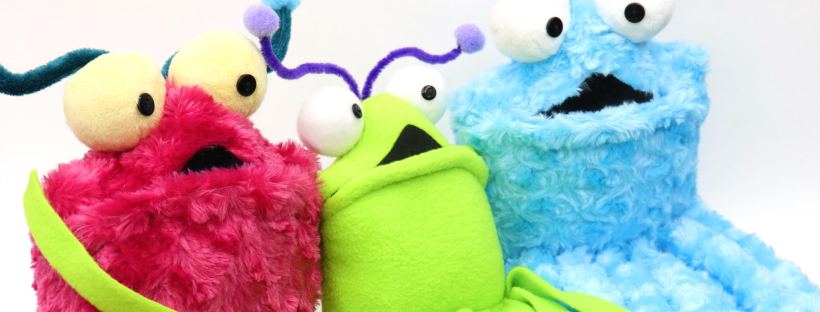
A friend asked me to make an alien plush for her daughter, and I had so much fun with it that I decided to share the project.

I started by making the larger fur aliens and then decided to add the smaller fleece option, which takes less fabric and is easier to construct.
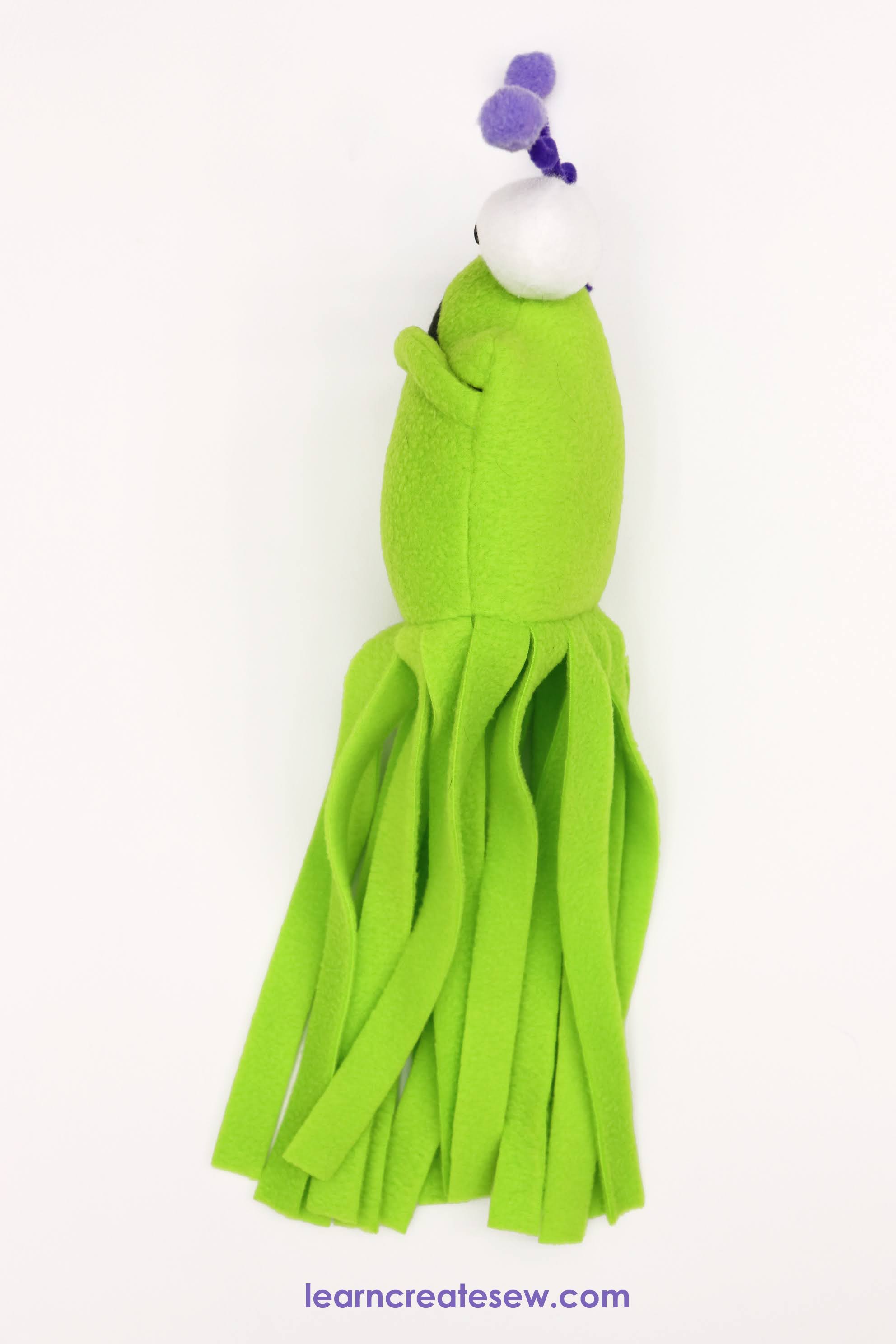
The antenna and large eyes give these plushies a lot of personality.

Regular-Sized Plush

The large aliens are made with a swirl faux fur fabric (also called rose minky) for the body and regular minky for the accents. They measure approximately 20 inches tall and have finished (sewn) legs.

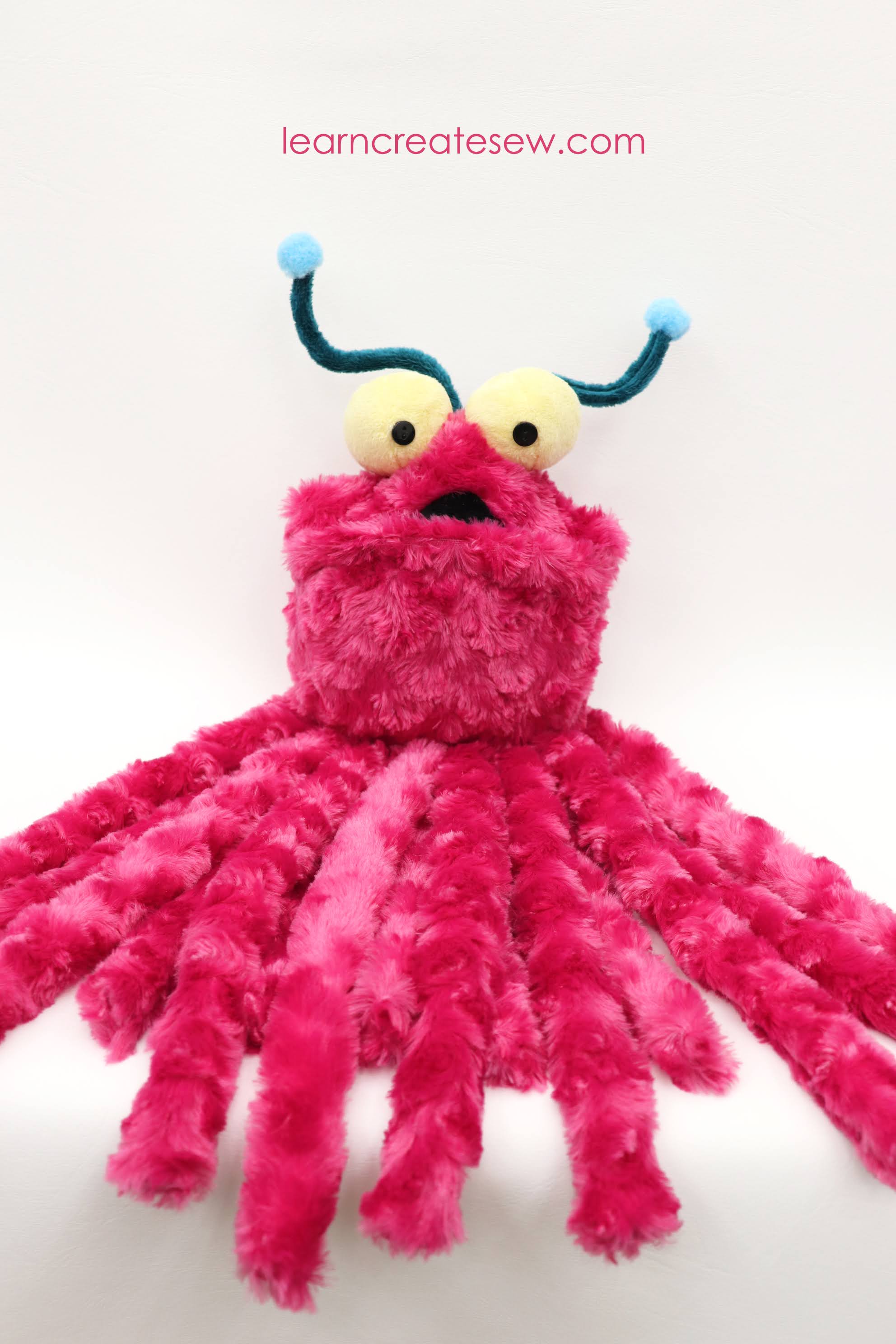
Small Sized Plush

The small aliens are made with fleece for both the body and the accents and have unfinished (unsewn) legs. The small size measures approximately 15 inches tall when finished. This is 75% scale of the regular-sized plush. This plush feels considerably lighter and smaller because of the reduced size and because the unfinished legs eliminate a lot of bulk.

Finished v Unfinished Legs

You have two legs finish choices when you make the alien, finished or unfinished. The small fleece aliens have unfinished legs. This means that they are not sewn. The fabric is simply cut into strips, the edges are left raw, and they are sewn directly to the plush. This shortens the construction time by quite a bit and reduces the difficulty of the project.

The regular-sized faux fur aliens have finished legs. The finished legs are sewn individually prior to attaching them to the plush. I chose to finish the legs on the faux fur to minimize shedding and to make them stronger. The finished legs take more time and more fabric.

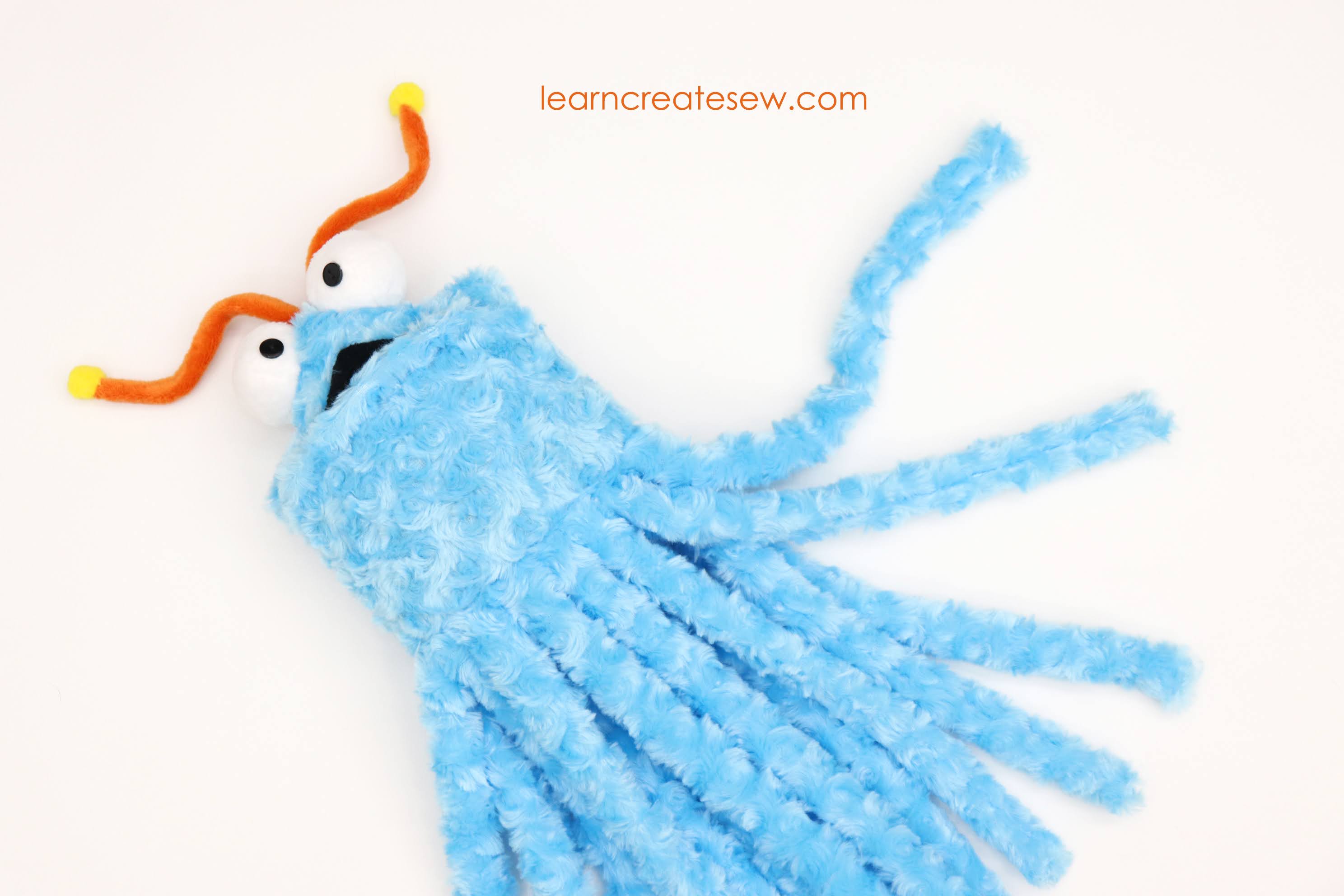
Accents

The eyes and antenna of the aliens bring out their fun personalities. The eyes are sewn into balls with minky or fleece fabric and then decorated with buttons. There are two options for making the antenna, the first which is shown on the small fleece plush, is simply to bend a pipe cleaner and hot glue pom poms to the ends. The other is to cover the antenna with fabric, which is shown on the larger fur aliens. You make a fabric tube, insert wire or pipe cleaners, and then sew pom poms to the end. The single pipe cleaner option is definitely faster and easier, and I prefer that look best, but the covered option is much stronger and helps the antenna stand out.

Supplies:

Refer to the Cut Layout included with the free pattern for fabric quantities

  • Body Fabric – Minky, Fleece, or Faux Swirl Fur
  • Accent Fabric for Eyes, Mouth, and Antenna – Fleece or Minky
  • 1 or 2 Pipe Cleaners or 9 – 12 inches of wire
  • 2 Pom poms (20 – 25 mm)
  • 2 Buttons (9 or 12 mm)
  • Polyfil
  • Coordinating Thread
  • Hot Glue (optional)
  • 2 Wire Caps (optional)

Pattern:

Instructions:

Happy Sewing!

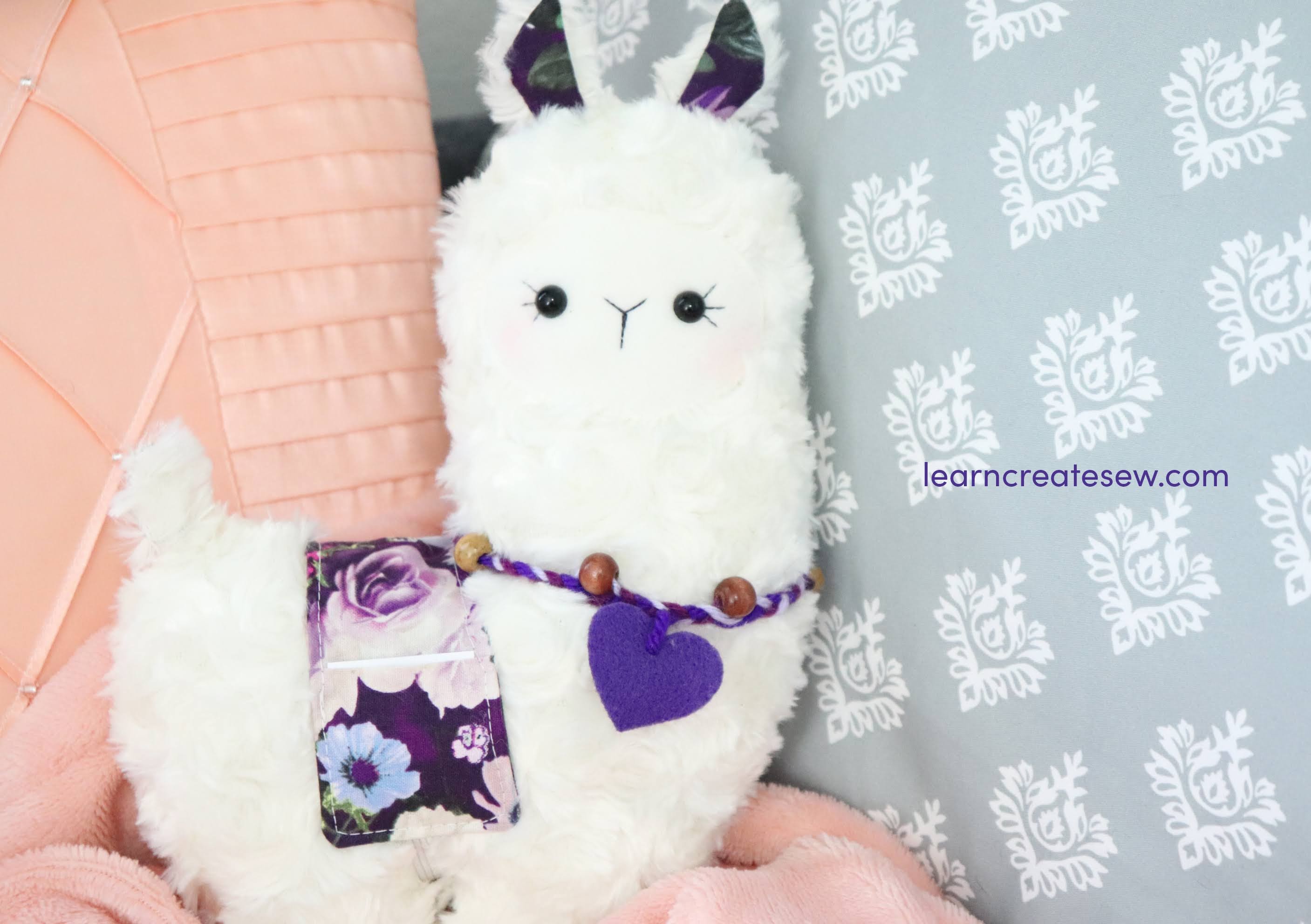
Lovely Little Llama

With Valentine’s Day coming up I was inspired by a cute new idea! A Lovely Little Llama Valentine!

This little llama has a blanket with two pockets that can deliver valentines for the big day 🙂

Not only would this llama be adorable for Valentine’s Day, but any holiday! Change the colors to green and red and you have Christmas. Dress it up for birthdays, Easter, or even Halloween. Changing the colors, accessories, and fabrics will completely change the feel of the project.

The pocket pouch is definitely my favorite part of the project, aside from the overall cuteness, of course! You can place notes, treats, and gifts in the little pockets.

The pattern is available in two sizes. The small size measures approximately 9 inches tall without the ears, and the large measures approximately 11.5 inches tall.

It is constructed with swirl fur which is great to work with and is super fluffy! It just calls out for cuddles 🙂

This project is fairly simple, but the fur does add a bit of difficulty. I would say it is about a 4/10 in terms of difficulty. You need to be comfortable using small seam allowances and sewing curves. Experience with fur or plush fabrics is also helpful.

Supplies – (See Cut Layouts for Fabric Sizes)

  • Fleece or Swirl Fur Fabric (Body)
  • Fleece or Felt (Face)
  • Cotton Fabric (Blanket, Ears, & Tail)
  • 1/4 inch wide elastic (3.5 inches – small, 4.25 inches – large)
  • Two Safety Eyes (8mm – small, 10mm – large)
  • Black Thread or Embroidery Floss
  • Blush or Pastels (Optional)
  • Yarn, scrap felt, and beads (Necklace – Optional)
  • Coordinating Thread
  • Poly-fil

Tools

  • Sewing Machine & Basic Sewing Tools (Pins, Scissors, etc.)
  • Hemostats or Tweezers (Recommended)
  • Hand Sewing Needles
  • Ultra Fine Point Sharpie (Optional)
  • Air Erase Marker (Recommended)
  • Purple Thang (Optional)

Free Patterns & Cut Layouts

QUICK OVERVIEW:

DETAILED VIDEO INSTRUCTIONS:

Happy Sewing!

One Hour Easy Zippered Purse

I absolutely love the project I am sharing with you today! I few years ago I was rushing to get ready for a vacation and my purse would NOT fit in my bag. I had one hour before I had to leave for the airport. What was I going to do? Well, being me, I decided to sew a new purse!

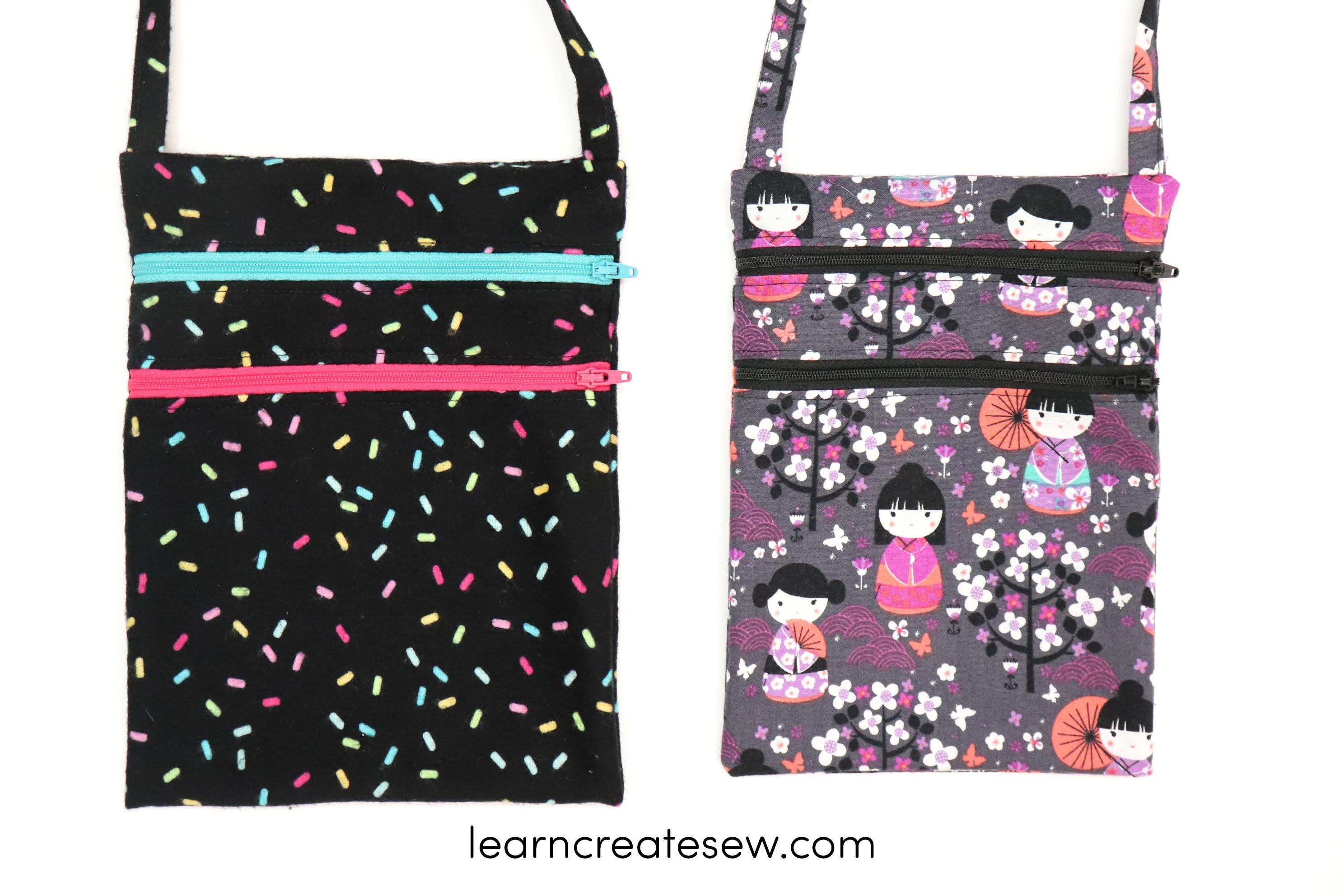
This is what I came up with! And since then I have used this purse absolutely all the time.

This purse is very lightweight and super handy to have around. I love to use this when I travel so I can fold it up in my luggage. I also really like to use it when I go for walks. It is the perfect size for a cell phone and smaller items.

This is a great first zipper project, so if you are just beginning with zippers this is a great place to start because you don’t have to worry about linings. Since the purse doesn’t have a lining it can be made quickly and simplifies the project. This is definitely a casual bag and I have enjoyed making this using both cotton and flannel fabrics.

Free Cut Layouts are available for two different styles, narrow and wide.

The black confetti purse is the wide version, and the cotton print is narrow.

Once you are comfortable with the process of how it is constructed it is super easy to adapt. By changing the length and width of your rectangles you can change the size of the bag. You can also use the same process to increase the number of zippers! I love the look with 3 zippers!

The wide bag measures approximately 7.375 x 9.5 inches and the narrow bag is approximately 6.375 x 9 inches.

SUPPLIES:

  • 2/3 yard cotton or flannel fabric (Makes 2 if the fabric is at least 40 inches wide)
  • Two – Three 9 inch zippers (for each purse)
  • Coordinating thread
  • Fray Check (Optional)

Tools

  • Sewing Machine
  • Basic Sewing Tools (Pins, scissors, etc.)
  • Ruler and marking tool (to draw the rectangles from the cut layout)
  • Iron

Free Cut Layouts:

DETAILED VIDEO INSTRUCTIONS:

QUICK OVERVIEW:

Happy Sewing!

Fur Pom Poms

With all of the stress of this year weighing heavy, I decided to take up a new hobby to help myself relax. I decided to learn how to crochet! I had crocheted before, but it had been several years. My mom came to visit with her assortment of crochet projects and I just couldn’t stop myself from exploring the craft again.

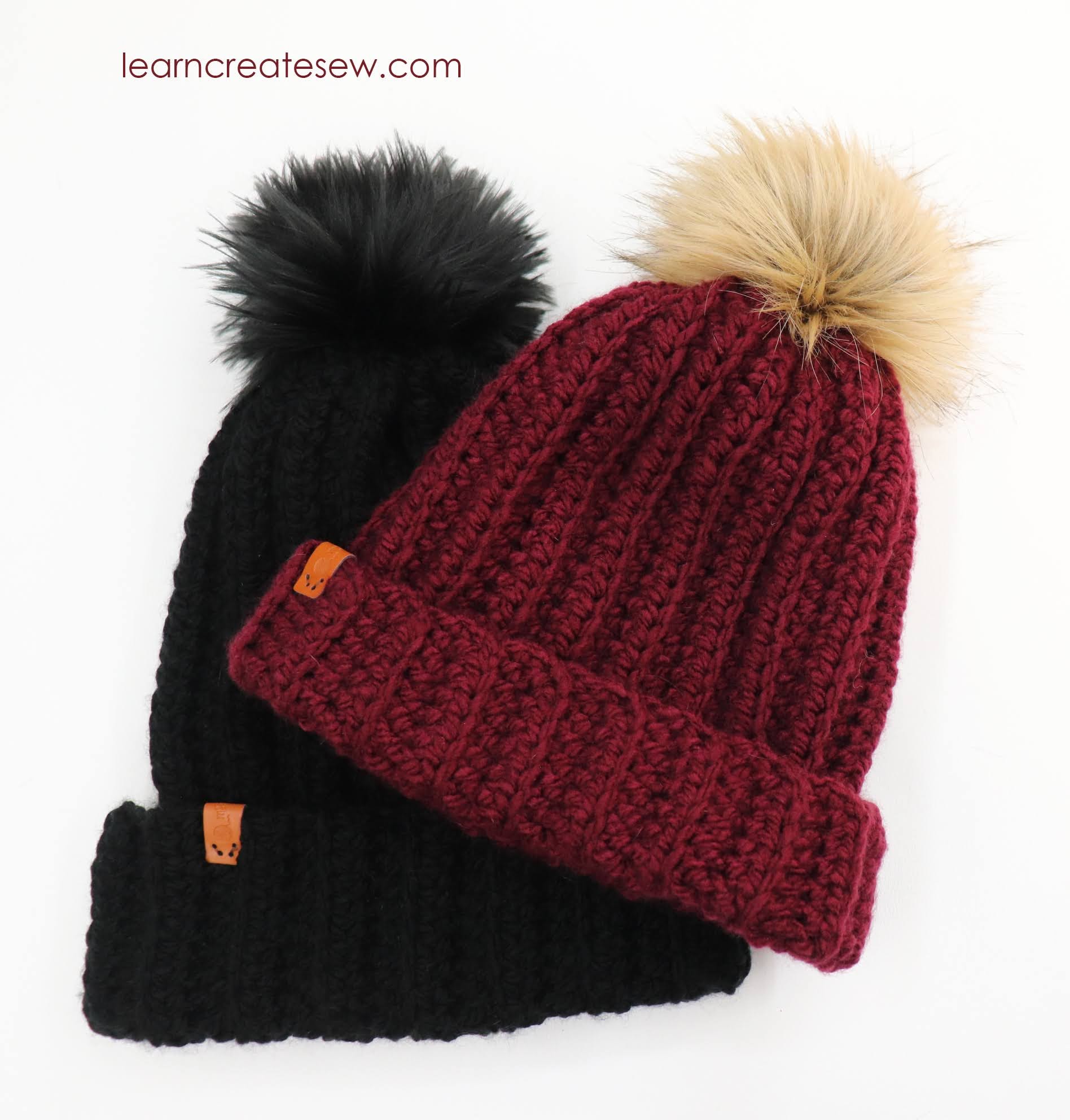
One of the first projects I made were these Half Double Crochet Beanies. These were simple and quick and a lot of fun. But they were definitely missing something…the fur pom pom! Hence this tutorial.

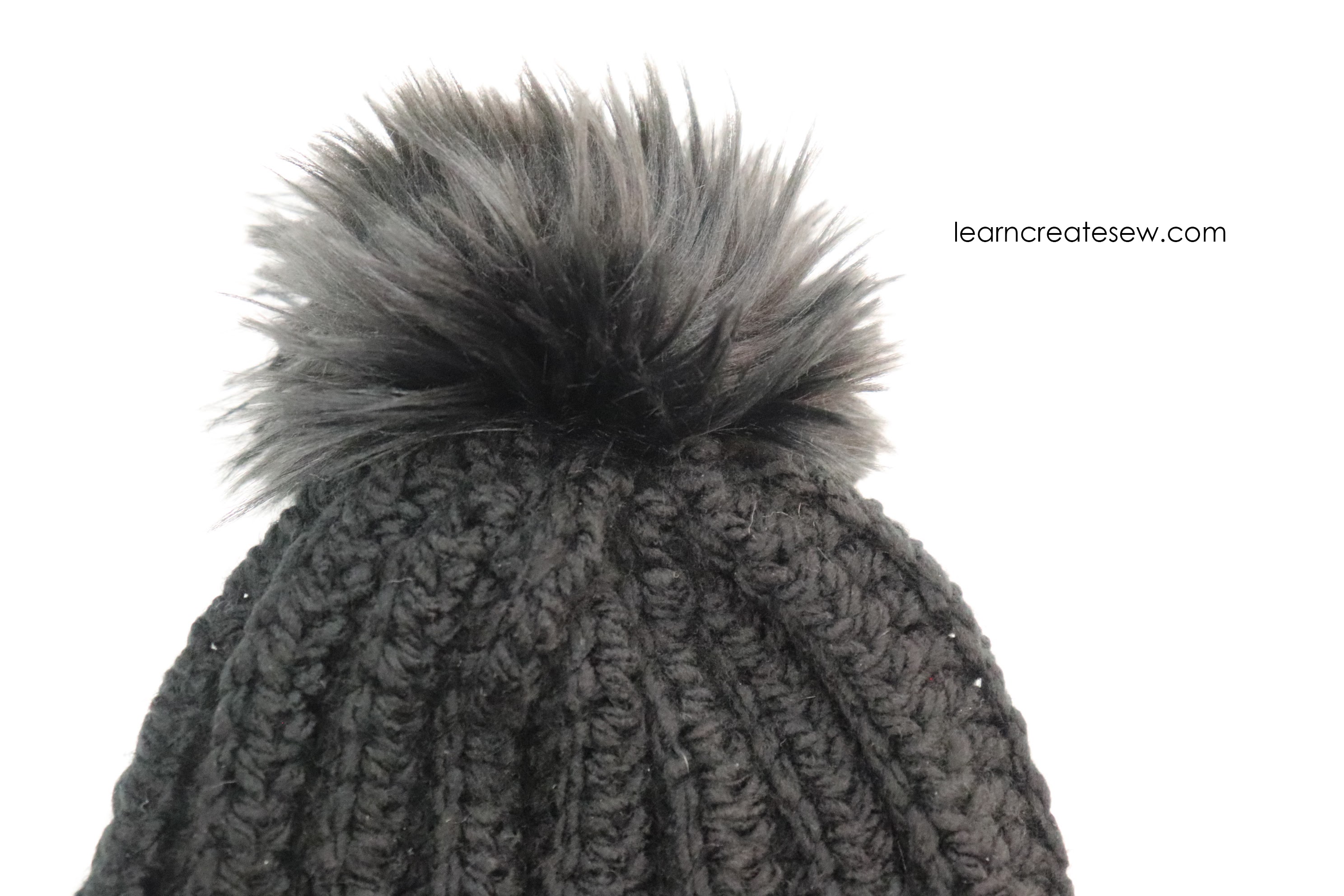
I thought I would share with you how I made the pom poms for the top of the beanies.

All it takes is faux fur fabric, poly-fil, needle and thread.

I think it adds a lot of character to the beanies! These pom poms have long ties that can be used to attach the pom poms to any project you like.

SUPPLIES:

  • Button thread
  • Faux Fur fabric (8 inch square or less)
  • Poly-fil stuffing

FREE PATTERN:

QUICK OVERVIEW:

DETAILED INSTRUCTIONS:

How I made the Beanie…

CROCHET PATTERN:

YARN: Serenity Premier Chunky – Weight 5

Hook: 7.0 – 9.0 

     A larger hook will require fewer stitches, but they will be more spaced out.

     I used hook 7.0 for the burgundy beanie and 9.0 for the black beanie.

Size: Teen/Adult

Terms:      Ch – Chain             

                 BLO – Back Loop Only

Hdc – Half Double Crochet

Chain 34 – 42

     The number of chain stitches you need will vary depending on the size of the hook you selected.

     You want your chain to be 11 – 14 inches long, not including the chain 2 at the end.

     Mine (the burgundy beanie) was 12 inches long. I chained 36 stitches and measured stitches 1 – 34.

Leave the thread tail long.

Row 1 – Beginning in the 3rd chain from the hook Hdc in each stitch. Hdc in back loop only. [Total Stitches: 32-40]

     The total number of stitches should be 2 less than your chain.

     Check the length again after completing row 1. You want your row 1 to be 11 – 14 inches long.

      Mine was 12 inches long and I had 34 total stitches.

      You should have the SAME number of stitches in every row from now on.

Row 2: Ch 2, turn, Hdc BLO in each stitch [32 – 40]  

     Don’t forget to skip the turning chain when you begin your stitches.

Row 3+: Repeat Row 2 until your work is 17 – 20 inches wide. 

You can test the width by wrapping the beanie around your head. It should be about two inches or so shorter than the circumference of your head.

Mine ended up being 12 x 19 inches. (The circumference of my head is 21 inches). Since this is a large yarn and a big hook it will stretch.

A smaller width will give a more snug fit.

STOP ON AN EVEN NUMBER OF ROWS.

Your working yarn should be on the opposite end from your starting tail. Cut the working yarn to be about 1 yard long.

Fold the beanie in half with wrong sides together. Sew the edge together. You should end with the working yarn next to your original thread tail. This will be the top of the beanie. Tie the thread tails in a knot.

Stitch through all the raised stitches around the top edge and pull closed. Tie in a secure knot. Weave in the thread tails.

And then add your fur pom pom!

Happy Sewing…and Crochet!

Fun Christmas Character Gnomes

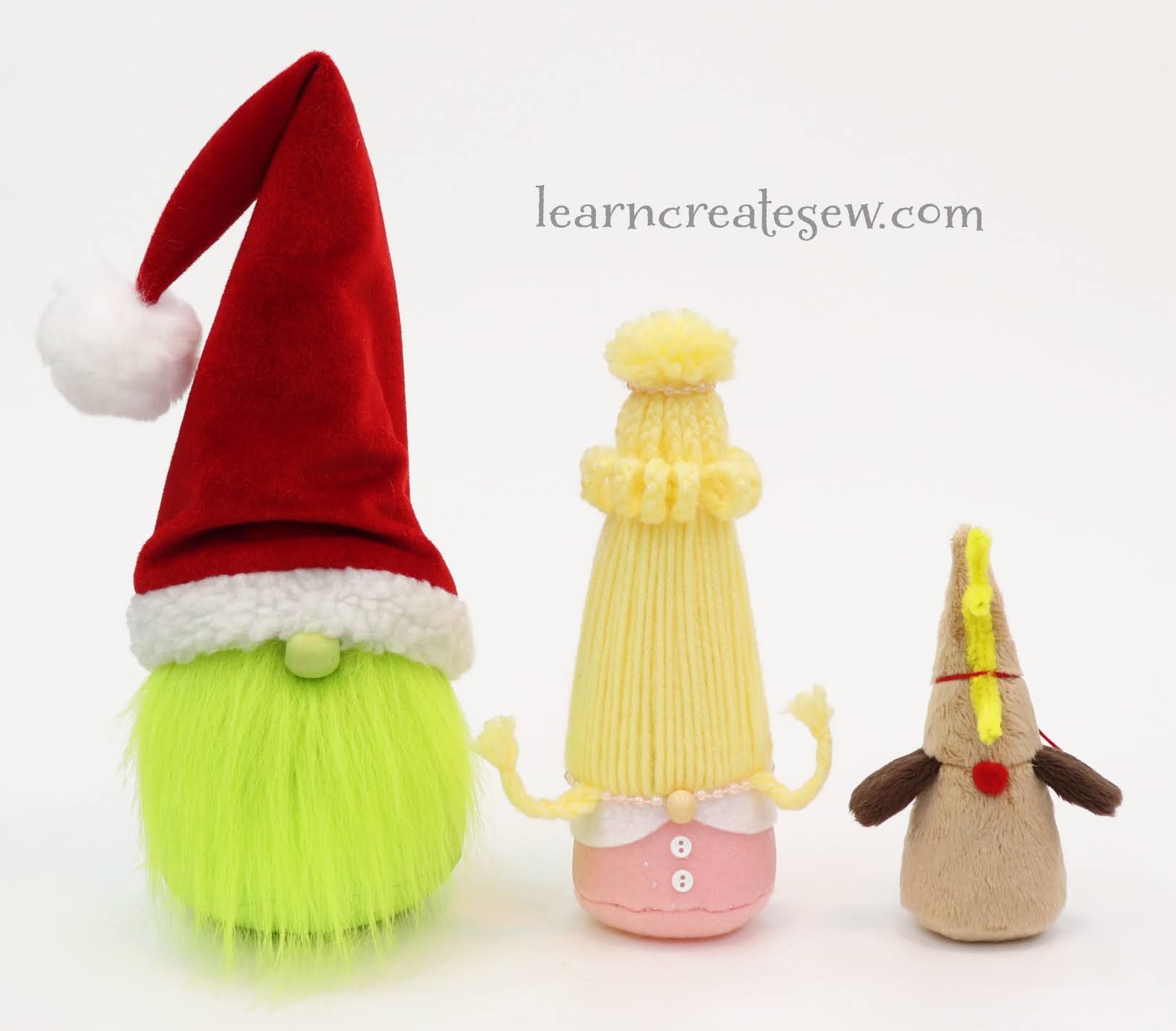
Whenever I think of Christmas, all of those iconic characters from Christmas classics come to mind!

I was crafting with my mom and we started brainstorming all of the possibilities available when making gnomes. There are just SO many cute cute gnomes out there.

I took up the challenge and decided to make some themed gnomes of my own. I hope you enjoy!

I just simply couldn’t resist making these guys!

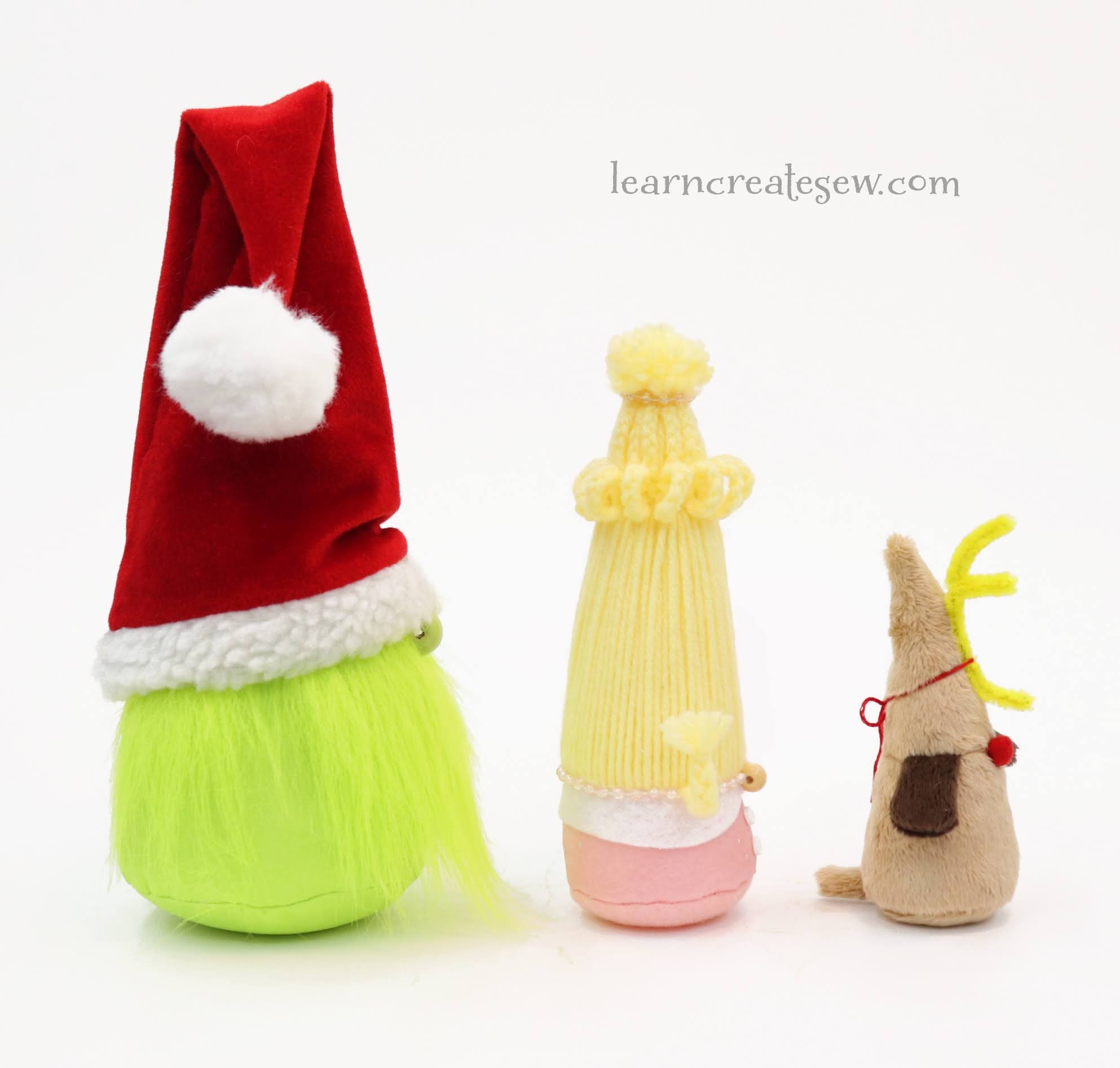
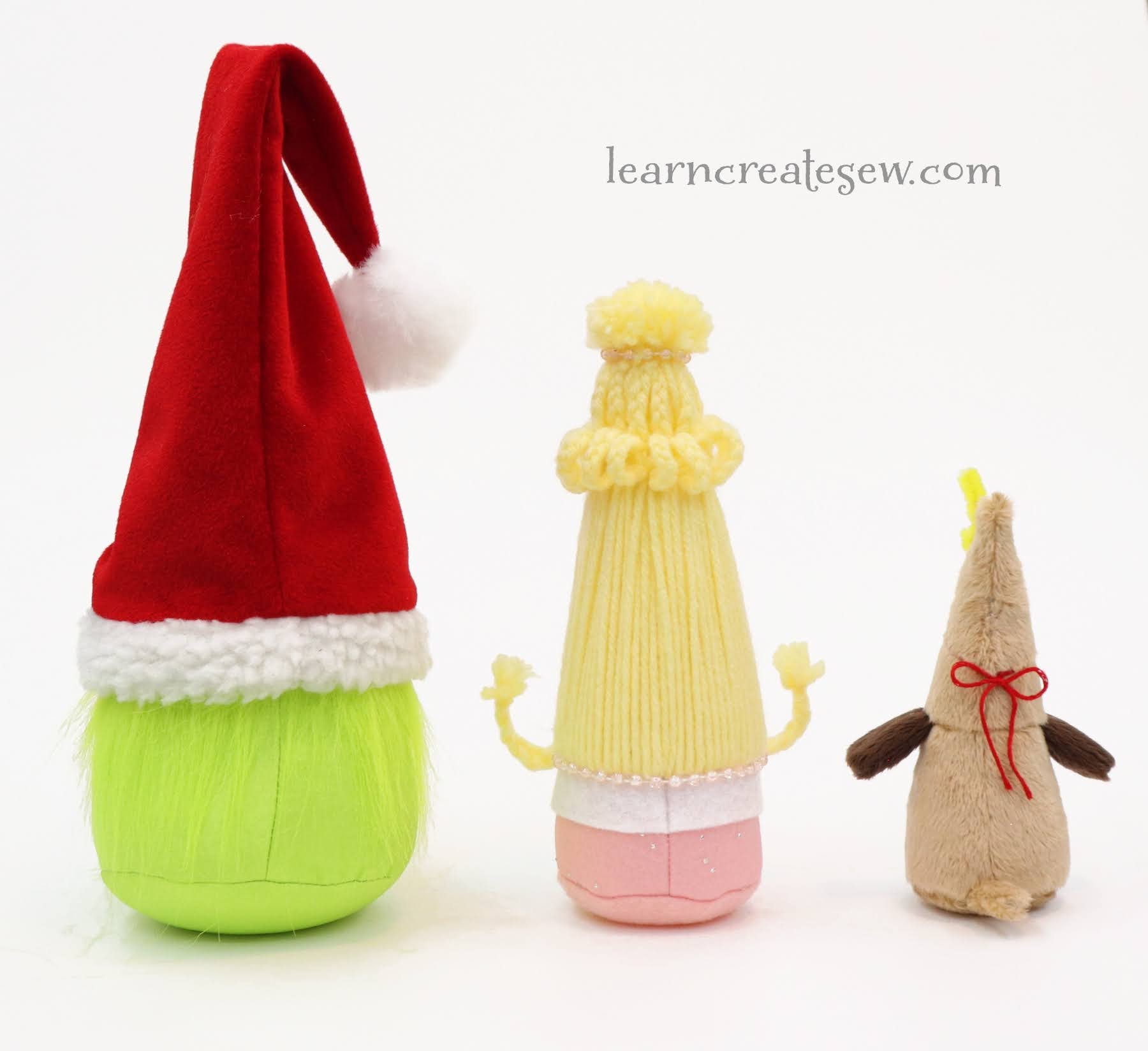
This big green guy can be made using the basic Christmas Gnome Pattern and tutorial. He is a size X-Large and stands about 10.5 inches tall without his hat. I added a sherpa binding to the edge of the hat and a bit of fur around the entire body, rather than just the beard.

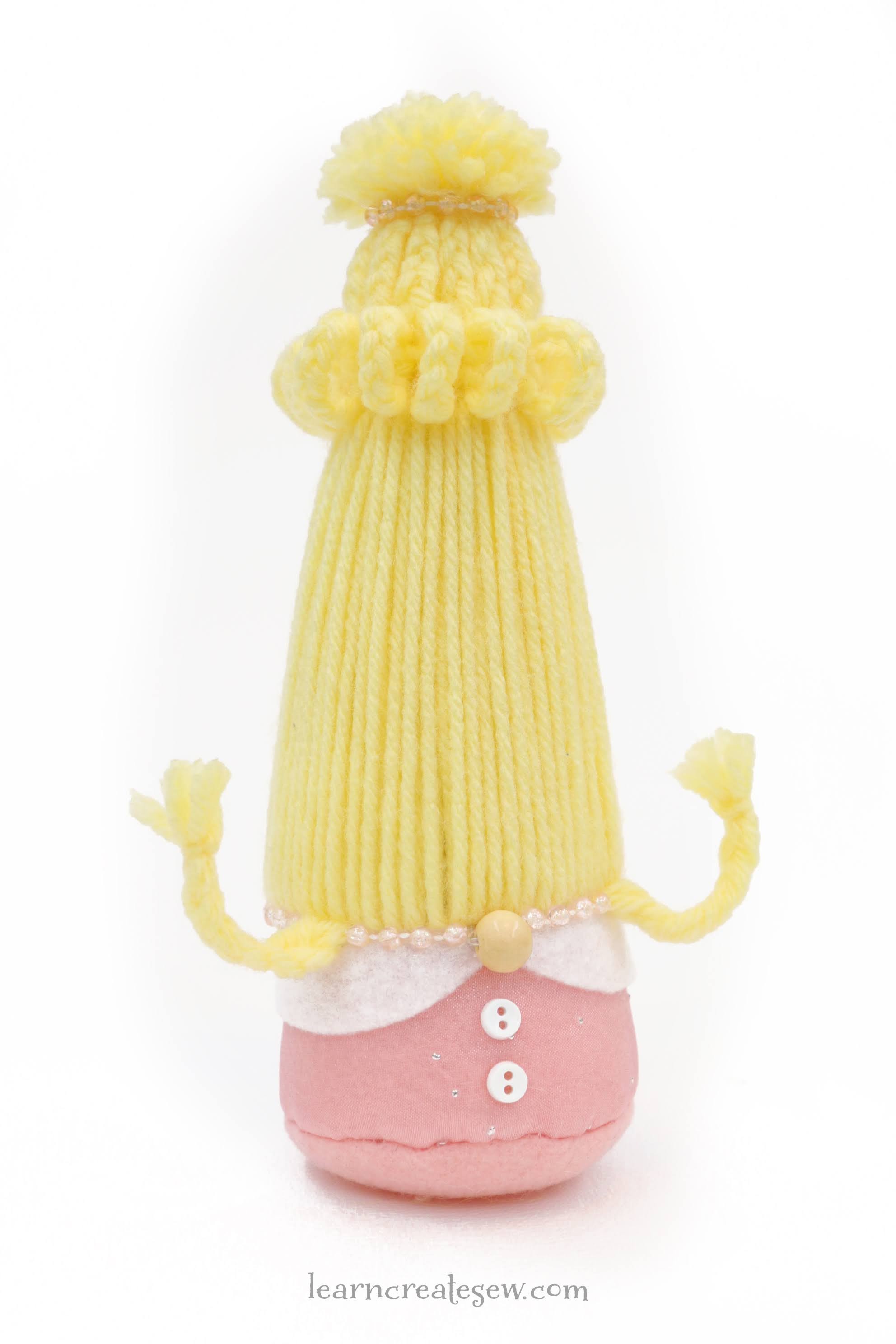
This little lady was super fun! I made the small size.

I really enjoyed decorating this one as well as making the hair. It took four tries to figure it out, but I was really happy with the results!

I really enjoyed styling the hair. All the little braids were time consuming, but I love the end result!

I also really liked adding decorations, such as buttons and pearls.

Of course, these two would not be complete without their furry friend!

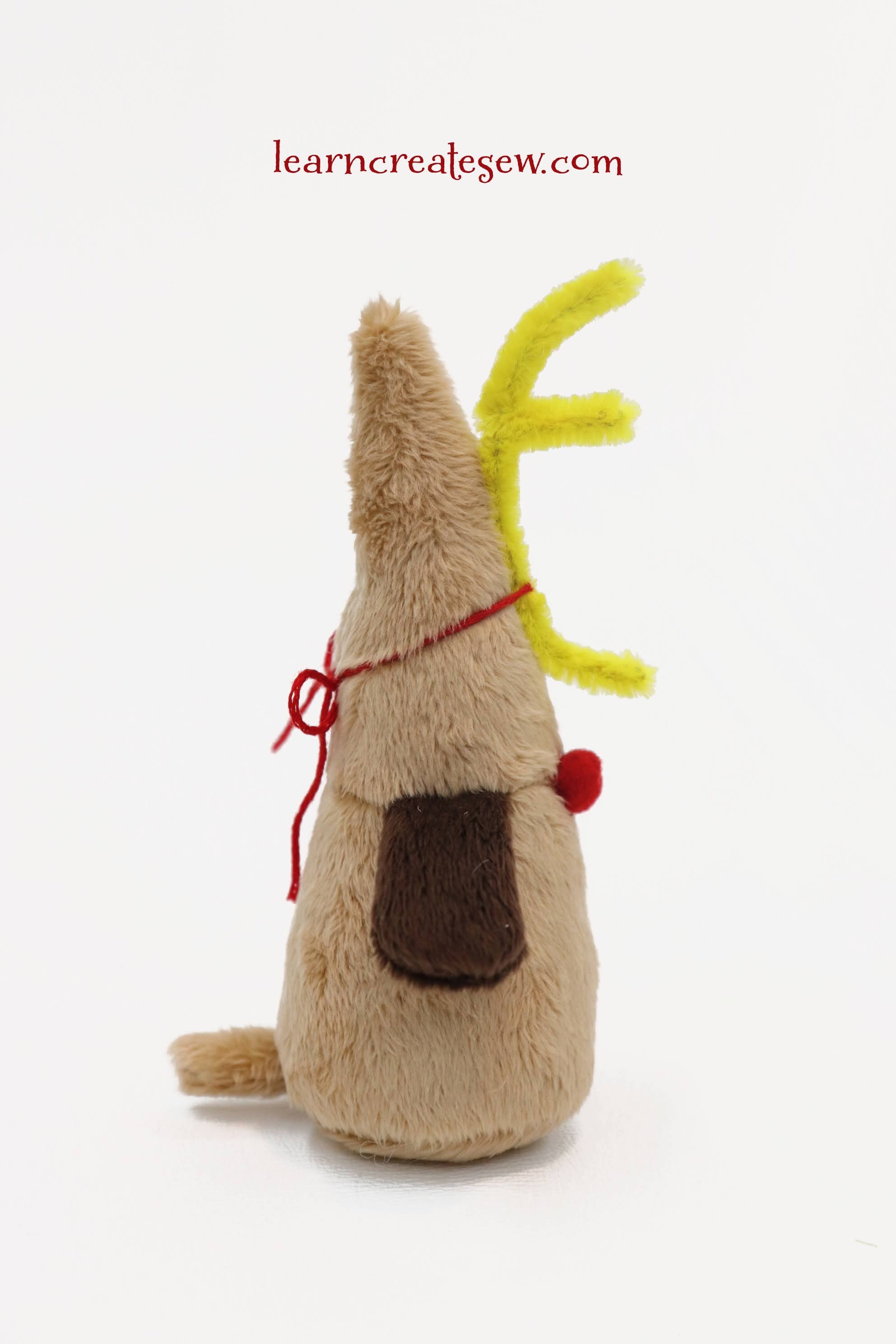
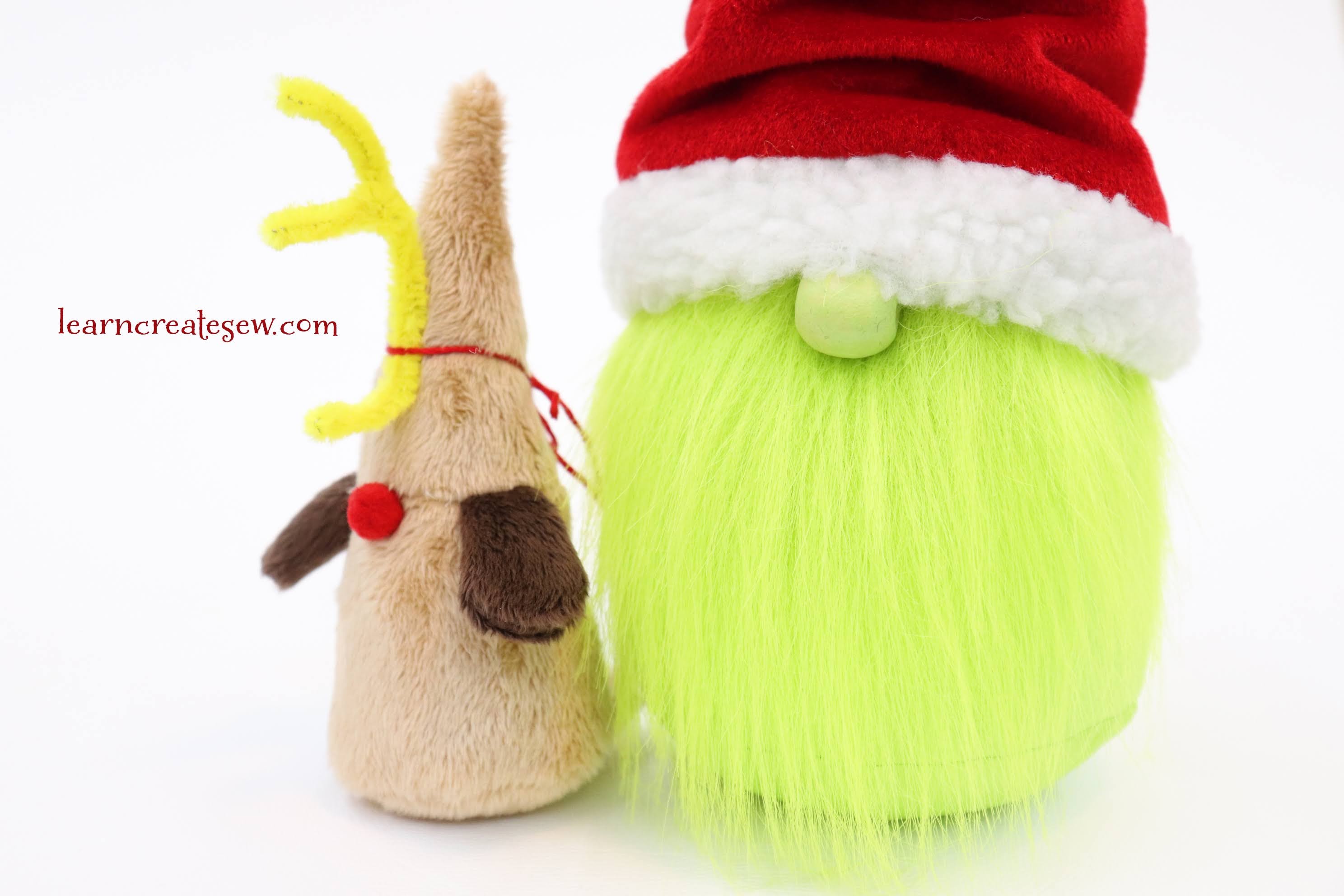
This little pup was actually super quick to make and I absolutely adore how he turned out. I used minky to give him that furry look 🙂 And a pipe cleaner is the antler. A special thanks to my sister for that idea!

SUPPLIES:

  • All
    • Poly-fil
    • Poly Pellets
    • Wooden Bead or Pom pom for Nose
    • Coordinating Thread
  • Green Santa
    • Green Fur
    • Red Velvet
    • Green Body Fabric
    • Sherpa for trim
    • Pom pom for Hat
  • Little Girl
    • Yarn (Hair)
    • Felt or Fabric (Body)
    • Decorative Overlay (Optional)
    • Felt (Collar)
    • Felt (Upper body under hair)
    • Tiny Buttons (Optional)
    • Pearl Trim (Optional)
  • Little Dog
    • Light Brown Fabric (Body – I used minky)
    • Dark Brown Fabric (Ears – I used minky)
    • Red Embroidery floss
    • Pipe Cleaner (Antler – I used yellow)

FREE PATTERNS:

Visit my Christmas Gnome Page for more pattern options

DETAILED VIDEO INSTRUCTIONS – LITTLE GIRL

DETAILED VIDEO INSTRUCTIONS – DOG

DETAILED VIDEO INSTRUCTIONS – CLASSIC GNOME

Happy Sewing!
Christmas Stocking Embellishments

At this holiday season, I want to express my gratitude to all of my followers. Thank you! Thank you for supporting learncreatesew.com and subscribing to my YouTube Channel. Having the opportunity to share my love of sewing with so many is a great privilege and an opportunity I never thought I would have.

Thank you for making all of this possible and encouraging me to keep creating.

And for you, here are my next videos!

I had a lot of fun adapting the Christmas Stocking pattern for you! I don’t know about you, but I love options. But what if I did this…or this…? That is what I am always asking myself. As a result, I wasn’t satisfied with just the basic stocking. I wanted to expand upon it to provide more great options for creativity.

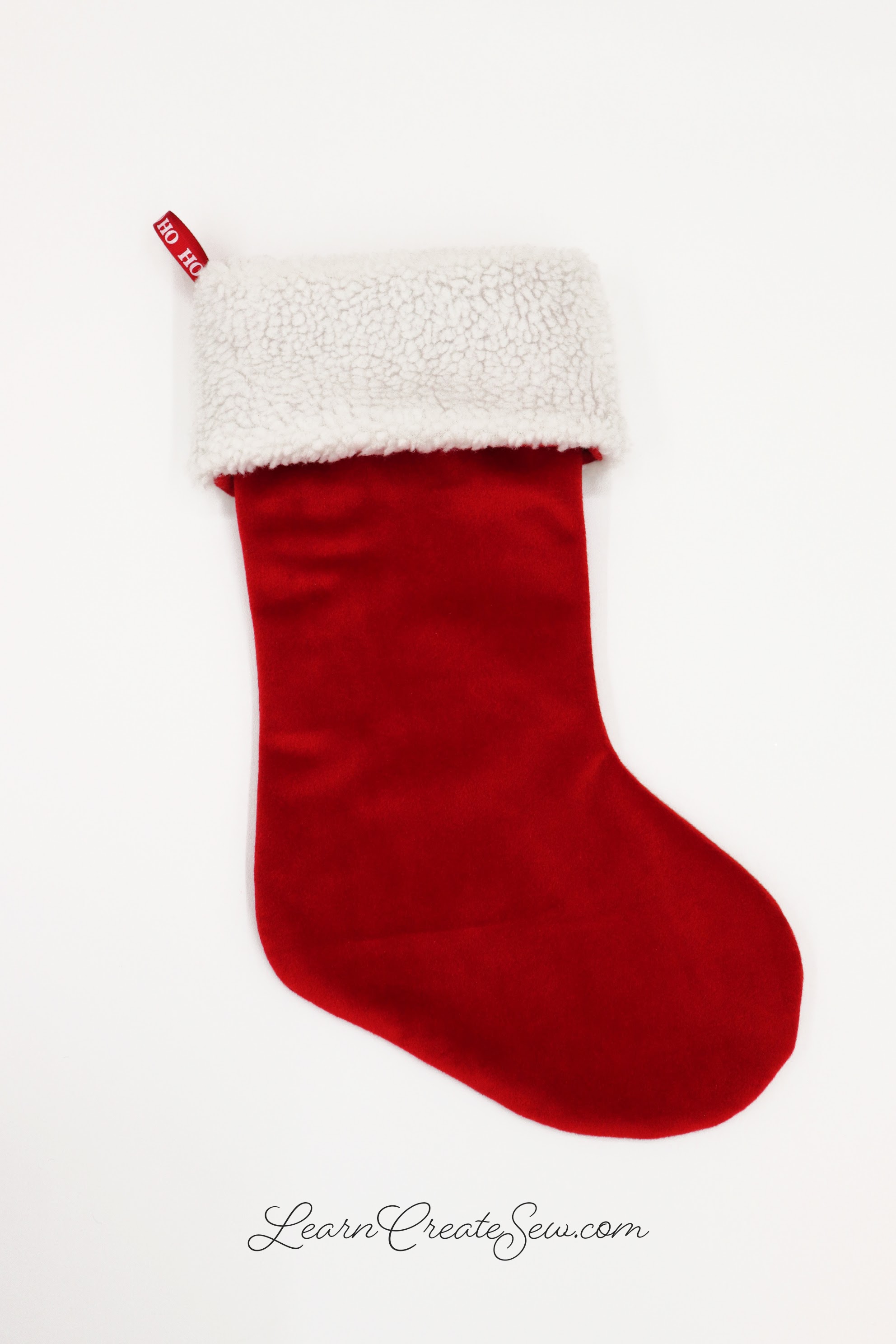
The first video explains how to add a contrasting cuff, if you wanted the fabric of the lining to vary from the fabric of the cuff. The stocking shown here has a sherpa cuff but a flannel lining.

The next video adds a burlap overlay to the main fabric as well as decorative embellishments.

I hope these videos inspire creativity, and I hope you have a lot of fun making your own stockings!

See the Christmas Stocking page for the free pattern.

Christmas Stocking

I’m so excited to share this project with you today! It has been quite a while since my last post and I am happy to finally share with you a fun holiday project.

Life and work caught up with me the last few weeks and it took the excitement of Christmas projects to motivate me to get back to sewing!

This is a quick easy Christmas Stocking.

It is fully lined and has a fold over cuff!
The free pattern is available in several sizes.

The pattern works great with flannel, fleece, and cotton fabrics.

If you enjoy this tutorial keep an eye out for future posts in which I’ll show you a few quick alterations to the same pattern.

SUPPLIES:

  • Coordinating Thread
  • Ribbon (4 – 8 inches)
  • 7/8 yard (or less) Fabric for the Outside of the Stocking (Cotton, Flannel, or Fleece)
  • 7/8 yard (or less) Fabric for the Lining and Cuff (Cotton, Flannel, or Fleece)
    • The project works best when the lining and outside fabrics are the same type of fabric.
    • The amount of fabric needed varies a lot depending on the size of the stocking you make and the direction you need to cut your fabric.
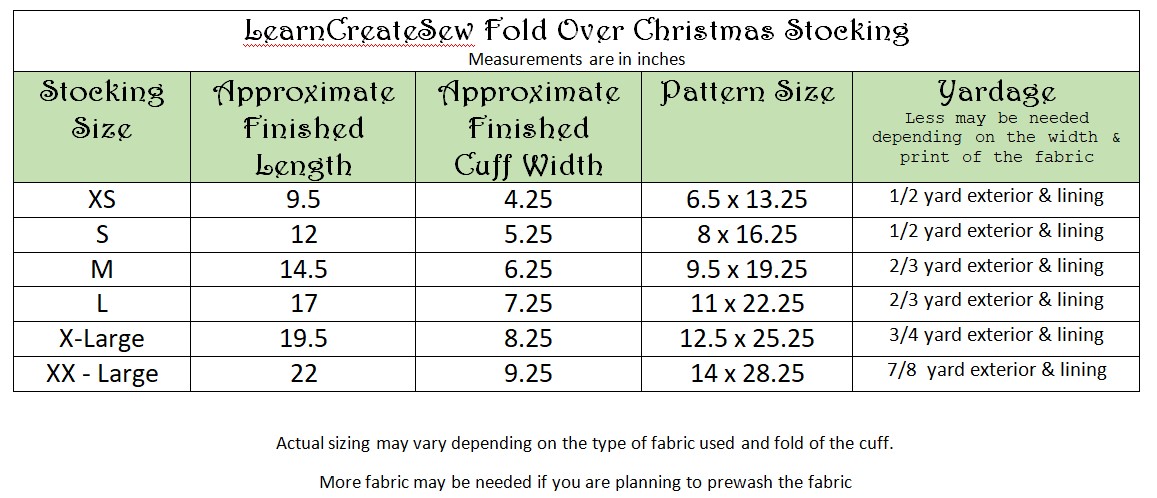
    • I recommend reviewing the pattern sizes in the table below if you would like more specific measurements.
    • Remember you will need two lining pieces and two outside pieces.

A bit more on yardage:

For instance, if I want to make a size small I know I need two pieces of outside fabric that will fit the pattern (which is 8 by 16.25 inches). If the direction of my fabric doesn’t matter 1/4 yard would work…but if I have to follow the selvage, for example on fabrics with words or a specific direction, I may need 1/2 yard.

Enjoy!

FREE PATTERNS:

QUICK OVERVIEW:

DETAILED VIDEO INSTRUCTIONS:

Learn to Sew: Lesson 6: Drawstring Bag

In this lesson we will learn several topics that are applicable in a wide variety of sewing projects. The drawstring bag introduces how to make a casing or channel that can be used to hold, a drawstring, elastic, ribbon, and more. This skill is used everywhere from bag making to garment construction and makes the drawstring bag a great project for beginning sewers.

Lesson Category:

  • Machine Sewing – Straight Seams

Lesson Topics:

  • Making a Drawstring
  • Making a Casing
  • Sewing Straight seams
  • Finishing Seams
  • Pressing

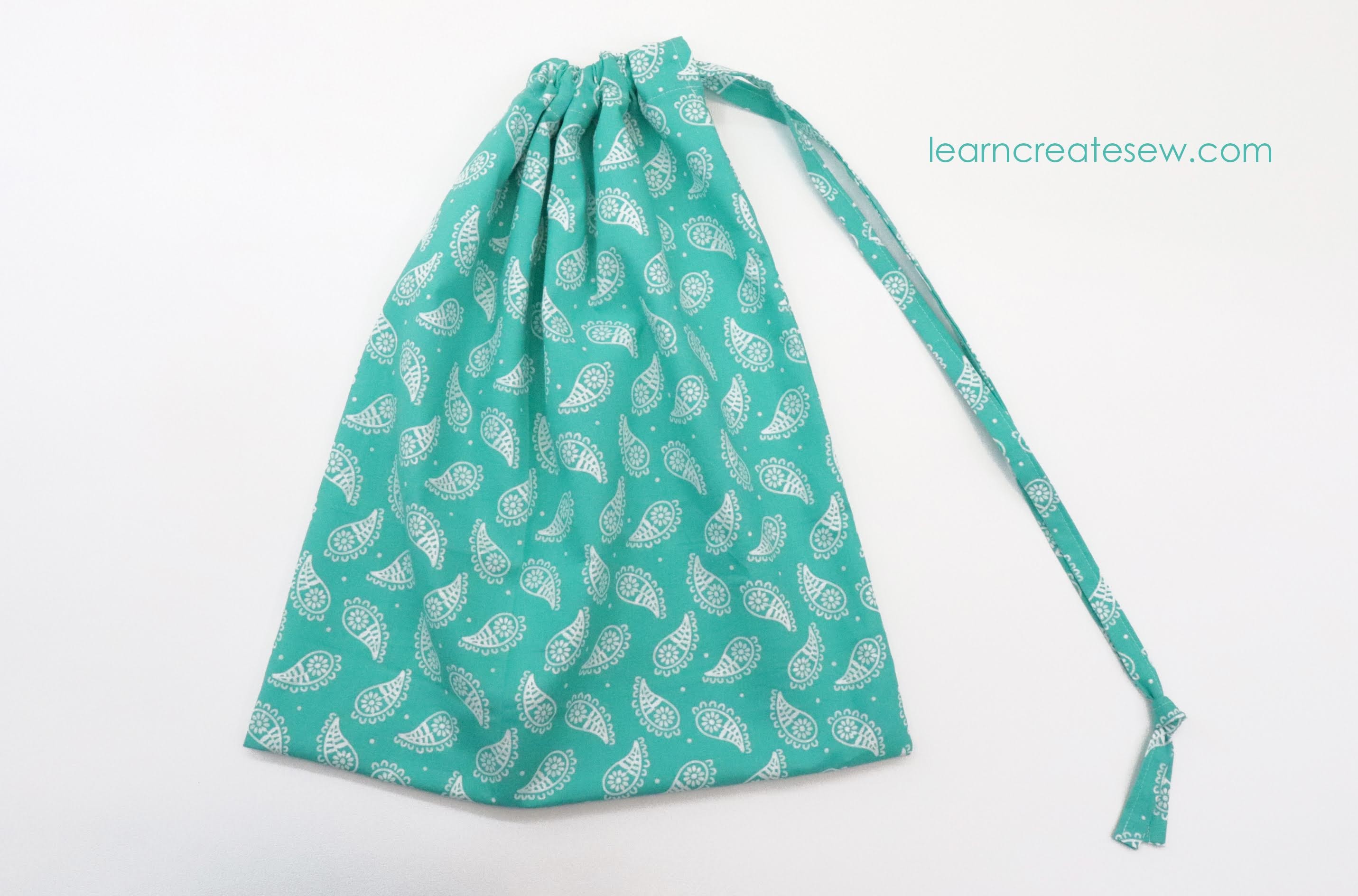
This bag measured approximately 13.5 x 15 inches when finished, but could easily be adapted for other sizes.

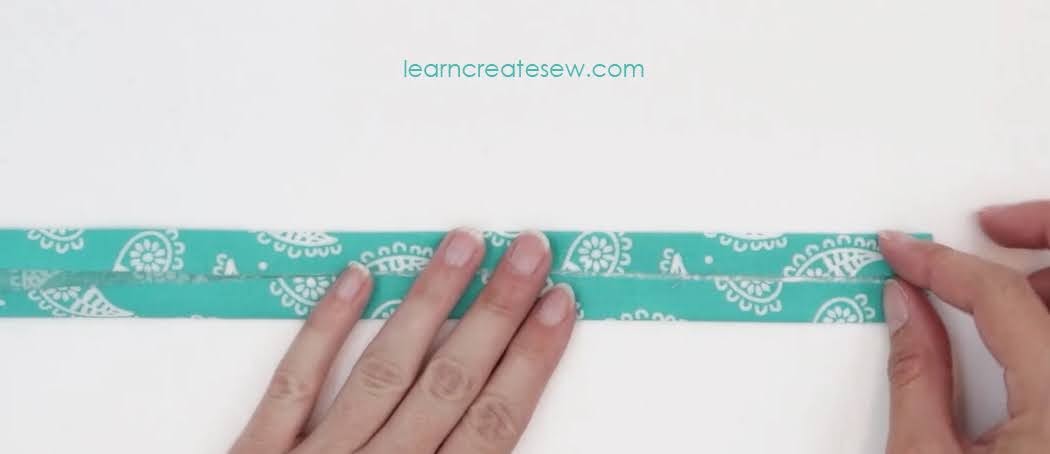
The bag features a 1/2 inch wide drawstring made by piecing and folding 2 inch strips of fabric.

This project was designed to only use 1/2 yard of fabric, and as a result the drawstring is pieced, but you could use more fabric if you prefer to make the drawstring out of a continuous piece of fabric rather than multiple pieces.

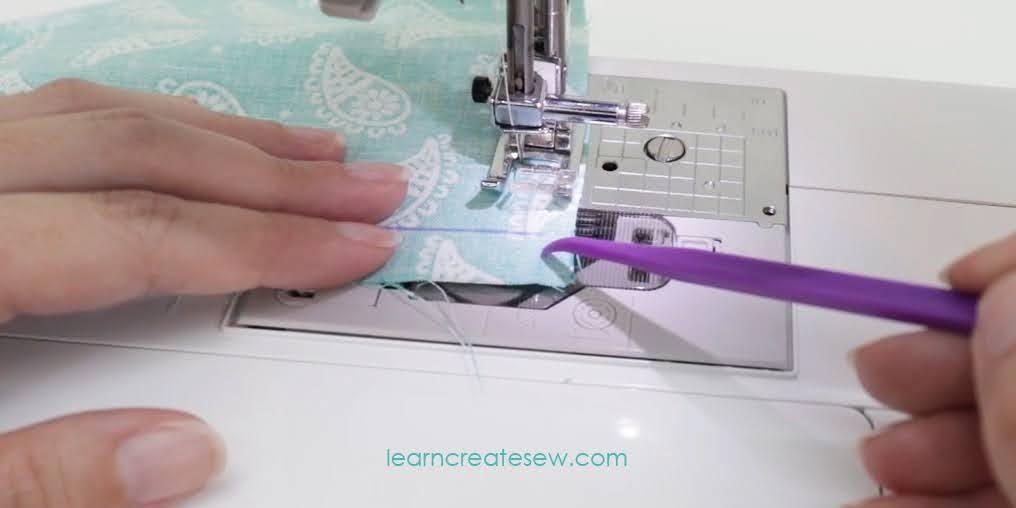
It has a wide casing for easy threading of the drawstring. I’ll show you a quick way to make sure the sizing of your channel is consistent.

It also introduces finishing seams, which is a great skill in general. If you are interested in learning more about finishing seams check out my Skill Building Video on the topic!

In the video also introduces tips for how to turn a corner exactly, how to finish the edges of the drawstring channel and more.

Supplies

  • 1/2 yard cotton fabric
  • Coordinating thread

Helpful Tools

Instructional Video:

Sloth Plush Video Tutorial PART 1

The sloth plush has been one of my posted free projects for quite some time, but I thought it was time to make a video!

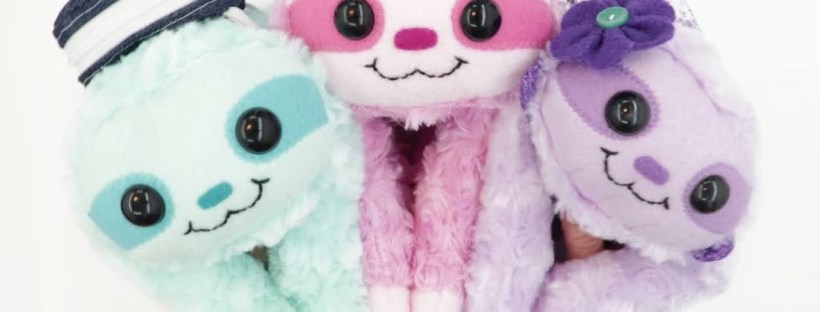
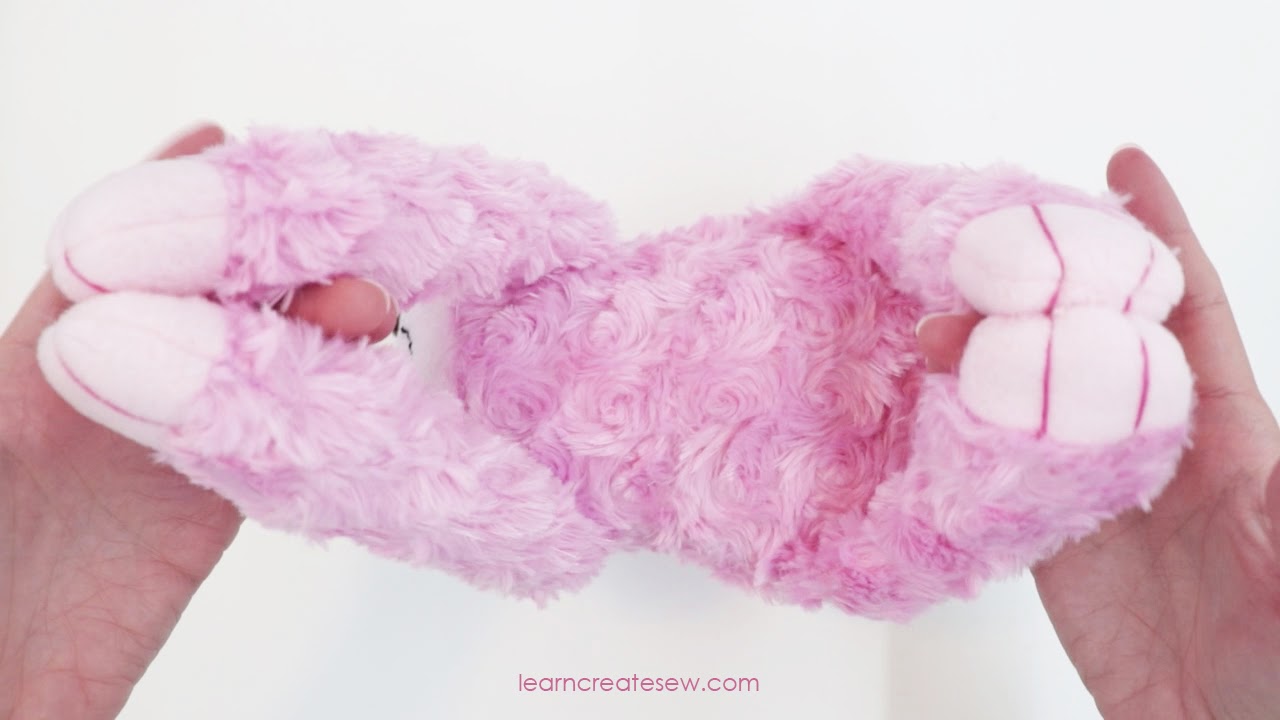
I absolutely LOVE this project! It is so cuddly, which just makes me happy! It does take a bit of time, especially if you choose to work with fur, so the instructions for this project will be in two parts.

Supplies:

  • 7 x 48 inches Faux Fur or Fleece for body and legs
  • 4.5 x 18 inches of fleece for the face and claws
  • Scrap felt for face details
  • Two 16mm Safety Eyes (You could also use felt circles or buttons if you prefer)
  • Embroidery floss
  • Magnets, Velcro, or Snaps (optional)
  • Scrap fabric to cover magnets (optional)
  • Coordinating Thread
  • Poly-fil Stuffing

Helpful Tools:

Files:

Video Instructions PART 1:

Learn to Sew: Lesson 5: Felt Carrying Case

Thanks for your patience for this latest post! I am a full time teacher, and with school starting back in full swing I haven’t had as much time to devote to new posts as I would like. Don’t worry! I still plan to post new content. However, it just may not be as frequent as it was over the summer. I hope you enjoy the new projects as they come and until then check out my free projects that are already available!

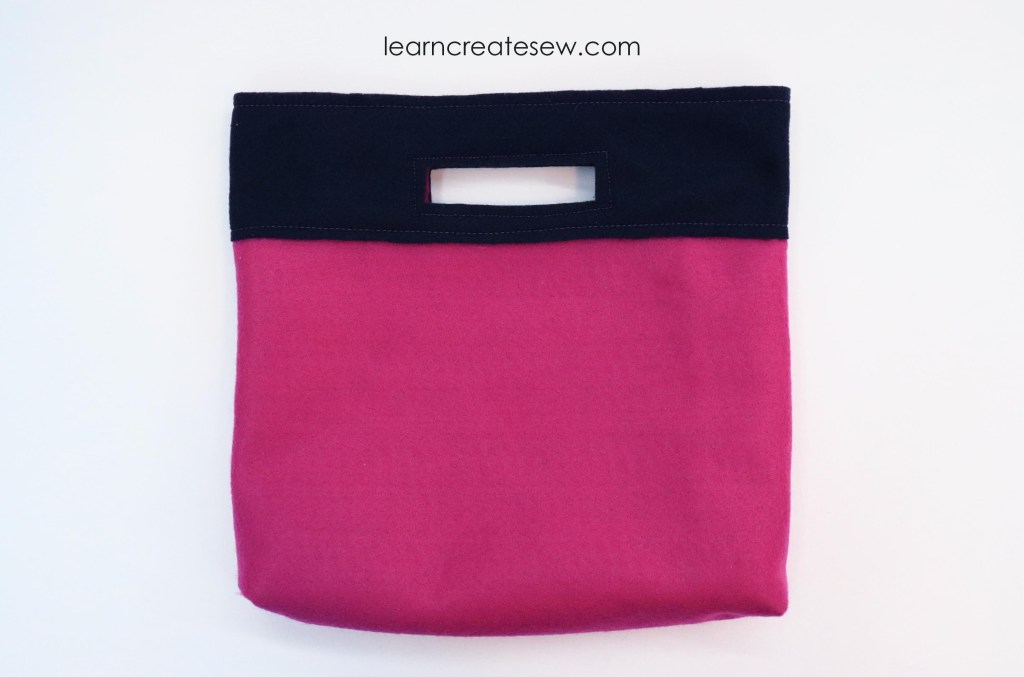
This is a fun quick project that helps practice sewing straight seams. It also introduces bag making basics with boxed corners.

Lesson Category:

  • Machine Sewing – Straight Seams

Lesson Topics:

  • Essential Tools
  • Cutting Rectangles
  • Sewing Straight Seams
  • Boxing Corners

This project uses large sized felt fabric, since the pieces are larger than the standard sized felt sheets available in most stores.

Felt is a great fabric to start with for your first projects because it doesn’t fray. You don’t have to worry about raw edges and it will look nice inside and out!

The top of the bag is made with two layers of felt stitched together for added strength and to provide contrast.

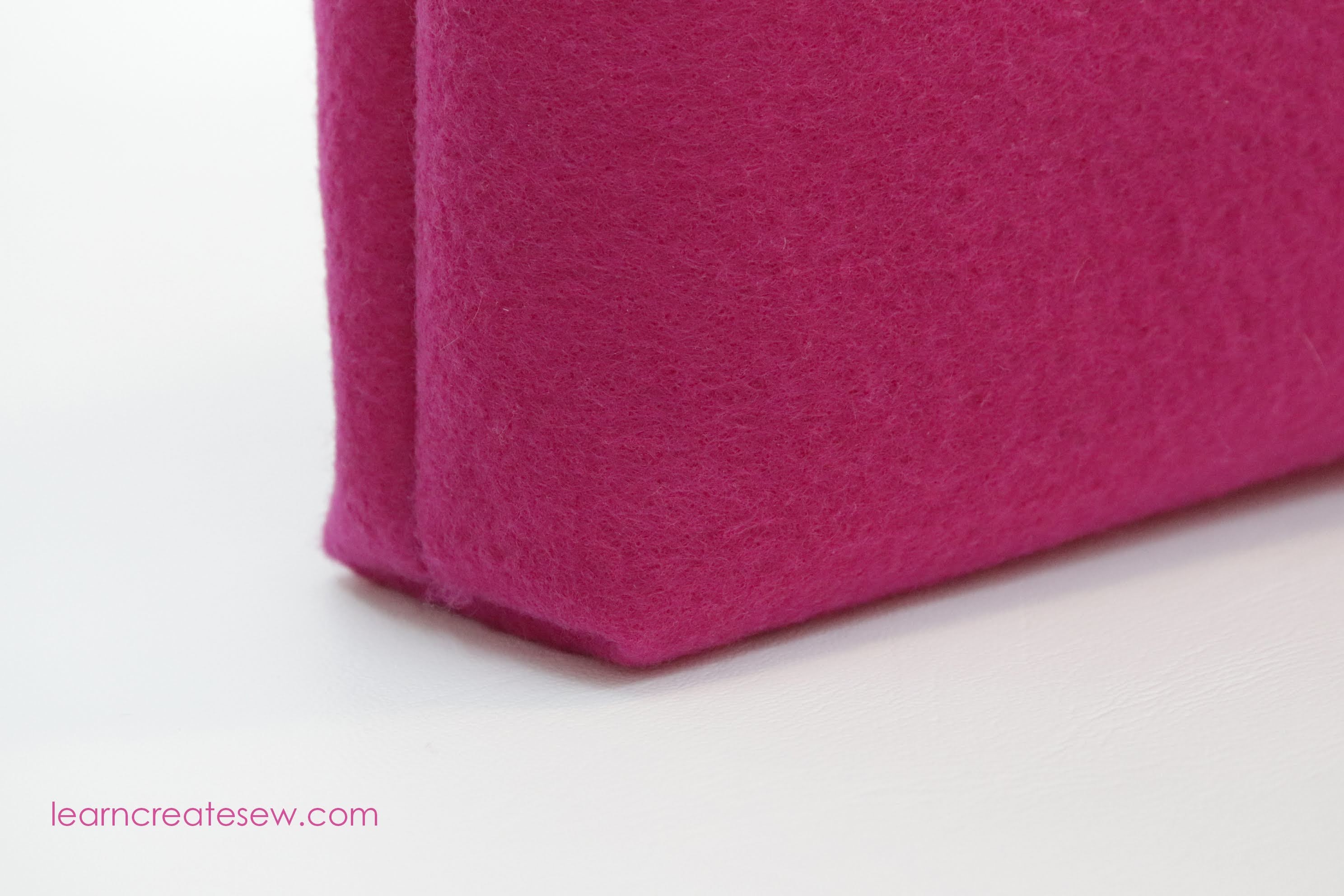
It also has boxed corners. Boxed corners can be a bit of a challenge, but it adds a lot of great features to your bag.

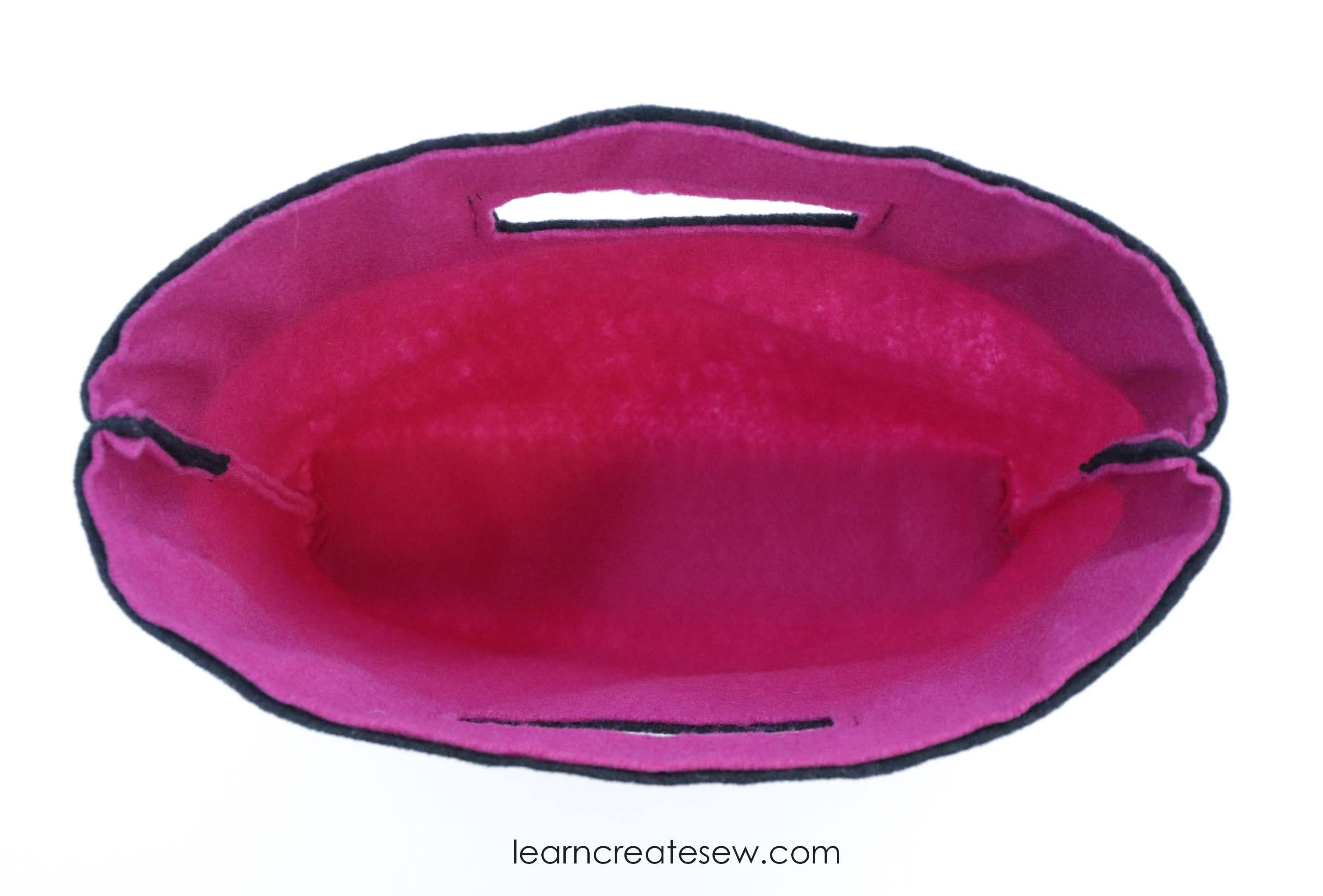
It provides space at the bottom of the bag so it is no longer flat.

In this case it also allows the bag to stand up. Once you learn how to add boxed corners it is a great feature to add to many different types of bags and cases.

Lesson: