Fur Pom Poms

With all of the stress of this year weighing heavy, I decided to take up a new hobby to help myself relax. I decided to learn how to crochet! I had crocheted before, but it had been several years. My mom came to visit with her assortment of crochet projects and I just couldn’t stop myself from exploring the craft again.

One of the first projects I made were these Half Double Crochet Beanies. These were simple and quick and a lot of fun. But they were definitely missing something…the fur pom pom! Hence this tutorial.
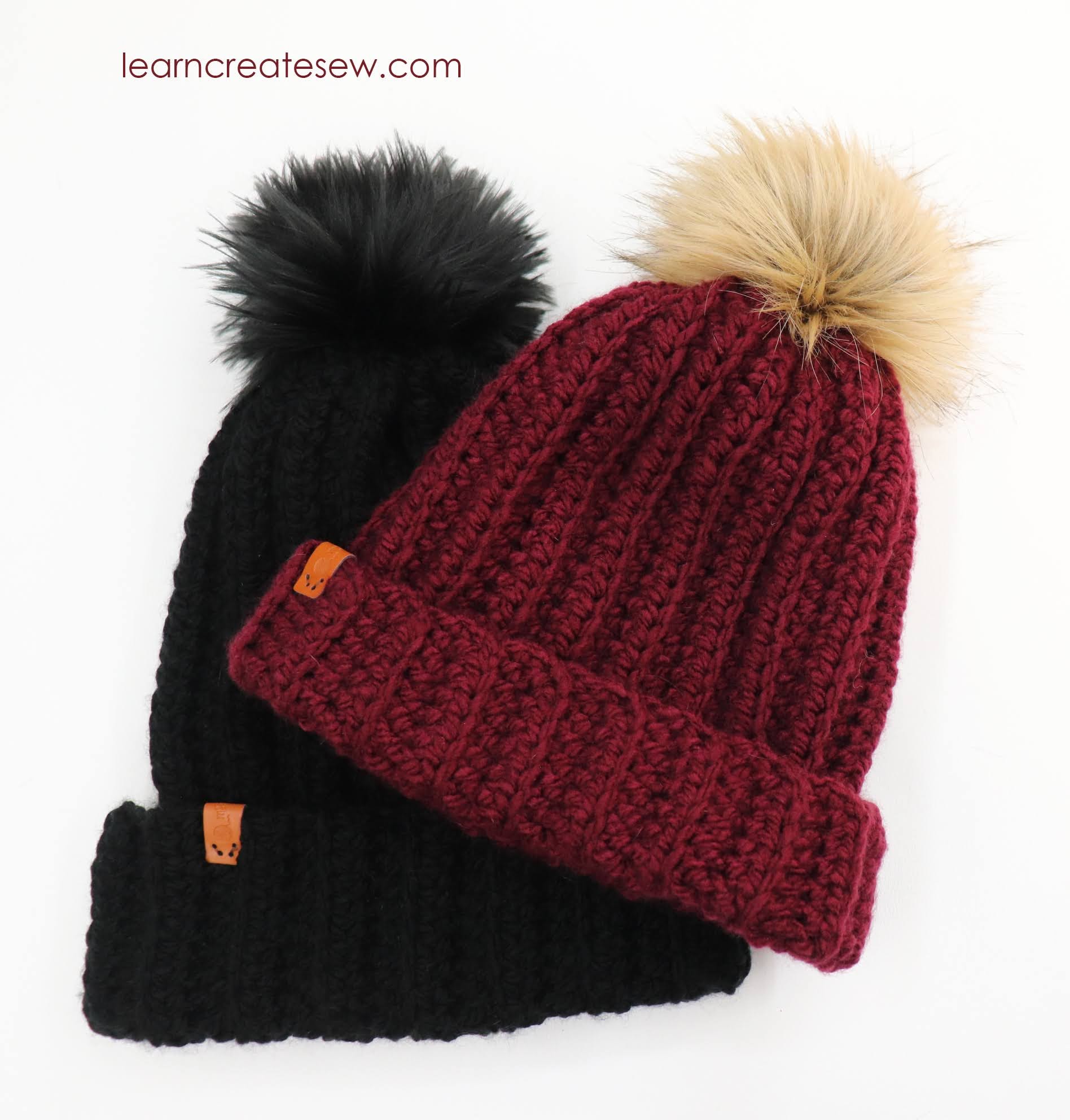
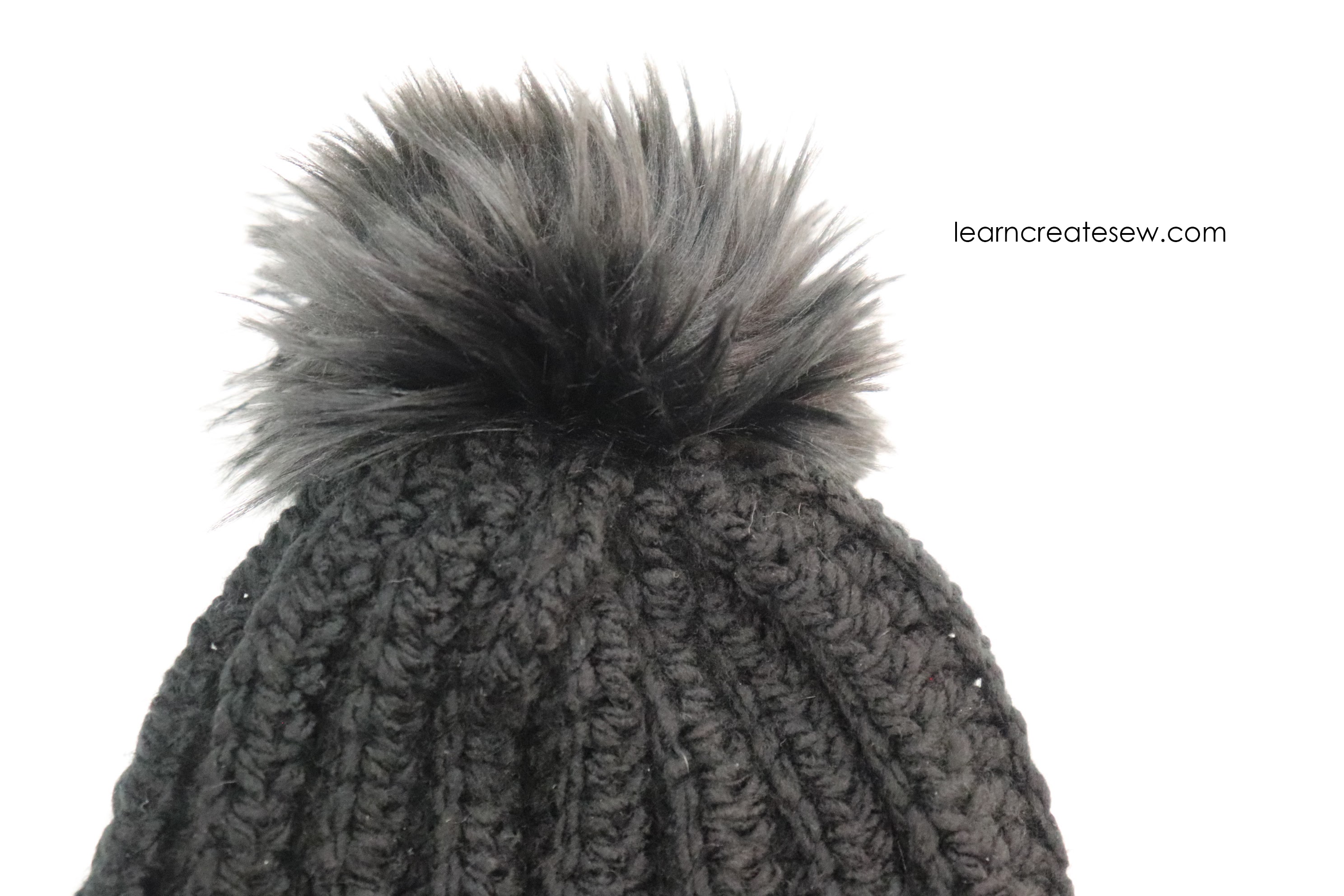
I thought I would share with you how I made the pom poms for the top of the beanies.

All it takes is faux fur fabric, poly-fil, needle and thread.

I think it adds a lot of character to the beanies! These pom poms have long ties that can be used to attach the pom poms to any project you like.
SUPPLIES:

  • Button thread
  • Faux Fur fabric (8 inch square or less)
  • Poly-fil stuffing

FREE PATTERN:

QUICK OVERVIEW:

DETAILED INSTRUCTIONS:

How I made the Beanie…

CROCHET PATTERN:

YARN: Serenity Premier Chunky – Weight 5

Hook: 7.0 – 9.0 

     A larger hook will require fewer stitches, but they will be more spaced out.

     I used hook 7.0 for the burgundy beanie and 9.0 for the black beanie.

Size: Teen/Adult

Terms:      Ch – Chain             

                 BLO – Back Loop Only

Hdc – Half Double Crochet

Chain 34 – 42

     The number of chain stitches you need will vary depending on the size of the hook you selected.

     You want your chain to be 11 – 14 inches long, not including the chain 2 at the end.

     Mine (the burgundy beanie) was 12 inches long. I chained 36 stitches and measured stitches 1 – 34.

Leave the thread tail long.

Row 1 – Beginning in the 3rd chain from the hook Hdc in each stitch. Hdc in back loop only. [Total Stitches: 32-40]

     The total number of stitches should be 2 less than your chain.

     Check the length again after completing row 1. You want your row 1 to be 11 – 14 inches long.

      Mine was 12 inches long and I had 34 total stitches.

      You should have the SAME number of stitches in every row from now on.

Row 2: Ch 2, turn, Hdc BLO in each stitch [32 – 40]  

     Don’t forget to skip the turning chain when you begin your stitches.

Row 3+: Repeat Row 2 until your work is 17 – 20 inches wide. 

You can test the width by wrapping the beanie around your head. It should be about two inches or so shorter than the circumference of your head.

Mine ended up being 12 x 19 inches. (The circumference of my head is 21 inches). Since this is a large yarn and a big hook it will stretch.

A smaller width will give a more snug fit.

STOP ON AN EVEN NUMBER OF ROWS.

Your working yarn should be on the opposite end from your starting tail. Cut the working yarn to be about 1 yard long.

Fold the beanie in half with wrong sides together. Sew the edge together. You should end with the working yarn next to your original thread tail. This will be the top of the beanie. Tie the thread tails in a knot.

Stitch through all the raised stitches around the top edge and pull closed. Tie in a secure knot. Weave in the thread tails.

And then add your fur pom pom!

Happy Sewing…and Crochet!
Christmas Gnomes

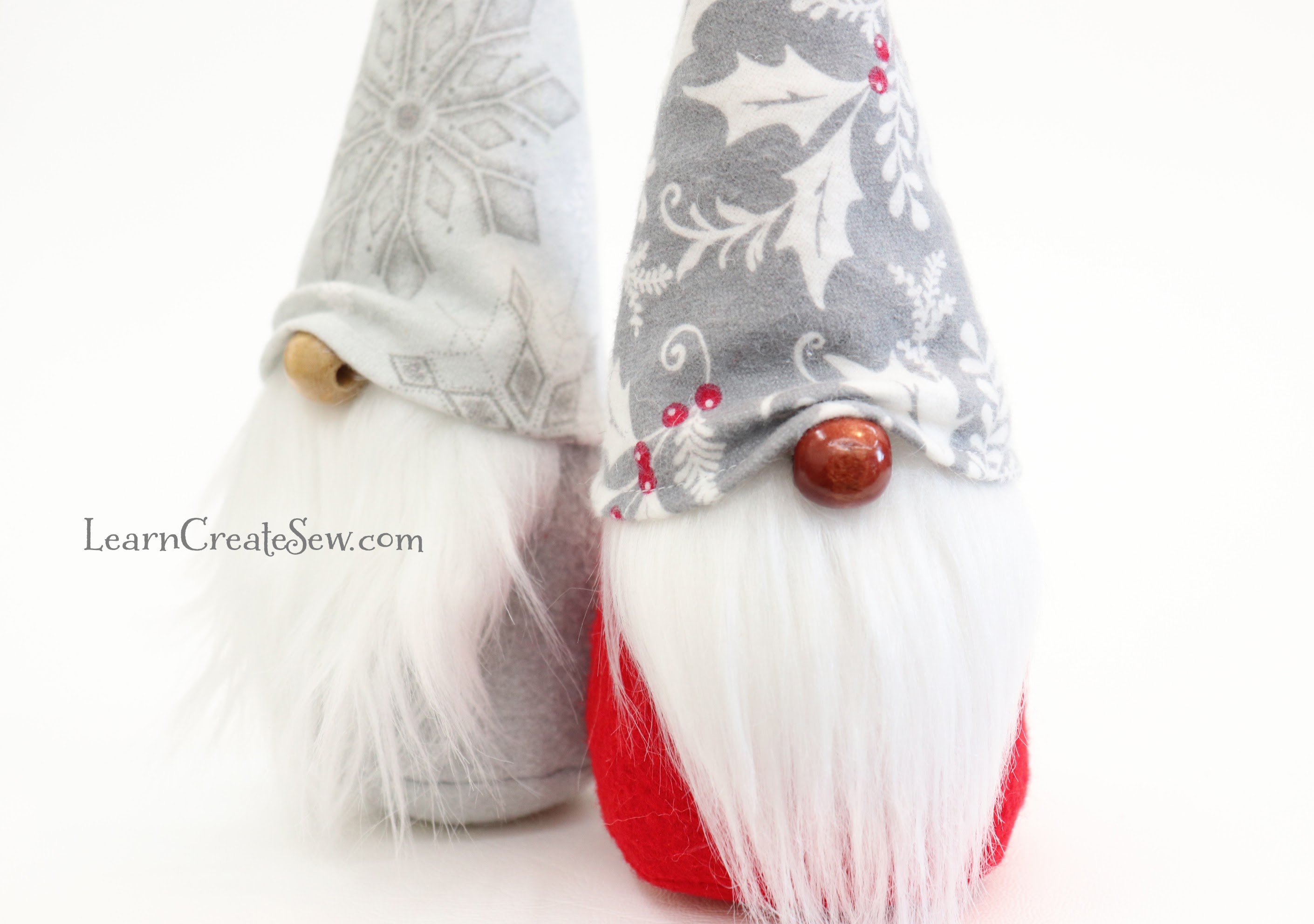
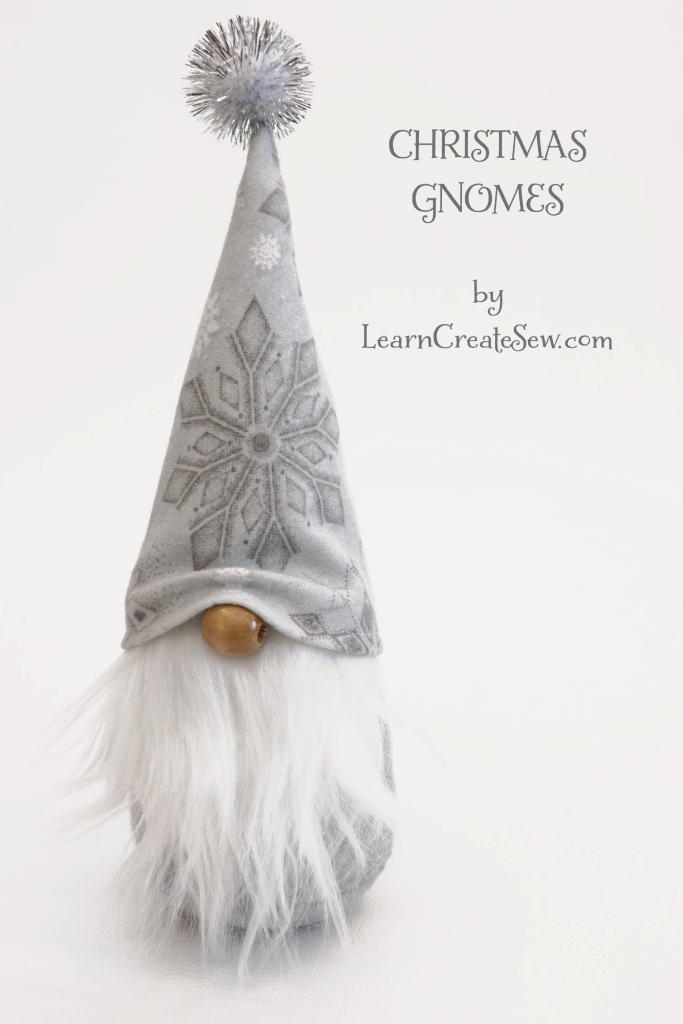
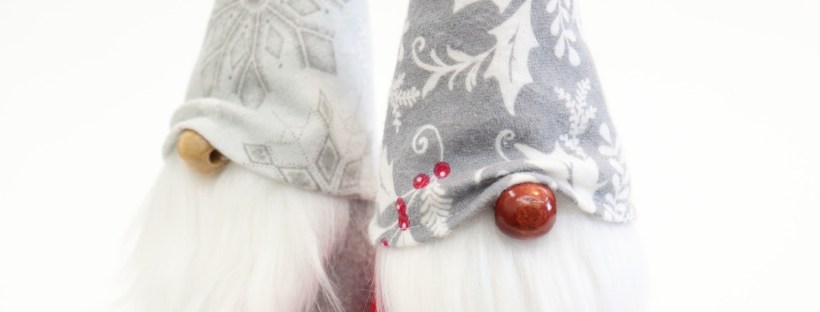
Happy Holidays! These little Christmas Gnomes are a great addition to your holiday decorations.

They are quick and easy to make and super cute!

I used flannel fabric for the hat and felt for the body. My favorite part is the sparkly pom poms I found for the tops!

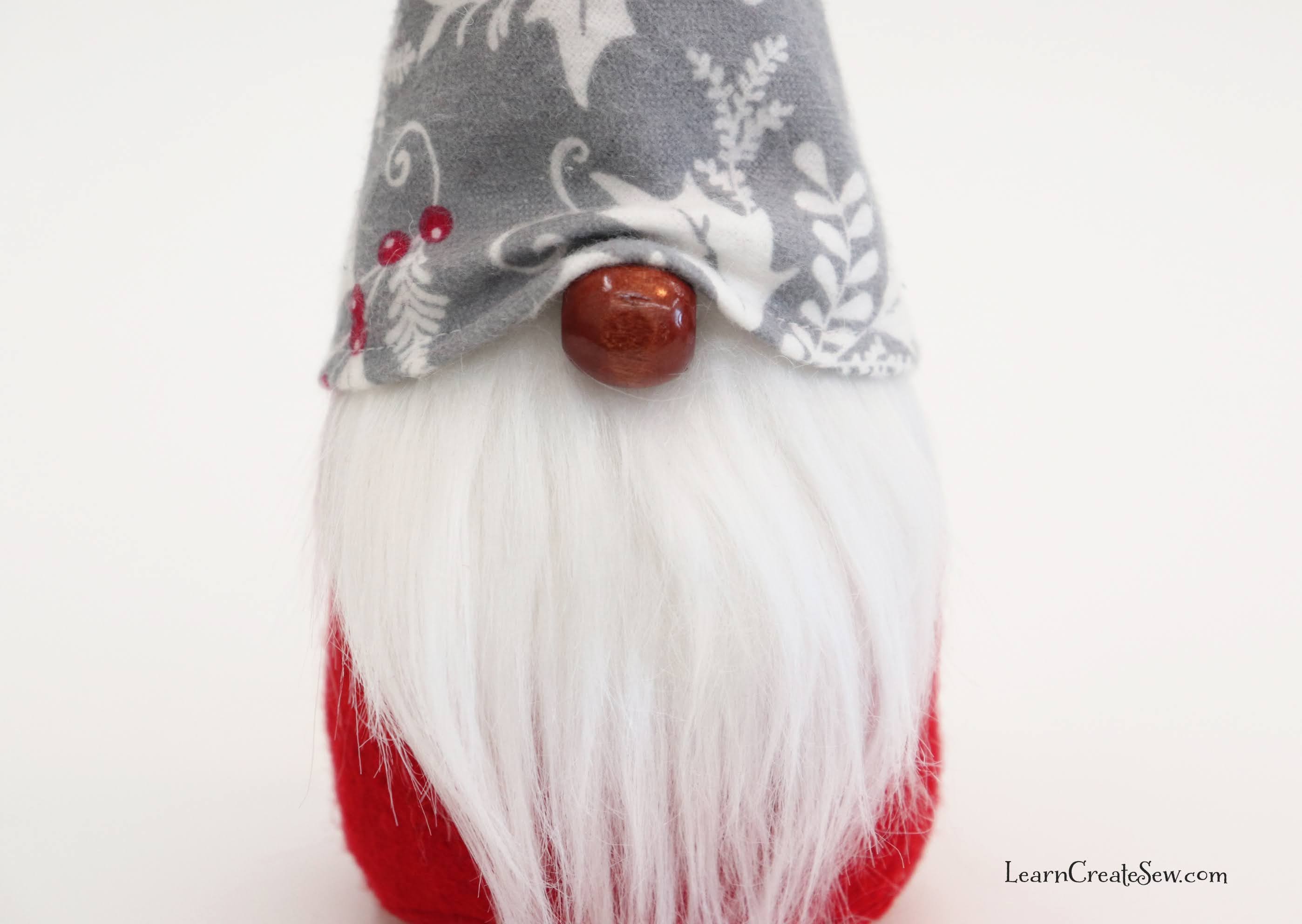
The beard is faux fur and gives the little gnomes a lot of character. I also picked up a mixed set of wooden beads at Walmart that work great as noses!

Each gnome is filled with polyfil and poly pellets to weigh them down.

Supplies:

  • Felt Fabric (Body)
  • Flannel Fabric (Hat)
  • Faux Fur with a long pile (Beard)
  • Pom Pom
  • Wooden Bead (Nose)
  • Polyfil Stuffing
  • Poly Pellets (or another filler to weigh down the gnome)
  • Coordinating Thread

FREE PATTERNS:

The Medium sized gnome body is approximately 8.25 inches tall when finished. The Large sized is 9.25 inches. These measurements are WITOUT the hat.

DETAILED VIDEO INSTRUCTIONS:

QUICK OVERVIEW:

I hope you enjoy this project!
Happy Holidays!

Christmas Stocking Embellishments

At this holiday season, I want to express my gratitude to all of my followers. Thank you! Thank you for supporting learncreatesew.com and subscribing to my YouTube Channel. Having the opportunity to share my love of sewing with so many is a great privilege and an opportunity I never thought I would have.

Thank you for making all of this possible and encouraging me to keep creating.

And for you, here are my next videos!

I had a lot of fun adapting the Christmas Stocking pattern for you! I don’t know about you, but I love options. But what if I did this…or this…? That is what I am always asking myself. As a result, I wasn’t satisfied with just the basic stocking. I wanted to expand upon it to provide more great options for creativity.

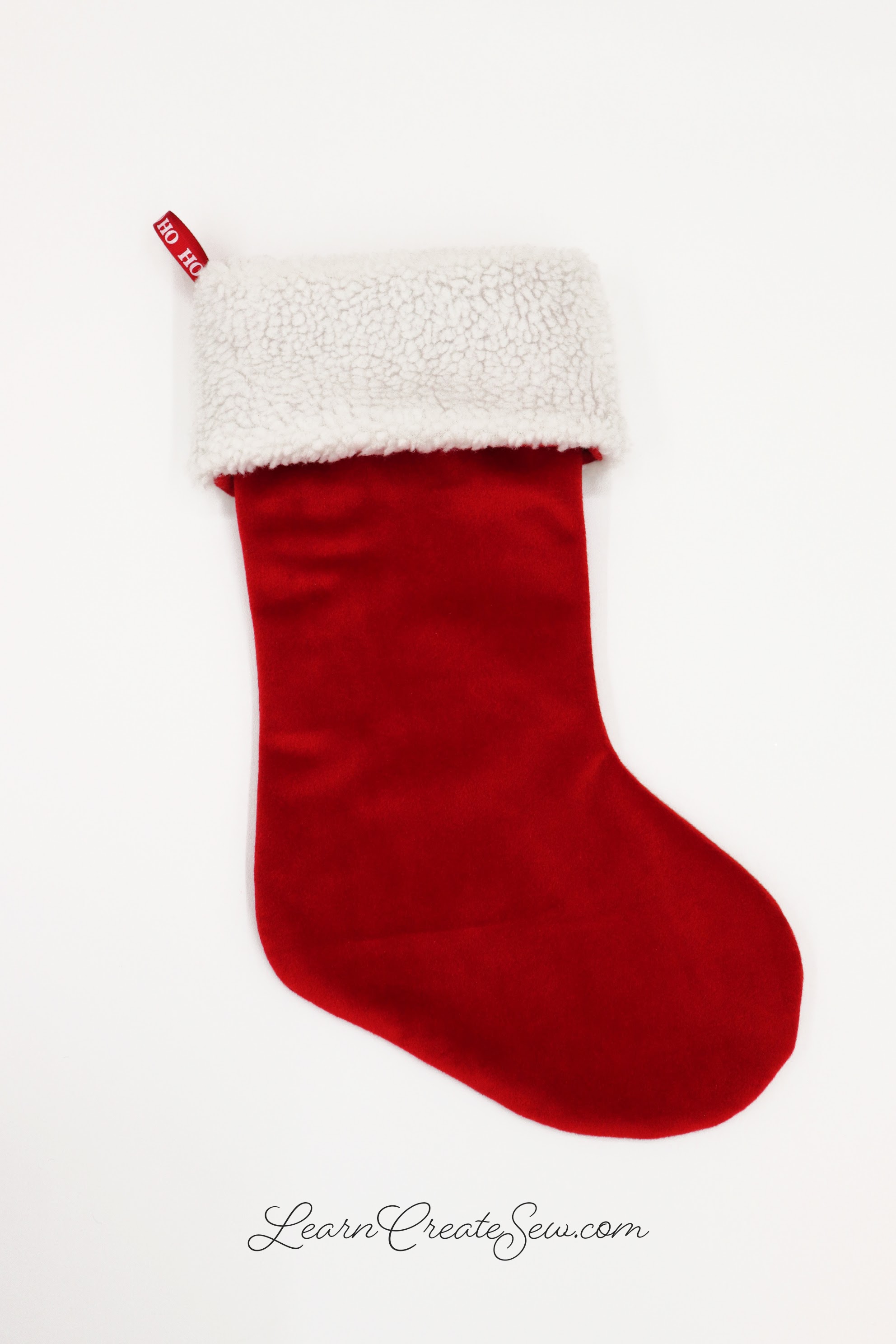
The first video explains how to add a contrasting cuff, if you wanted the fabric of the lining to vary from the fabric of the cuff. The stocking shown here has a sherpa cuff but a flannel lining.

The next video adds a burlap overlay to the main fabric as well as decorative embellishments.

I hope these videos inspire creativity, and I hope you have a lot of fun making your own stockings!

See the Christmas Stocking page for the free pattern.

Christmas Stocking

I’m so excited to share this project with you today! It has been quite a while since my last post and I am happy to finally share with you a fun holiday project.

Life and work caught up with me the last few weeks and it took the excitement of Christmas projects to motivate me to get back to sewing!

This is a quick easy Christmas Stocking.

It is fully lined and has a fold over cuff!

The free pattern is available in several sizes.

The pattern works great with flannel, fleece, and cotton fabrics.

If you enjoy this tutorial keep an eye out for future posts in which I’ll show you a few quick alterations to the same pattern.

SUPPLIES:

  • Coordinating Thread
  • Ribbon (4 – 8 inches)
  • 7/8 yard (or less) Fabric for the Outside of the Stocking (Cotton, Flannel, or Fleece)
  • 7/8 yard (or less) Fabric for the Lining and Cuff (Cotton, Flannel, or Fleece)
    • The project works best when the lining and outside fabrics are the same type of fabric.
    • The amount of fabric needed varies a lot depending on the size of the stocking you make and the direction you need to cut your fabric.
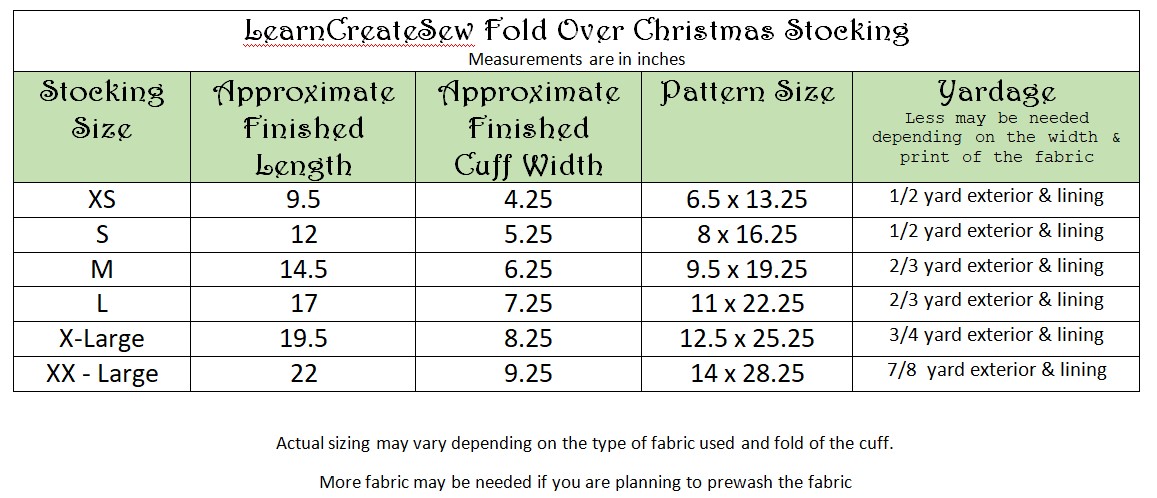
    • I recommend reviewing the pattern sizes in the table below if you would like more specific measurements.
    • Remember you will need two lining pieces and two outside pieces.

A bit more on yardage:

For instance, if I want to make a size small I know I need two pieces of outside fabric that will fit the pattern (which is 8 by 16.25 inches). If the direction of my fabric doesn’t matter 1/4 yard would work…but if I have to follow the selvage, for example on fabrics with words or a specific direction, I may need 1/2 yard.

Enjoy!

FREE PATTERNS:

QUICK OVERVIEW:

DETAILED VIDEO INSTRUCTIONS:

Learn to Sew: Lesson 6: Drawstring Bag

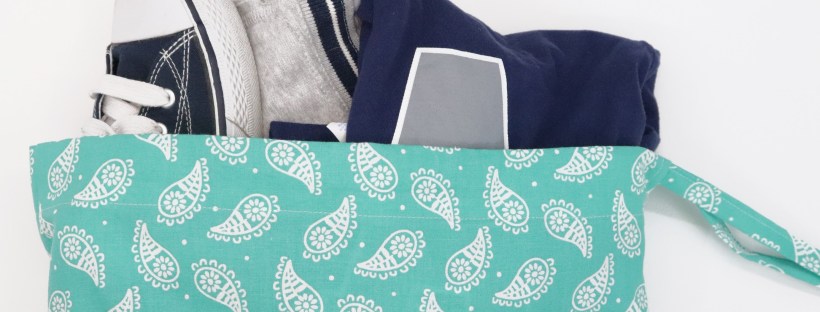
In this lesson we will learn several topics that are applicable in a wide variety of sewing projects. The drawstring bag introduces how to make a casing or channel that can be used to hold, a drawstring, elastic, ribbon, and more. This skill is used everywhere from bag making to garment construction and makes the drawstring bag a great project for beginning sewers.

Lesson Category:

  • Machine Sewing – Straight Seams

Lesson Topics:

  • Making a Drawstring
  • Making a Casing
  • Sewing Straight seams
  • Finishing Seams
  • Pressing

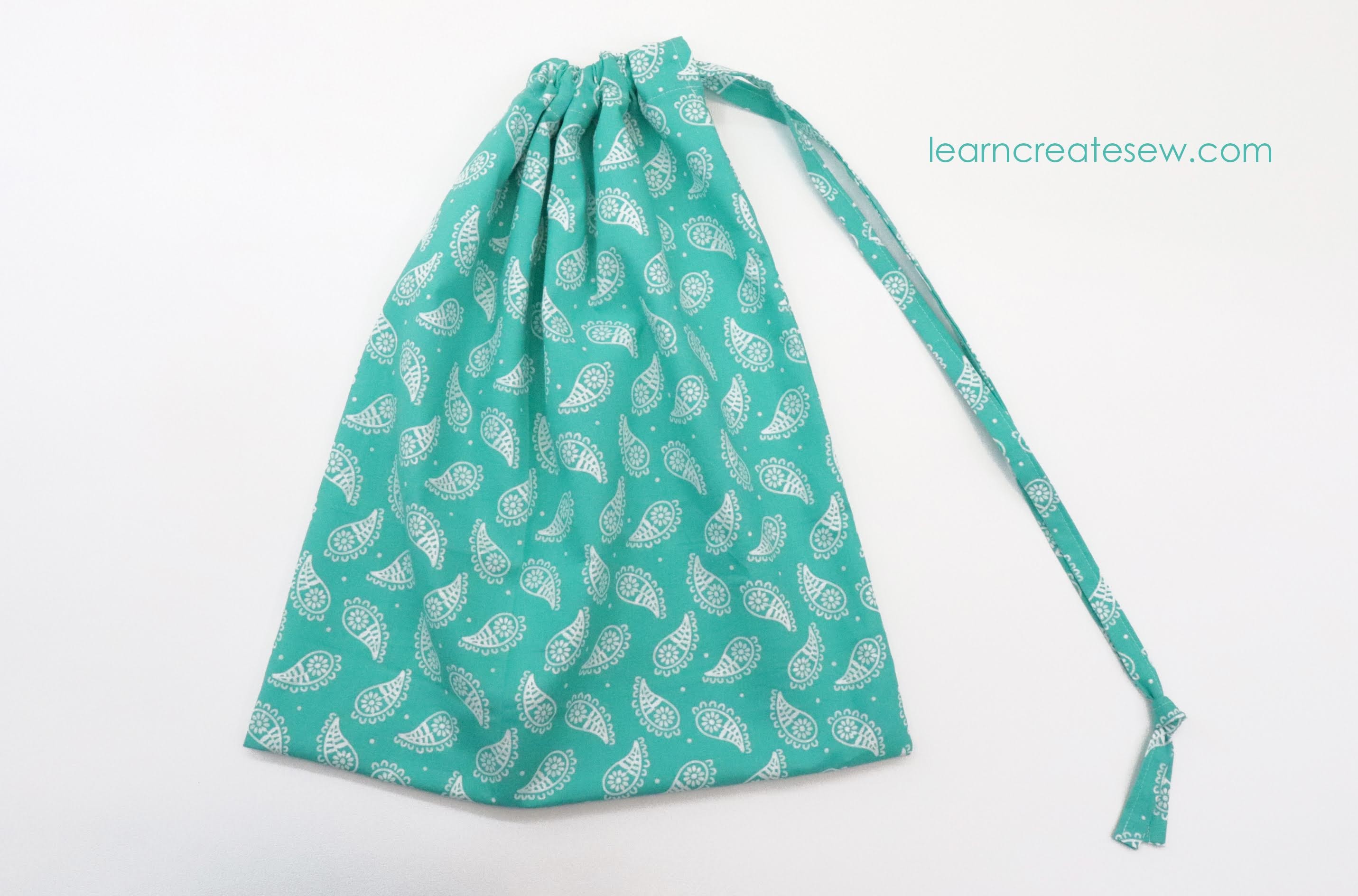
This bag measured approximately 13.5 x 15 inches when finished, but could easily be adapted for other sizes.

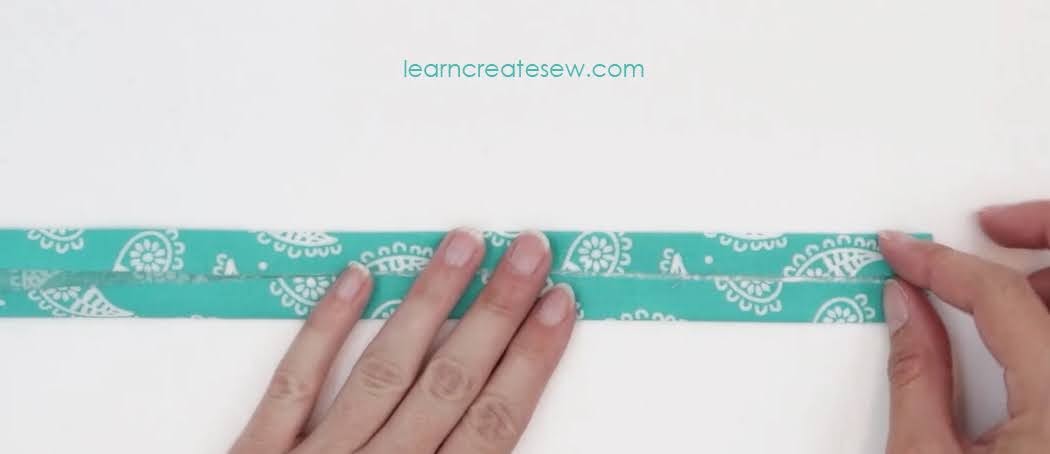
The bag features a 1/2 inch wide drawstring made by piecing and folding 2 inch strips of fabric.

This project was designed to only use 1/2 yard of fabric, and as a result the drawstring is pieced, but you could use more fabric if you prefer to make the drawstring out of a continuous piece of fabric rather than multiple pieces.

It has a wide casing for easy threading of the drawstring. I’ll show you a quick way to make sure the sizing of your channel is consistent.

It also introduces finishing seams, which is a great skill in general. If you are interested in learning more about finishing seams check out my Skill Building Video on the topic!

In the video also introduces tips for how to turn a corner exactly, how to finish the edges of the drawstring channel and more.

Supplies

  • 1/2 yard cotton fabric
  • Coordinating thread

Helpful Tools

Instructional Video:

Skill Builder: Unpicking a Seam

No matter how long you’ve been sewing, or how much experience you have unpicking seams is inevitable.

Sooner or later, you will have to unpick a seam. It’s actually good to do so. In most cases, when something goes wrong, it is best to redo it right away. Ignoring it can often make the issue worse, as you may find that what went wrong impacts what you will need to do four or five steps down the road. So, if we can become comfortable and skilled at unpicking seams, we will be able to improve the overall results of our sewing projects!

In this video I will show you four different ways to unpick seams. Since many fabrics are different, often the way we unpick the seams differs as well. All of the methods have their uses and are helpful in a variety of situations.

Method 1: Unpicking from the Wrong Side

This is usually done with the fabric laying flat and right sides together. It is the most common method of unpicking, and is my go to method in most cases.

This method is actually quite simple, but it’s easy to do more work than you need to. Just remember…you don’t have to unpick EVERY stitch! That’s usually not necessary unless you are using a very small stitch length or are working in an area that was backstitched.

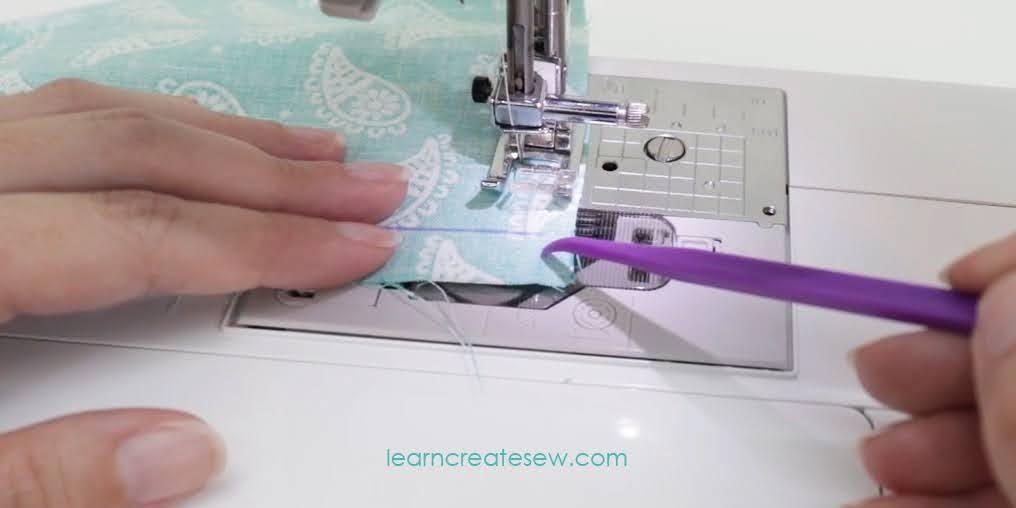
Simply slide the seam ripper under every 4th or 5th stitch, tearing the thread, and then pull thread from the back and ta da! It’s all undone!

Method 2: Unpicking from the Right Side

I use this method a lot on fleece or plush fabrics. I find on these fabrics my stitches sink right into the fabric, and sliding the seam ripper under the stiches can be difficult. I also like using this method in situations where the stitches are difficult to see, especially if you are using coordinating thread.

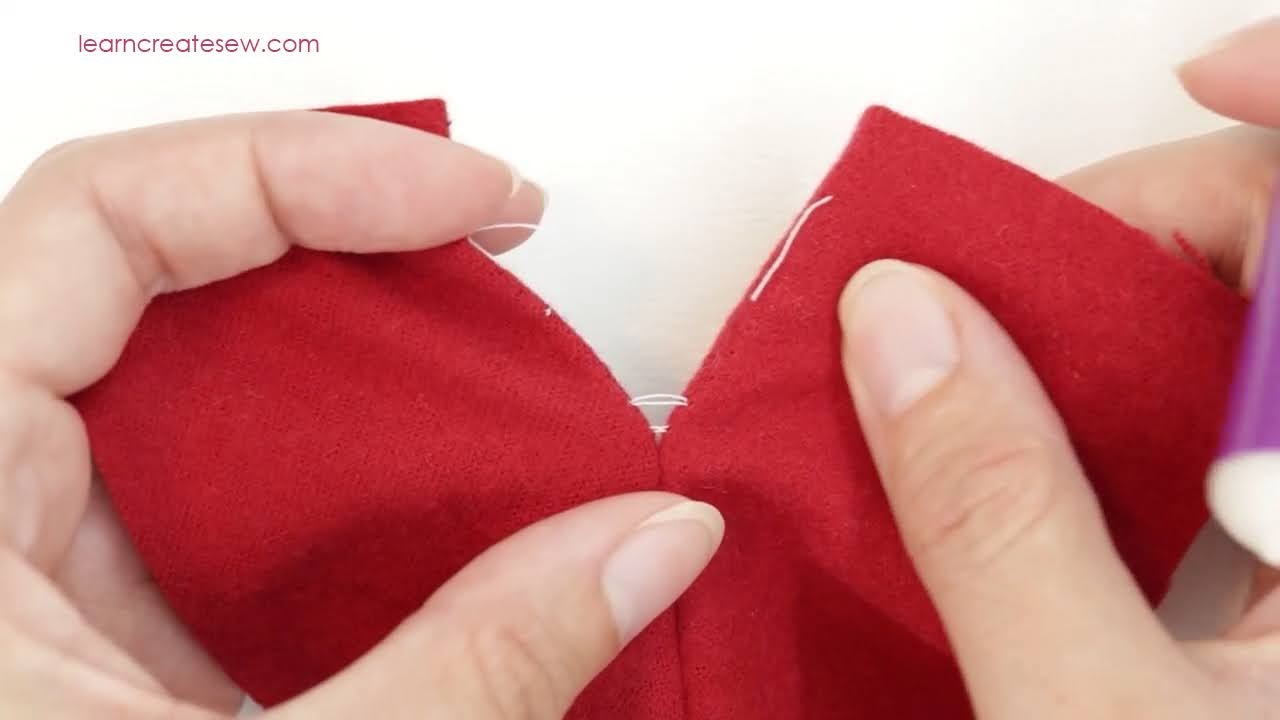
Lay your fabric flat with the seam allowance open. Unpick the first few stitches one by one, and then gently pull the fabric on each side away from each other. You will then be able to see the thread between them. This makes sliding the seam ripper under the threads much easier! And since you are gently pulling as you go, it often is quite quick.

Method 3: Unpicking Zig Zag Stitches

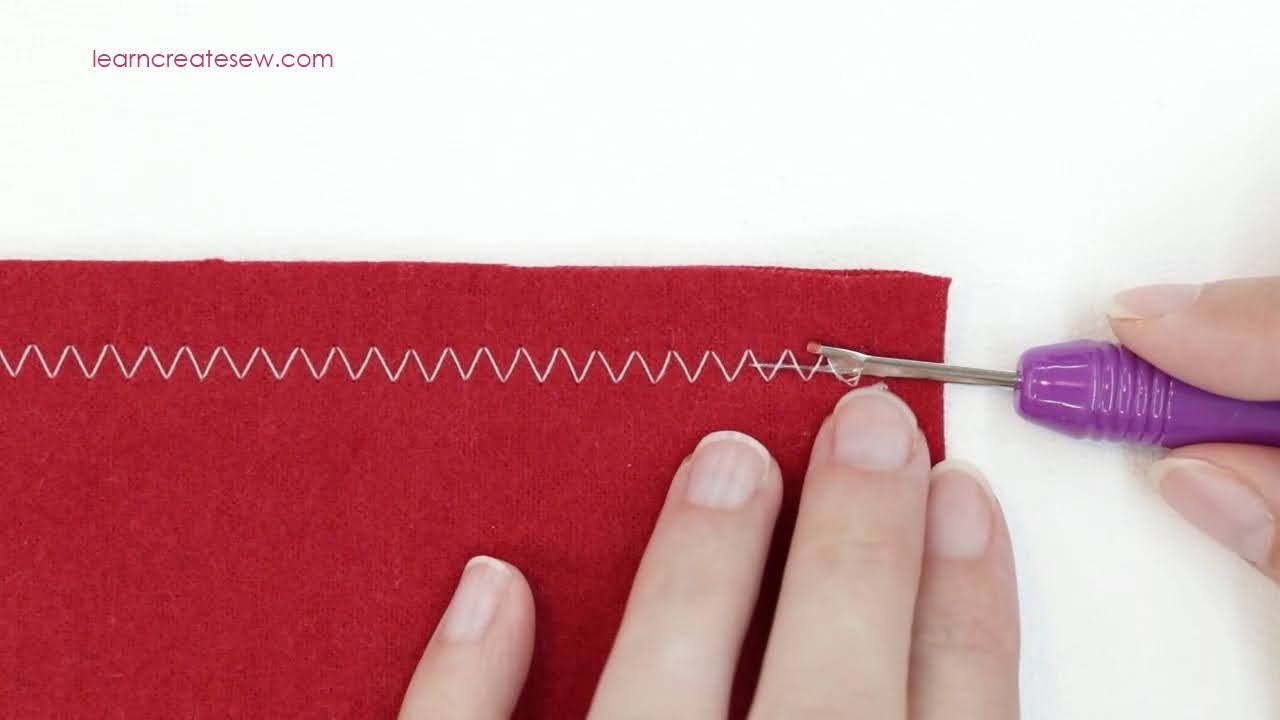
Zigzag stitches are probably the easiest stitches to unpick. You simply slide and go. Guide the point of the seam ripper under the stitches and slide right through. The seam ripper is usually able to glide under several stitches at once, ripping the stitches of the seam in seconds.

Method 4: Using the Little Red Ball

This is a really popular method for unpicking and is super convenient. Simply unpick a few stitches in the seam to get it started, then slide the little red ball between the layers of fabric, and gently push it through the seam. The little ball helps separate the fabric so only the threads are cut.

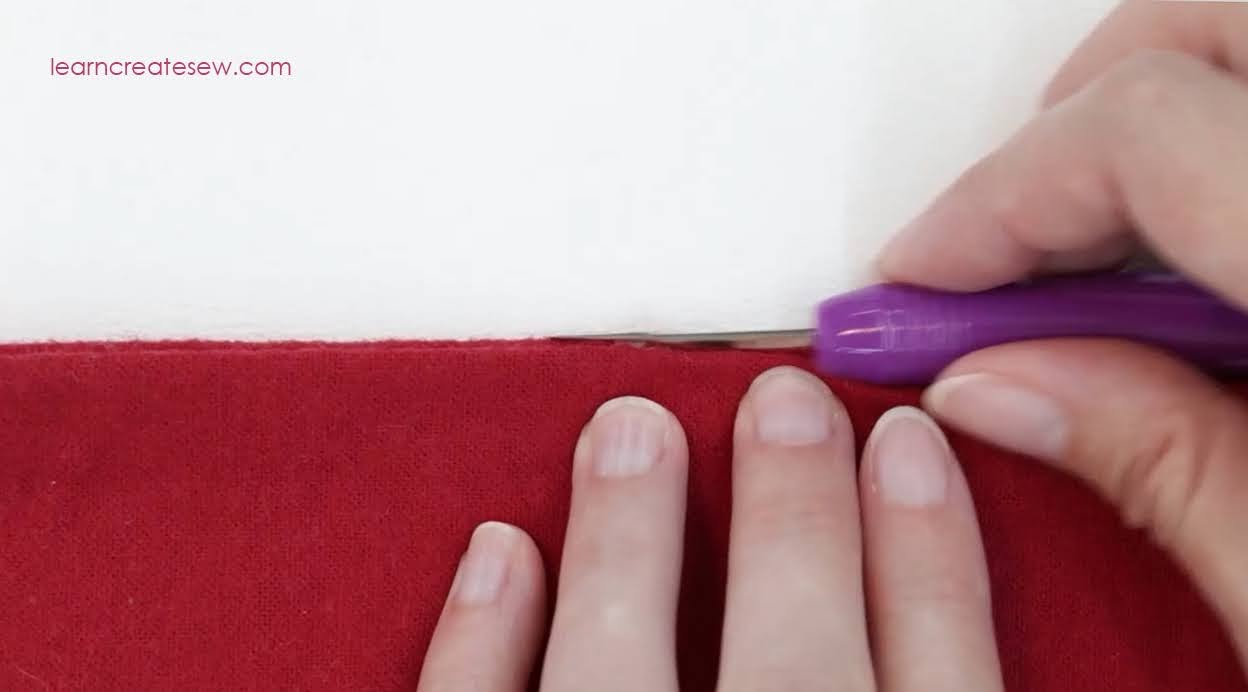
As the seam ripper slides down the seam it will cut the stitches. This method is SO fast. If you are careful it works great. This can be done with the fabric wrong sides together such as on the edge of a closed project, or with the fabric laying flat and the seam allowance open (which protects the fabric a bit more). It is actually pretty fun to watch the seam ripper slide smoothly along the edge and take out those unwanted stitches 🙂

I want to love this method, I really do. It is so easy and it’s nice to just slide that seam ripper along and let it do its’ work. Unfortunately, this method does have its drawbacks. Every once in a while a bit of fabric gets caught in the groove and the blade can tear a hole in your fabric. This could happen for a lot of reasons. It could be the weight or position of your fabric, a dull seam ripper, unexpectedly tight stitches, or any number of other reasons. I have on multiple occasions cut a hole in my fabric using this technique. As a result, I don’t use it very frequently. I also avoid attempting it on expensive fabrics or project that don’t have any leeway in sizing. I’ve found it’s just a bit too risky for me. That said, a lot of people love it and this is the method they use all of the time. So, give it a try! Find the method that works best for you and don’t hesitate to unpick a seam when needed!

Video Instructions:

Skill Builder – Finishing Seams

One thing that comes up frequently in sewing is finishing seams. This can be just as important on simple projects as it is on garments and in more complex construction.

Having a bag of tricks for finishing seams can remove the need for linings and can simplify projects. It can also provide a more polished and professional look.

In my video I will demonstrate four different methods of finishing seams.

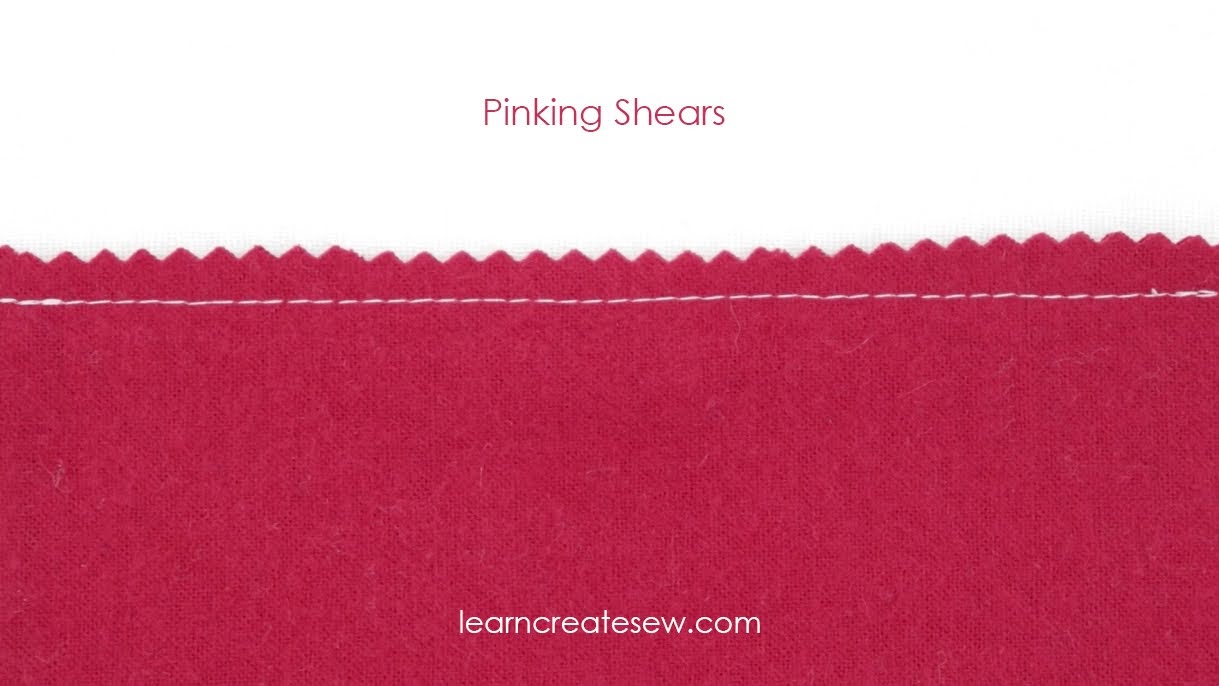
PINKING SHEARS

This is the easiest method for finishing seams. It takes very little time and is really convenient. However, it does require a nice pair of pinking shears and they can be a bit pricey.

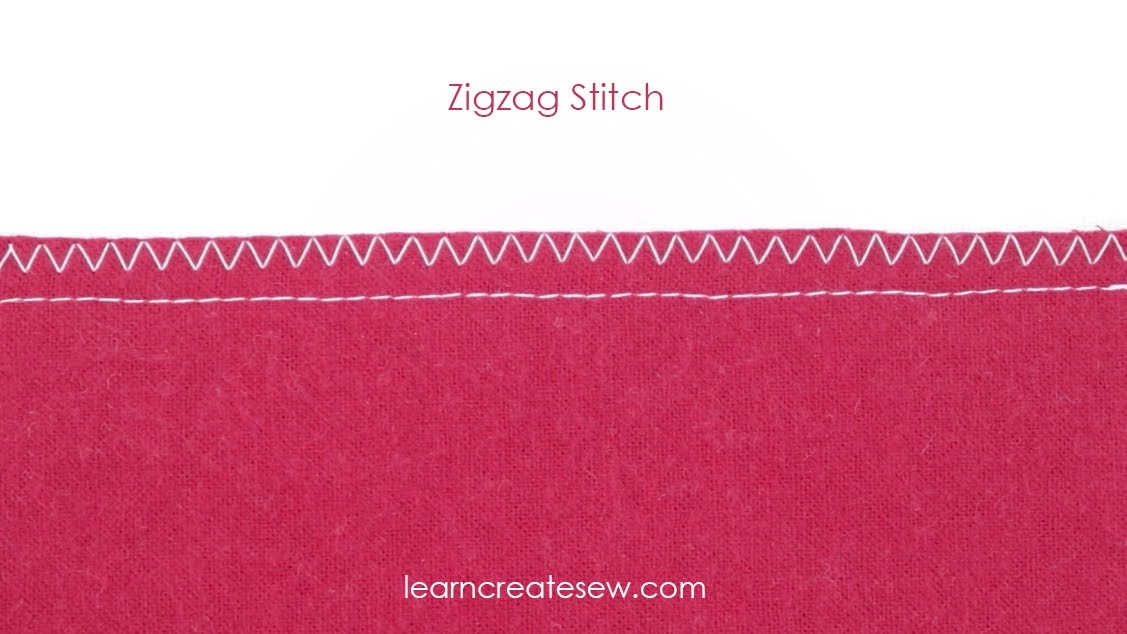
Zigzag Stitch

This method is very convenient as well. Most sewers are comfortable with the basic zigzag. It doesn’t require any special tools or accessories and it gets the job done.

Zigzag Over the Edge

This is a quick substitute for the overcast stitch if you don’t have the overcast foot available. However, depending on the weight of your fabric the edge may roll a bit when it is met with the tension of the stitch. I find it works well on heavier weight fabrics. The fabric shown in the example is a mid-weight flannel.

Overcast Stitch

This stitch provides the most professional finish. Since it is actually designed to go over the edge it is great for finishing seam allowances. However, it usually requires a special foot for your machine, and depending on your machine the stitch may or may not be an option.

Watch the video and learn how to use these seam finishing methods!

Learn to Sew: Lesson 5: Felt Carrying Case

Thanks for your patience for this latest post! I am a full time teacher, and with school starting back in full swing I haven’t had as much time to devote to new posts as I would like. Don’t worry! I still plan to post new content. However, it just may not be as frequent as it was over the summer. I hope you enjoy the new projects as they come and until then check out my free projects that are already available!

This is a fun quick project that helps practice sewing straight seams. It also introduces bag making basics with boxed corners.

Lesson Category:

  • Machine Sewing – Straight Seams

Lesson Topics:

  • Essential Tools
  • Cutting Rectangles
  • Sewing Straight Seams
  • Boxing Corners

This project uses large sized felt fabric, since the pieces are larger than the standard sized felt sheets available in most stores.

Felt is a great fabric to start with for your first projects because it doesn’t fray. You don’t have to worry about raw edges and it will look nice inside and out!

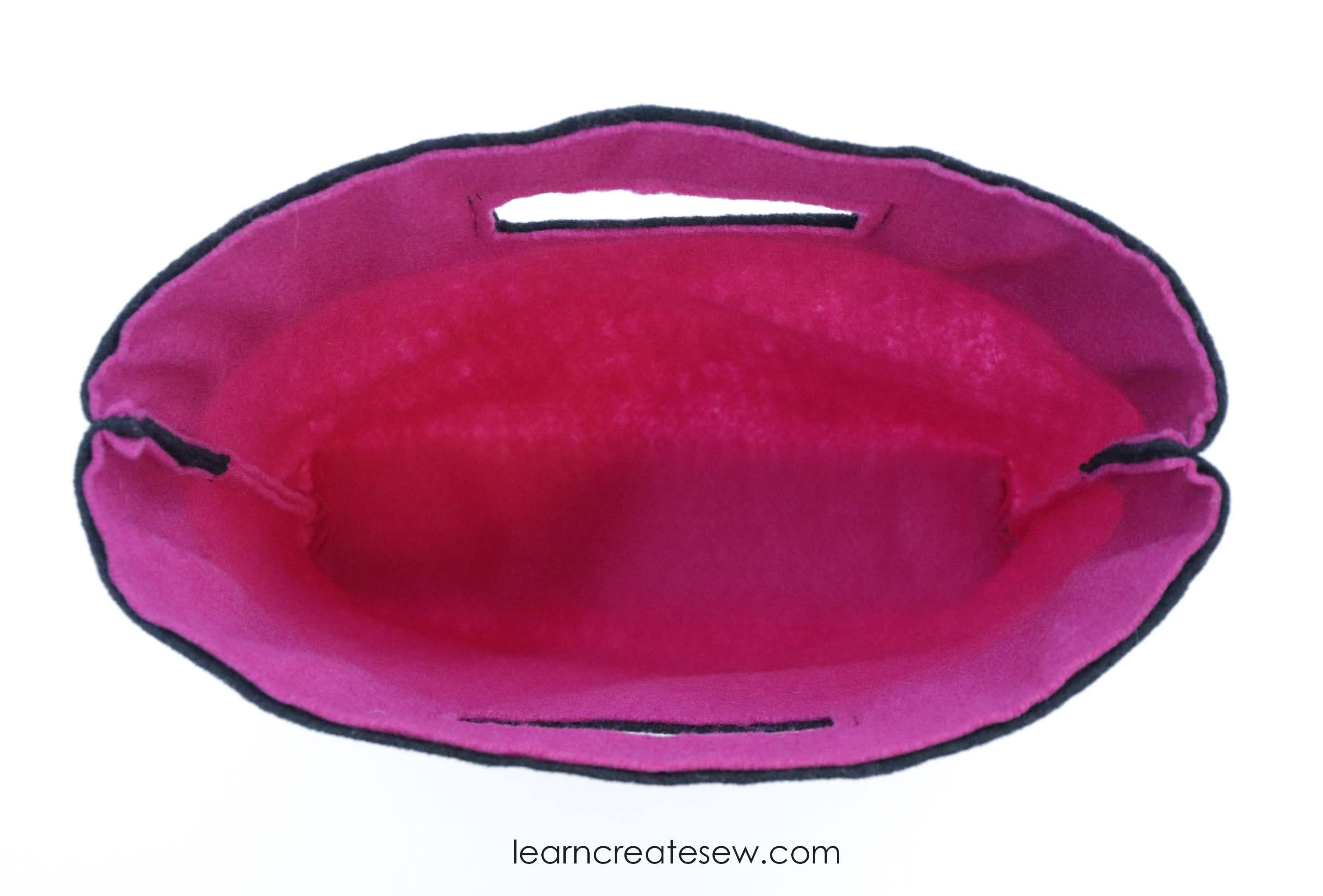
The top of the bag is made with two layers of felt stitched together for added strength and to provide contrast.

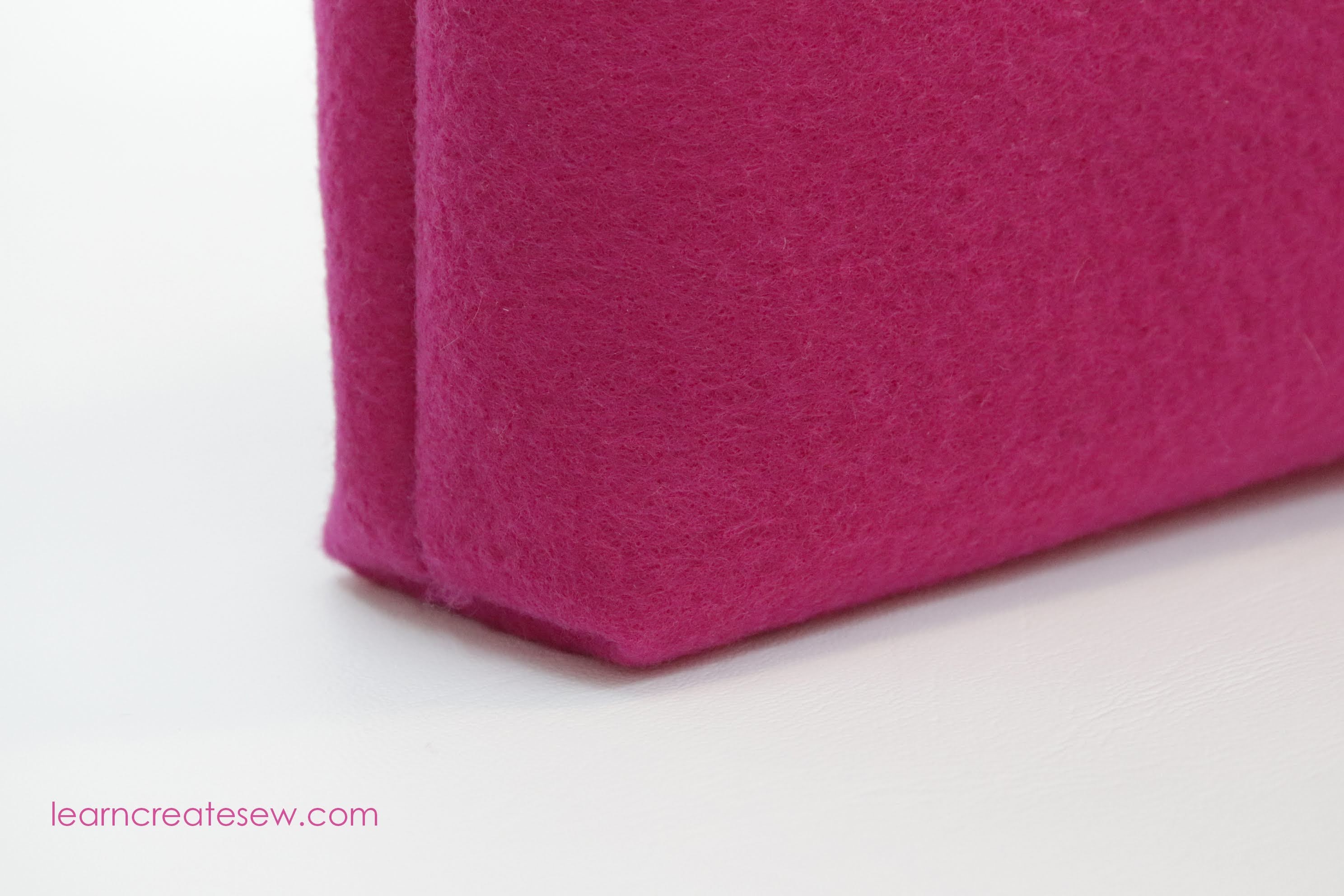
It also has boxed corners. Boxed corners can be a bit of a challenge, but it adds a lot of great features to your bag.

It provides space at the bottom of the bag so it is no longer flat.

In this case it also allows the bag to stand up. Once you learn how to add boxed corners it is a great feature to add to many different types of bags and cases.

Lesson:

Skill Builder – How to Sew a Seam

Once you’ve mastered threading and using seam allowances, as we studied in Lessons 3 and 4 of the Learn to Sew videos, you are ready to sew a seam.

This is where all machine sewing begins!

It’s important to be able to distinguish between the Right Side of the fabric, the bright side, the side you want to see on your final project, and the Wrong Side of the fabric, the dull side, the side you want hidden inside.

222

Almost always, when you sew a seam you sew with right sides together. This means the pretty sides of the two pieces of fabric will be touching.

You then align one of the sides with your seam allowance guide mark on your machine, and sew along the edge.

333

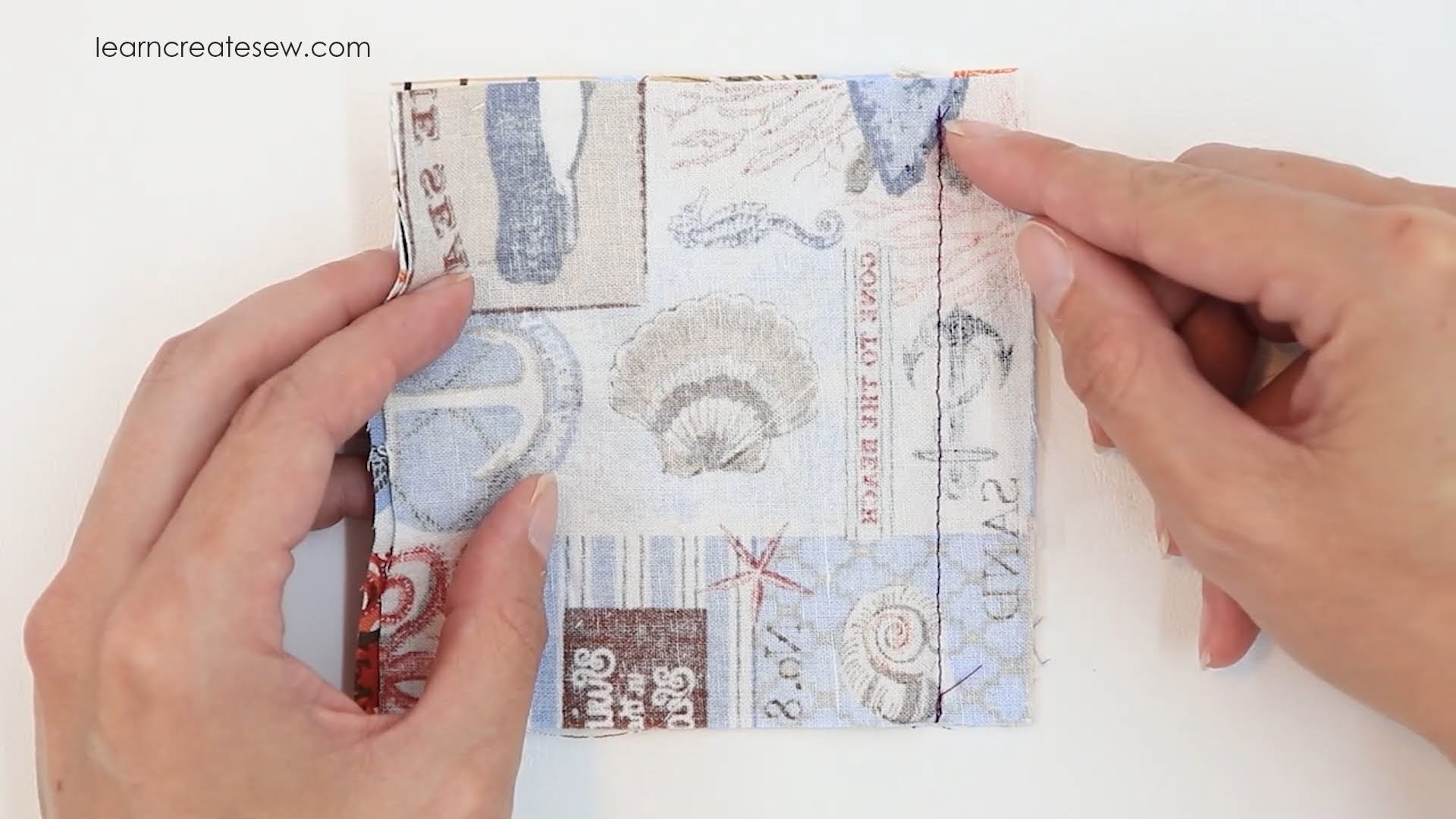
You use the needle plate on your machine as a guide to measure your seam allowance. As a result it is important to know your machine so you can ensure that your needle position aligns with the markings on your needle plate.

666

Once your needle is on the correct position and your machine is set to the correct stitch you can follow your guides as you sew to create a nice even seam allowance. It’s helpful to practice using different seam allowances so you feel comfortable using the different guides. That way when those seam allowance sizes appear in a project you are prepared.

999

It’s important to always back stitch when you start and stop your seam, unless told to do otherwise. This acts as a knot and prevents the seam from coming undone. Back stitching on a machine is different from the hand sewing back stitch. On a machine it’s when you make a few stitches in the opposite direction to secure your thread in place.

1313

It’s also a good idea to trim your threads after each seam. This helps prevents tangles and having a lot trim at the end of your project. It also improves the overall appearance of your project.

1111

In the videos below I have demonstrated sewing a seam on two different machines, on both a Brother Mechanical and a Brother Computerized Machine. The principles are the same for both, but there are slight differences in how you select your stitches and prepare your machine.

SEW A SEAM – BROTHER COMPUTERIZED MACHINE

SEW A SEAM – BROTHER MECHANICAL MACHINE

Learn to Sew: Lesson 4: How to Thread a Machine

In this lesson we will be threading Brother sewing machines. This will be demonstrated on two different machines.

The first is a Brother Computerized Machine with a Horizontal Spool Pin. The second is a Brother Mechanical Machine with a Vertical Spool Pin. Brother machines are very similar, so chances are if you have a Brother machine it will be similar to one or both of these.

If you don’t have a Brother machine I encourage you to consult your manual or find videos specific to your machine. Knowing how to thread your machine properly and being comfortable doing so, will solve 90% of your problems when sewing.

Lesson Category:

  • Sewing Machine Basics

Lesson Topics:

  • Quality Thread
  • Threading a Bobbin
  • Threading the Machine
  • Threading the Needle
  • Using an Automatic Needle Threader
  • Inserting the Bobbin into the Machine

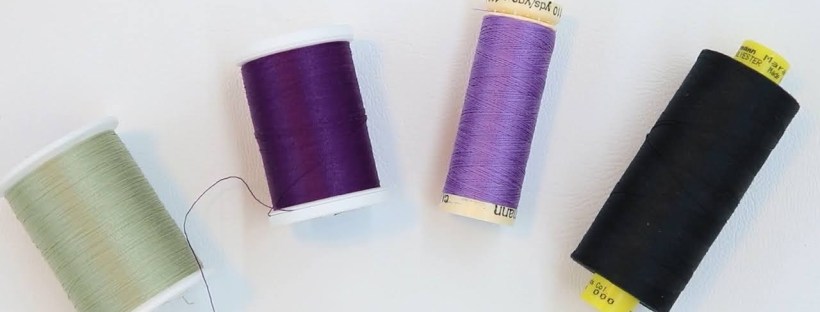
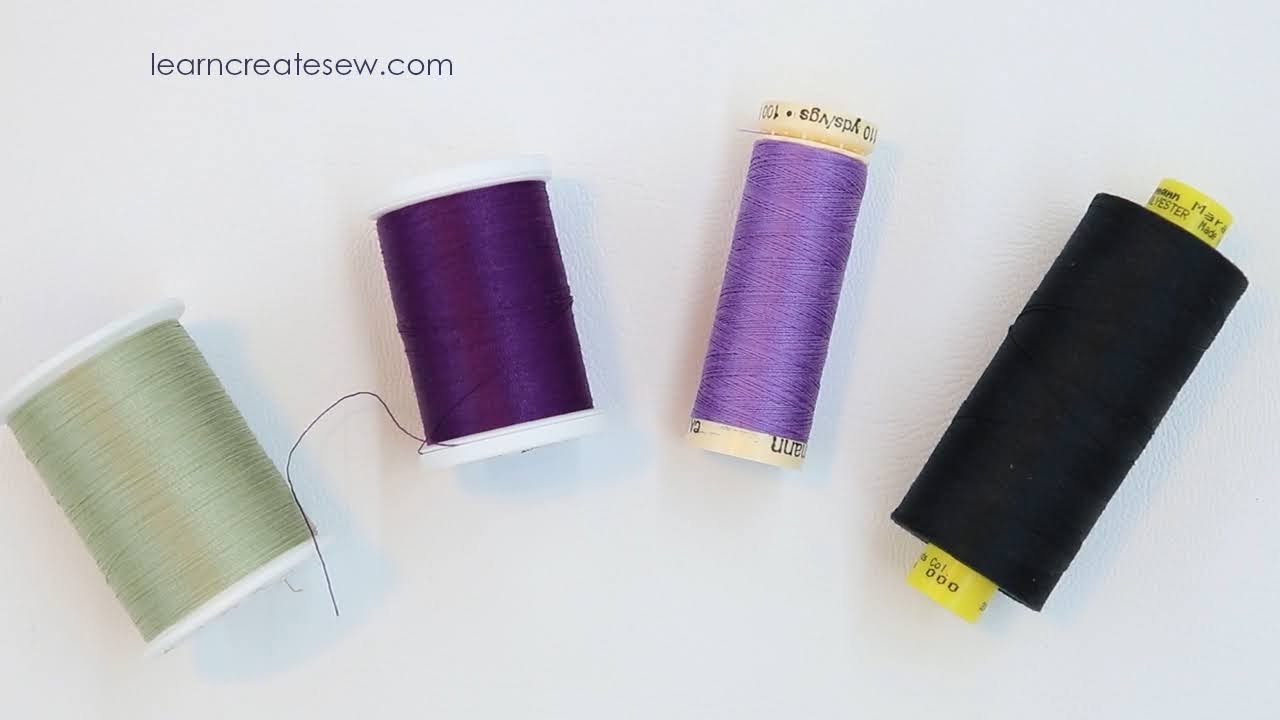
First thing to know when threading your machine is that the quality of thread matters! If poor thread is used in a sewing machine it breaks frequently. Not only is this annoying, but if you are just learning to sew it can make you want to give up altogether.

21-1

I mainly use Gutermann and Coats and Clark All Purpose threads.

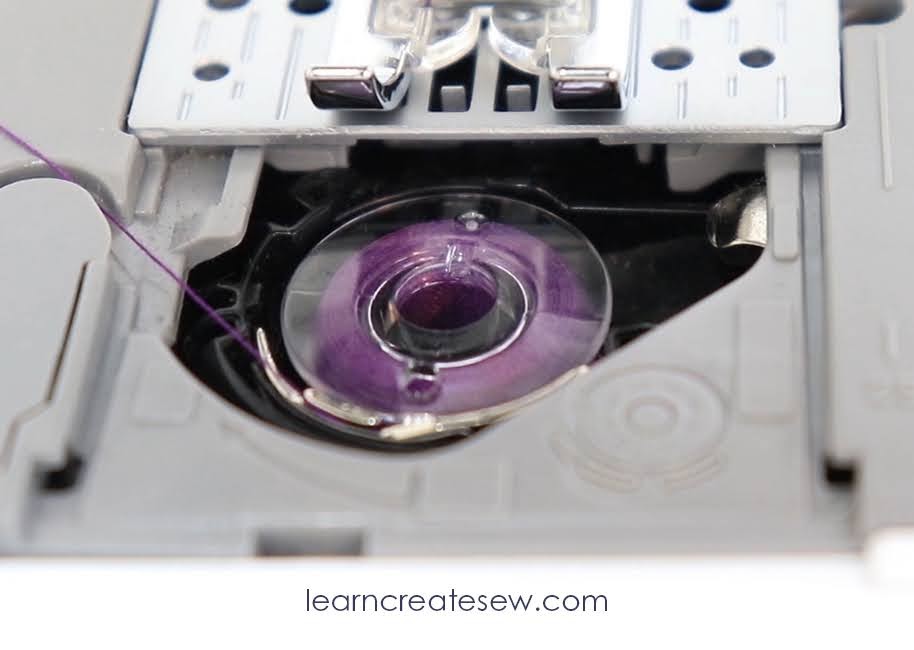
You also want to make sure you have the correct bobbins for your specific machine. Unfortunately, bobbins were not all created equal and while some look similar, just a slight difference in size can be significant. Most of the Brother machines I have used take SA156 Bobbins.

17

Since your sewing machine requires a bobbin in order to sew, we first learn how to thread the bobbin and then how to thread the machine.

3331

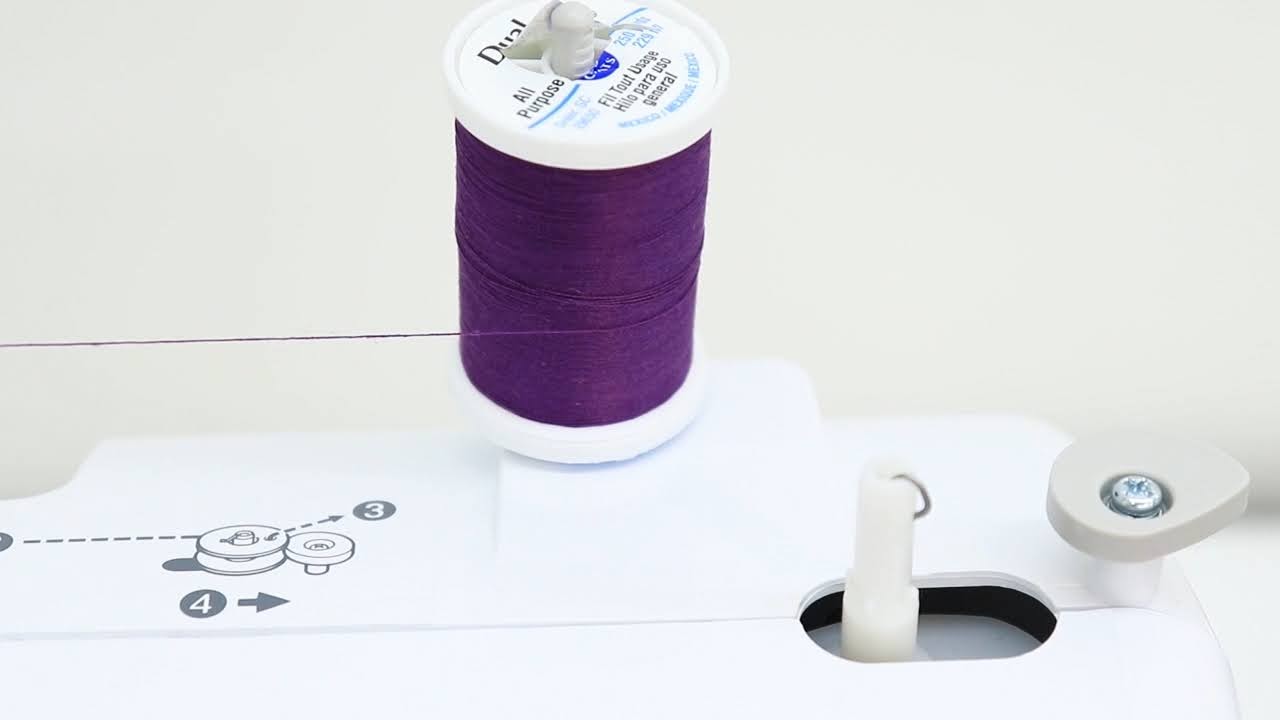
It’s helpful to identify if your machine has a vertical or horizontal spool pin. Thread spools that are wound with a crisscross pattern, such as the Gutermann threads shown in the picture shown at the beginning, work best on horizontal spool pins.

19-1

Threads that are would so that the thread is stacked, such as the Coats and Clark threads, work best on vertical spool pins.

555video

While I have used both styles of spools on both types of machines successfully, it is something to consider if your thread is giving you trouble.

I also occasionally have to use an adapter on my vertical spool pins in order to use the larger Gutermann spools (1093 yds). My adapter is very fancy…just kidding…it’s the body of a basic Paper Mate pen. I just take off the tip and the ink and use the hollow pen. I simply slide it over the spool pin and then slide the spool of thread over it. It’s definitely not the recommended method, but it has always worked great for me 🙂 It adds a bit of stability for taller spools. It’s also a whole lot cheaper than official spool pin adapters.

A note on a popular machine. The Brother CS6000i (and CS7000i) is wonderful model. It’s a computerized machine, but has a vertical spool pin. If you have this machine, threading the top of the machine and the bobbin will be most like my video on vertical spool pins, while inserting the bobbin casing will look like the one shown in my video with horizontal spool pins. You can just skip to the appropriate chapters in each video.

HOW TO THREAD BROTHER COMPUTERIZED MACHINES WITH A HORIZONTAL SPOOL PIN:

HOW TO THREAD BROTHER MECHANICAL MACHINES WITH A VERTICAL SPOOL PIN: