Please note: This pattern has been updated. There was an error on the original pattern. The bottom pocket gusset should measure 12.75 inches in length. Sorry for the inconvenience!
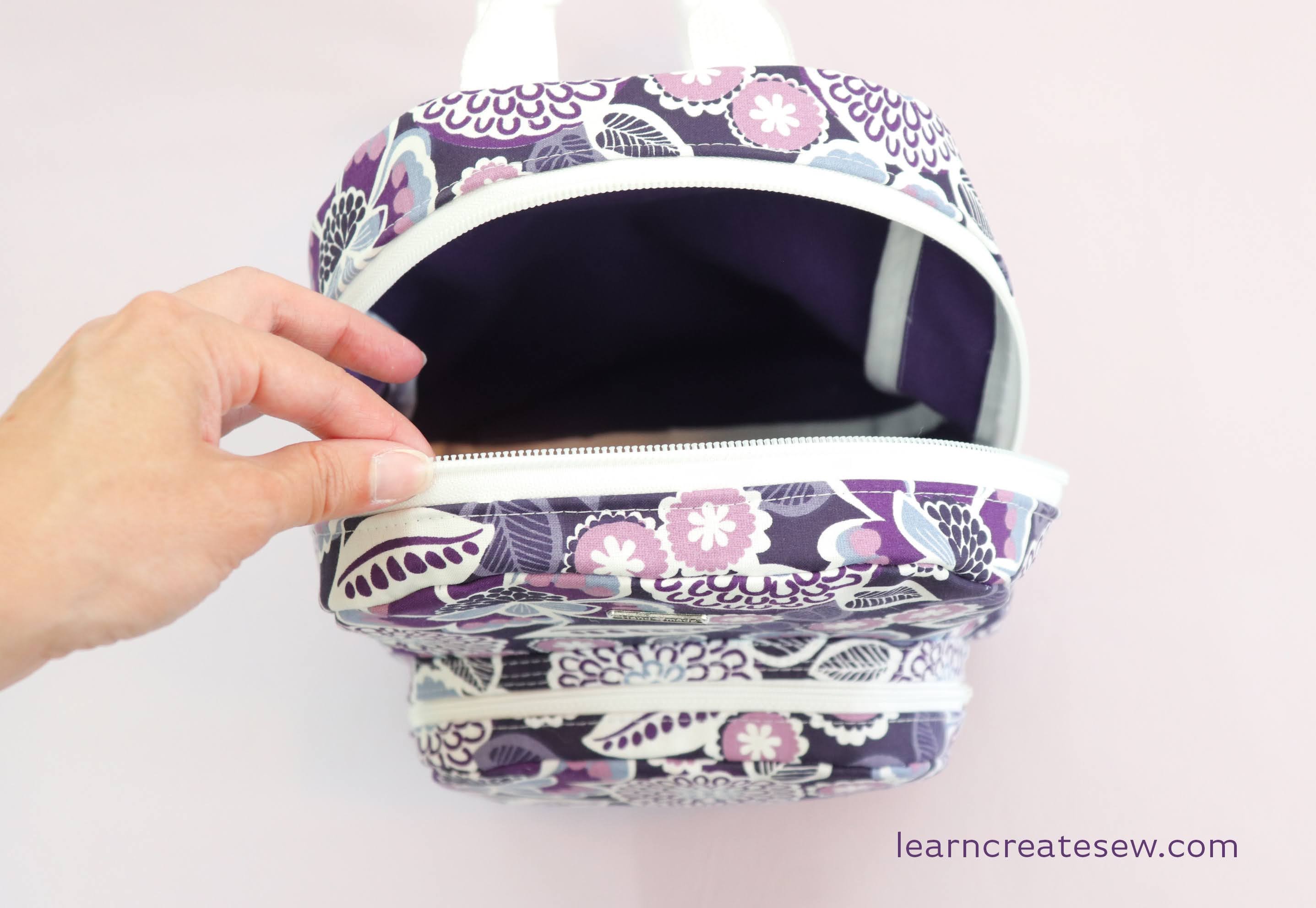
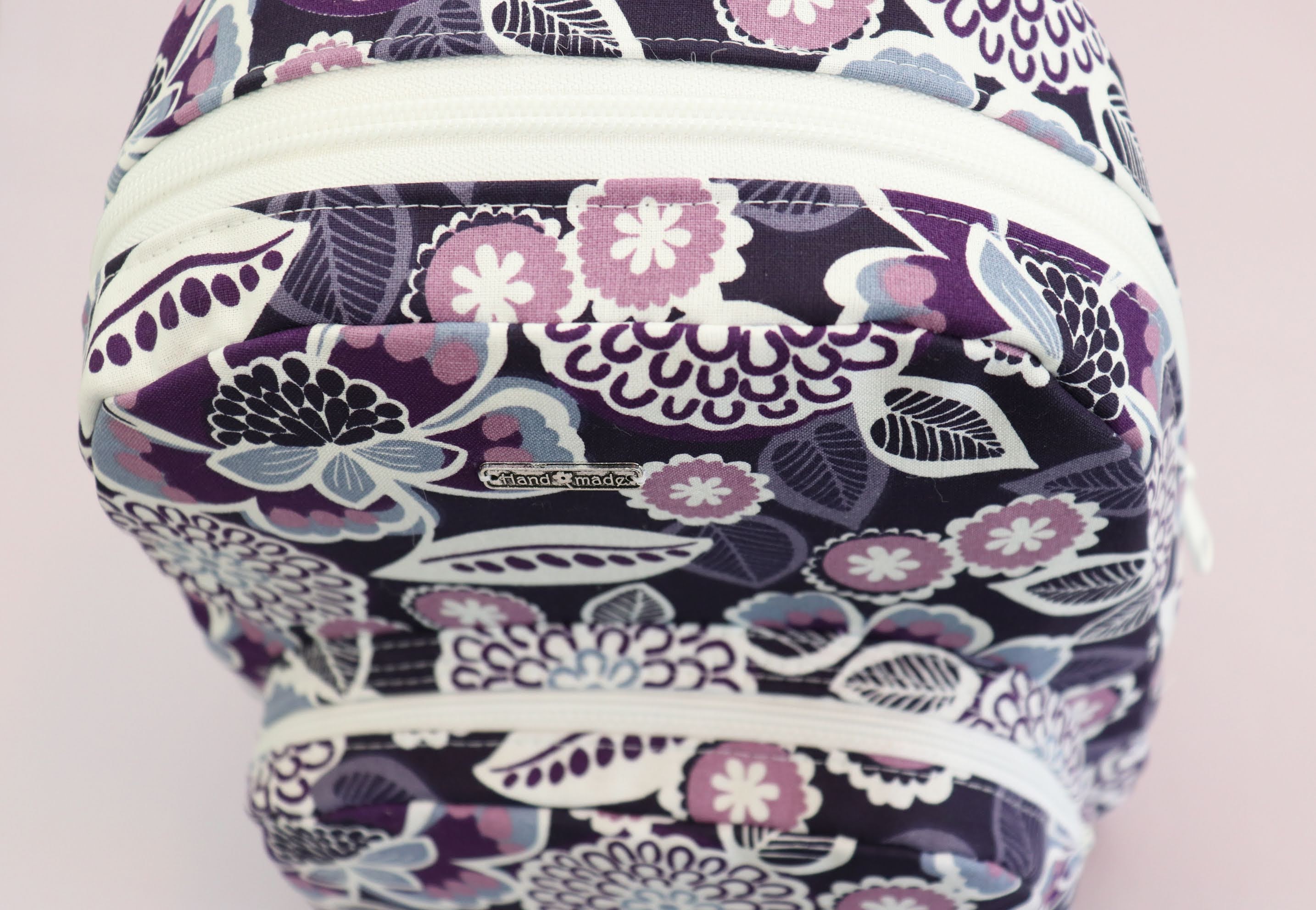
I absolutely LOVE this backpack! This is my favorite size backpack to take to amusement parks. At 9 x 11 inches it is smaller than regular sized backpacks, but large enough to hold a lot. I’ve stuffed this thing with water bottle, snacks, extra sweatshirt, wallet, keys, notebook, first aid kit, and more. However, it’s not so big that it gets too heavy, as regular sized backpacks can.
It even fits in a lot of the ride compartments at Disneyland. That is it’s best feature in my book!
It is constructed with a layer of cotton overlaying duck canvas. I used bias tape to bind the seams.
I’ve made six or seven of these bags using a variety of fabrics and interfacing. I’ve used vinyl, suede, plain canvas, fusible fleece, and even satin. The cotton covered canvas, with woven interfacing is my favorite combination! It is nice to work with, strong without being bulky, and holds its shape very well.
I love the pocket in front. While it takes patience to construct it’s not too difficult once you know the method.
This bag also has adjustable straps depending on how you like to wear your backpack.
Supplies Needed:
1/2 yd 41” wide Main Cotton Fabric 42 inches 19” wide Interfacing (I used Pellon SF101) 3/8 yd 58” wide Canvas (I used duck canvas from JoAnn) One 20 inch zipper One 13 inch zipper
1 pkg Extra Wide Double Fold Bias Tape 75 inches 1” wide Strapping Two 1” wide Rectangle Rings Two 1” wide Tri-glide adjusters One “Handmade” Metal Tag (Optional)
This project takes a bit of time and patience when working with multiple pieces, zippers, curves, and interfacings. Difficulty 7/10.
Approximate Finished Dimensions (inches):
Main Compartment 9 x 3.75 x 11, Pocket 7 x 1.5 x 5.75
DETAILED INSTRUCTIONS: PART 1: Fabric, Zippers, Pocket
Please note, this pattern has been updated. There was an error in the first version of the pattern, the bottom pocket gusset piece should measure 12.75 inches in length. Sorry for the inconvenience!
I have been wanting to finish this project for years! I made it a few years ago, but never got around to writing the instructions. I am super excited to finally have it completed 🙂
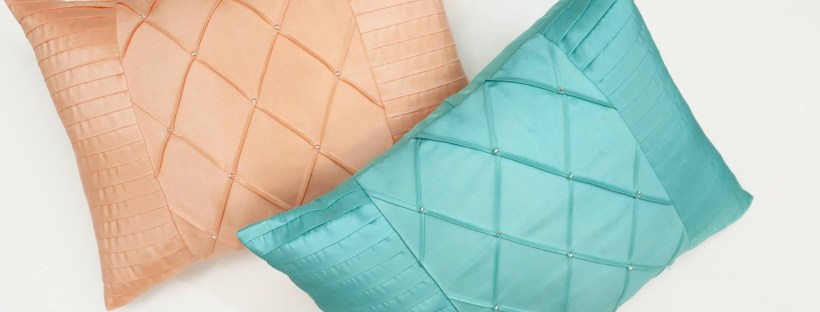
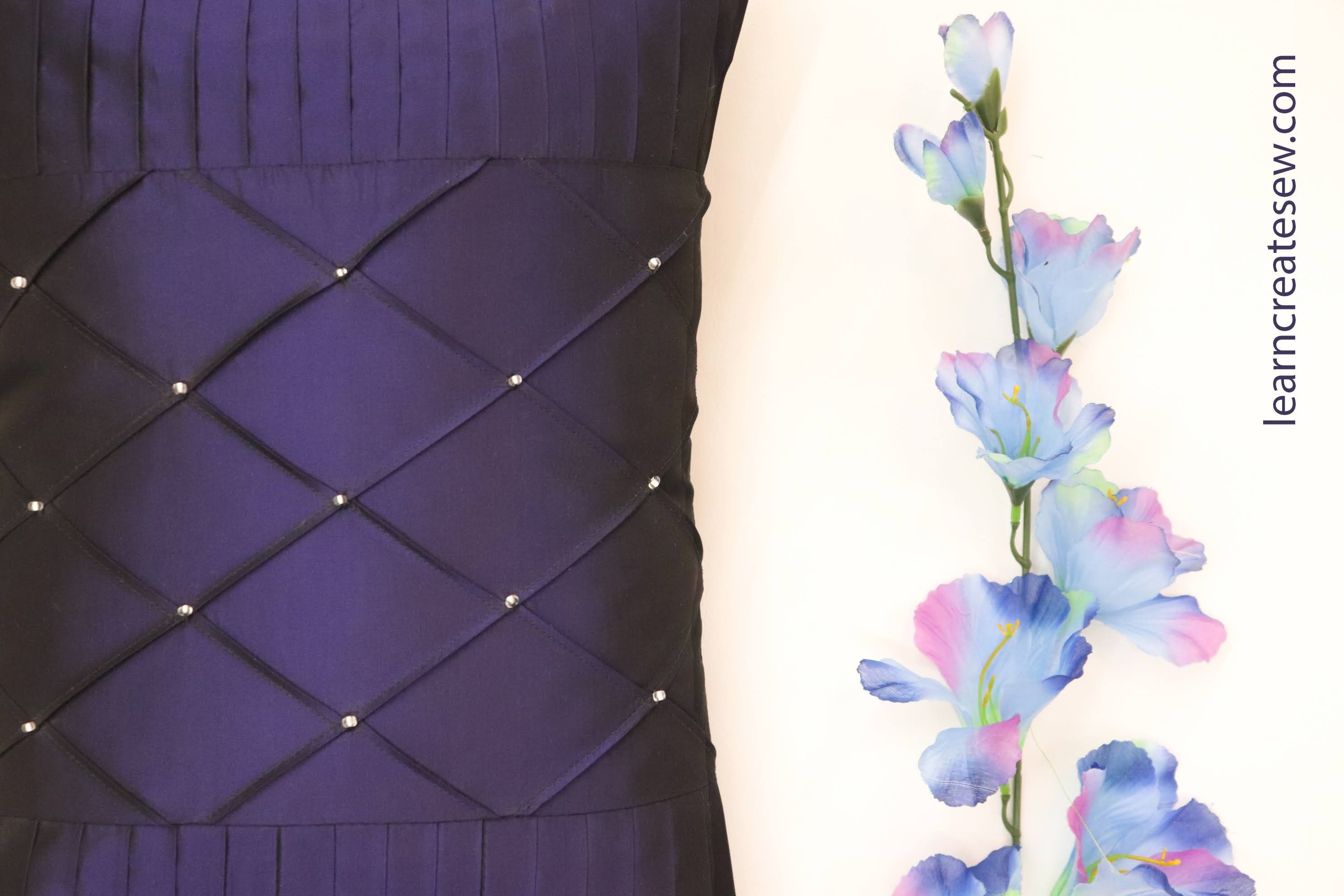
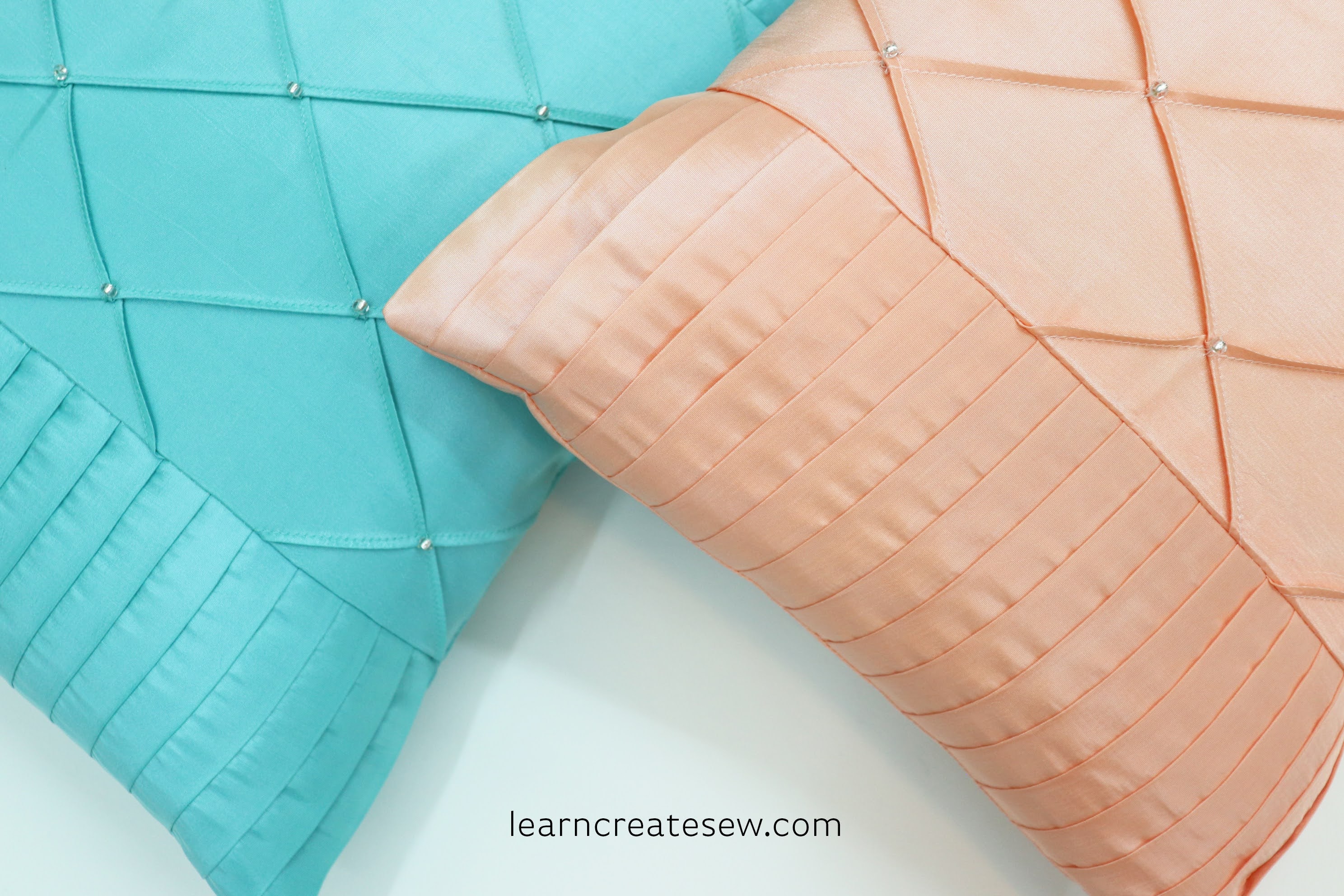
This is a cute little throw pillow and is a lot of fun to make. I absolutely love the beads attached, especially on the dark colored fabric.
You have to be quite precise in your measurements and seams when completing this project. For example, on the side pleats if you are consistently off by even 1/8 inch, you could end up several inches off the mark when you finish. As a result, this project is for more advanced sewers, or those confident in stitching accurate seam allowance sizes. Difficulty 6/10
This is one of my first home decor projects and I really like the results!
To make this project you need the following:
5/8 yard 60 inch fabric (I used taffeta)
One 9 – 11 inch zipper (I used an invisible zipper)
One 12 x 16 inch pillow form
Beads (Optional)
Coordinating Thread
Here is a cut layout and pressing guides for the pillow if needed. I recommend printing the pressing guides on a heavyweight cardstock.
Thank you to my Grandparents for giving me the idea for this project! It was a challenge, but a lot of fun. I have to say, I never thought I would be making a tutorial that had anything to do with dog poop, but here it is 🙂
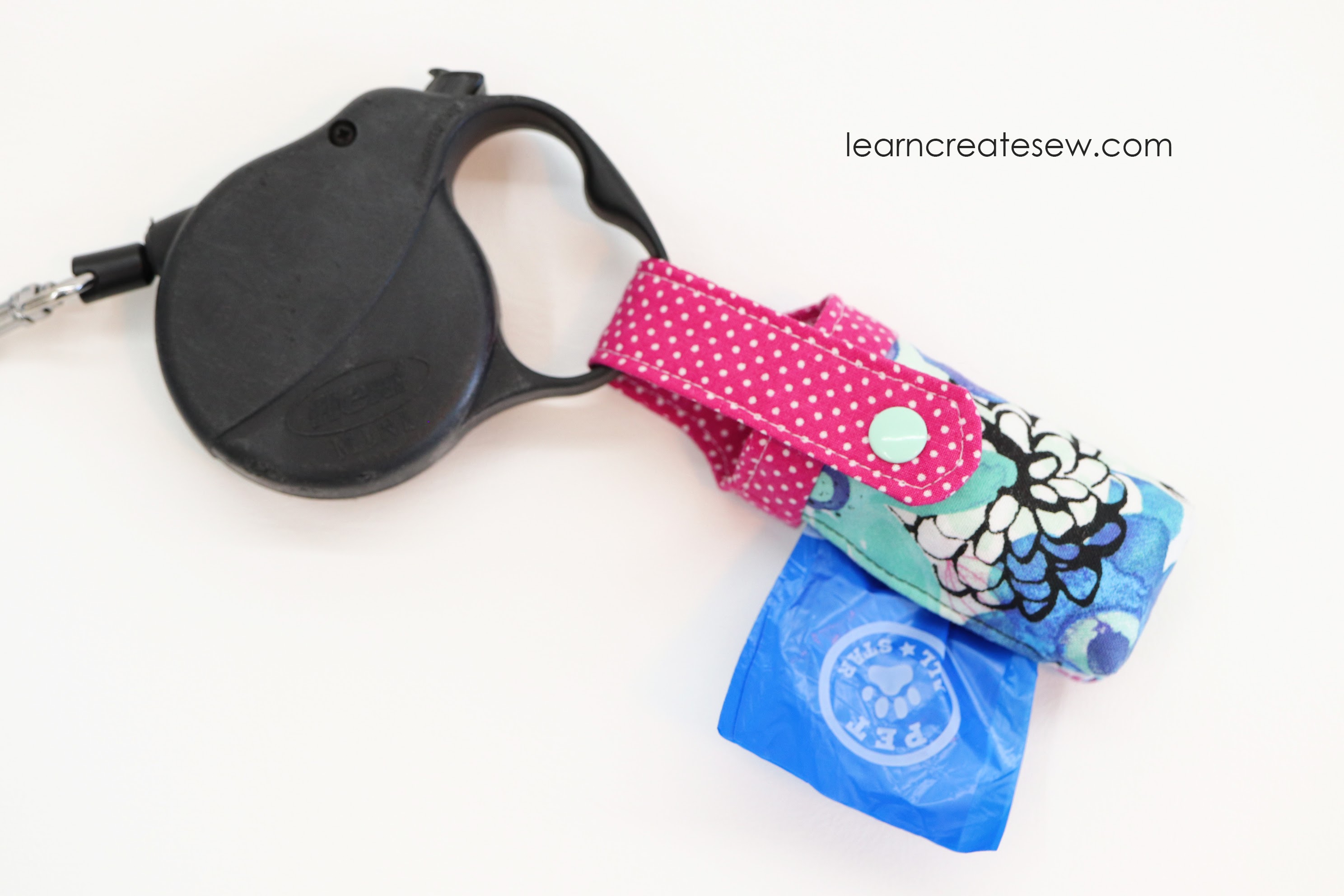
I have two dogs and they always…always…do their business while we are out and about. As a result, I have to carry these with me every time we go for a walk. Having a case to store the bags in is a must.
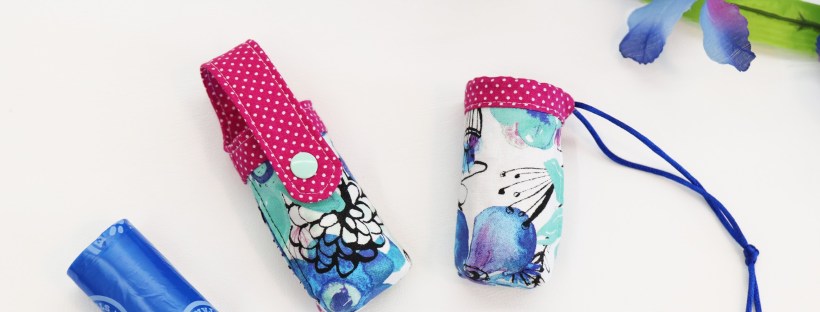
The pattern and instructions provide two different styles for the bag.
One is a loop handle which can be attached to the leash using Velcro, snaps, buttons, or more. This is a really cute style and is the typical style for waste bag holders.
The other is a simple drawstring bag. Both options have a slit in the side to allow for easy removal of the plastic bags.
This project is a bit challenging. I would say 6/10. Primarily because it is so small. Special tools can help, such as the Purple Thang to protect your fingers, and a detail pressing tool to reach the small areas.
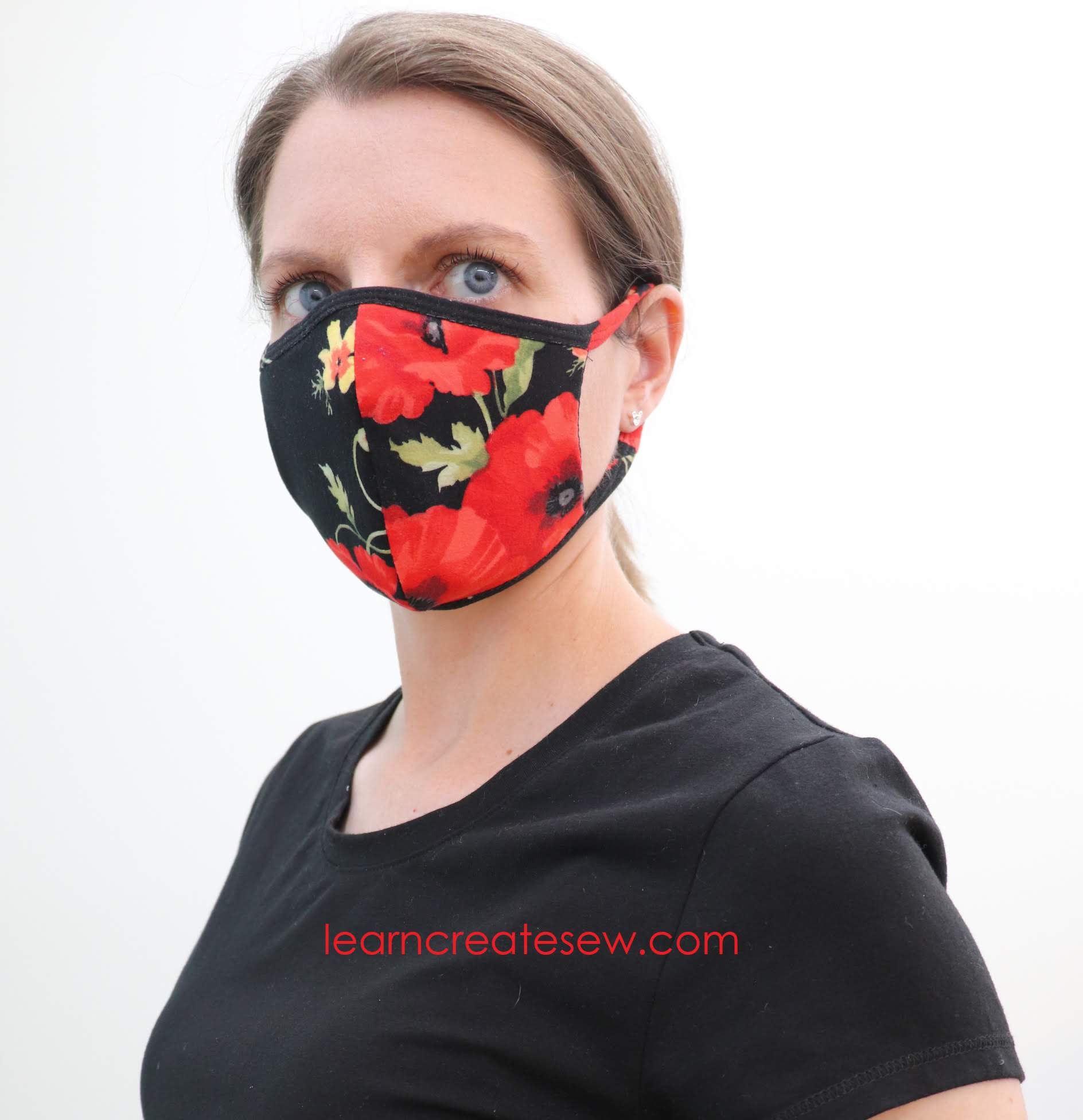
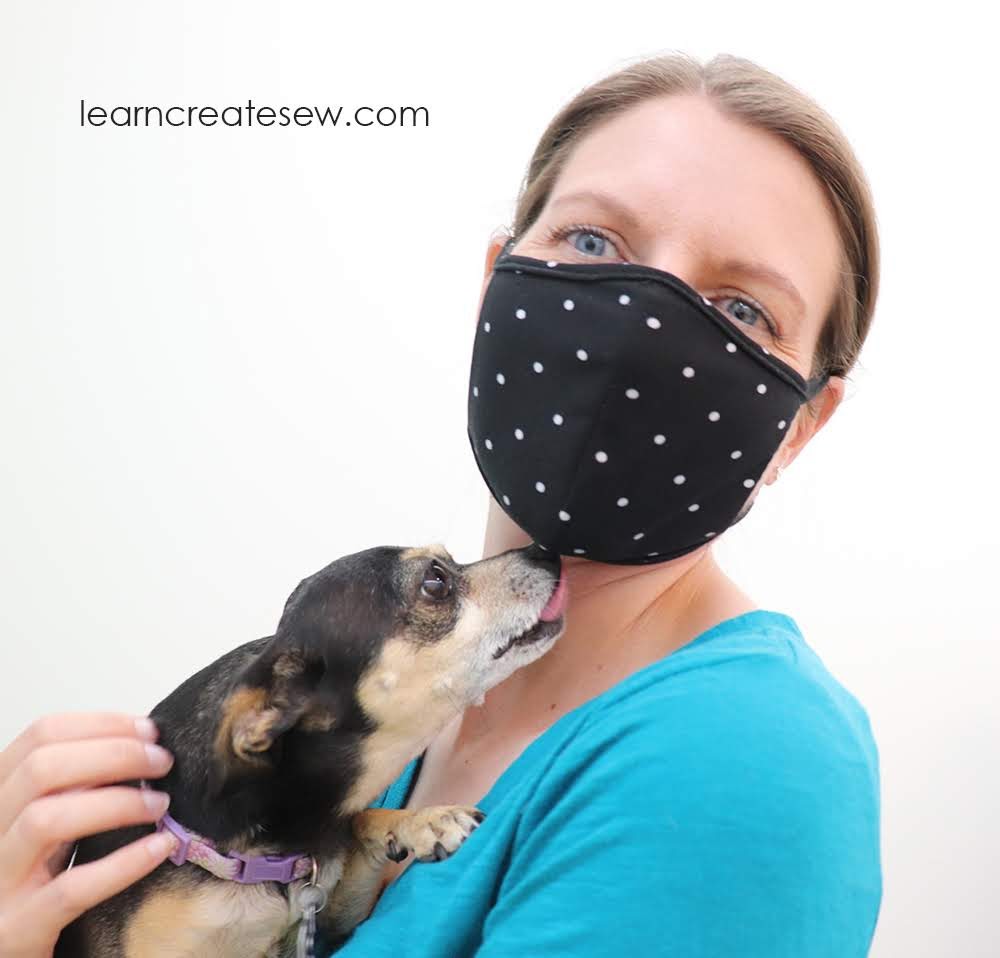
This is one of my favorite face masks. SO comfortable! And I love the fit!
With a lot of face masks I have a hard time finding just the right fit. Since the knit fabric stretches, it wraps around the face quite nicely.
I used a brushed polyester spandex from JoAnn that has a great stretch and holds its shape.
In addition to providing a safer environment, these masks also double as protection against dog licks.
This masks can be made using a zigzag stitch and stretch or ball point needle, or with a combination of a zigzag and twin needle. I used a stretch twin needle with width 2.5. The purple thang tool was very handy when sewing the binding.
Here is the pattern for the face mask. The pattern is available in a variety of sizes. I made a medium for myself and used 26 – 26.5 inches of trim. I used 26.5 of the zigzag stitched trim, and 26 with a twin needle.
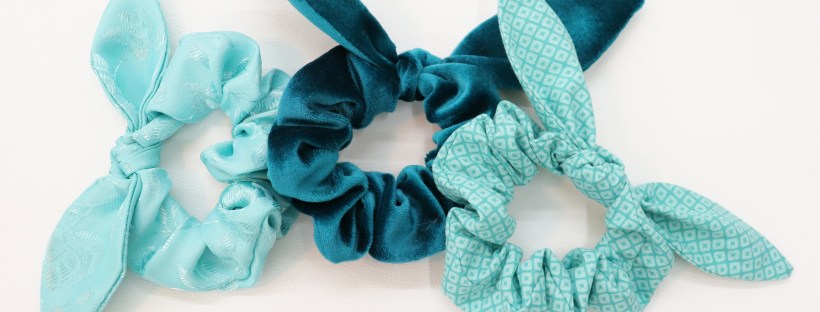
One of the projects that my students request to make most frequently is scrunchies! They are quick, easy, and don’t take a lot of fabric.
You can use a variety of fabrics to make scrunchies, so it’s a great way to use the fabric in your scrap bin. Scrunchies are great in cotton, flannel, velvet, satin, and more.
You can mix and match removable ties to add a bit of flare to your scrunchies.
Scrunchies only take a few minutes to make and even beginning sewers can be successful with this project.
You can make the scrunchies without the ties if you prefer.
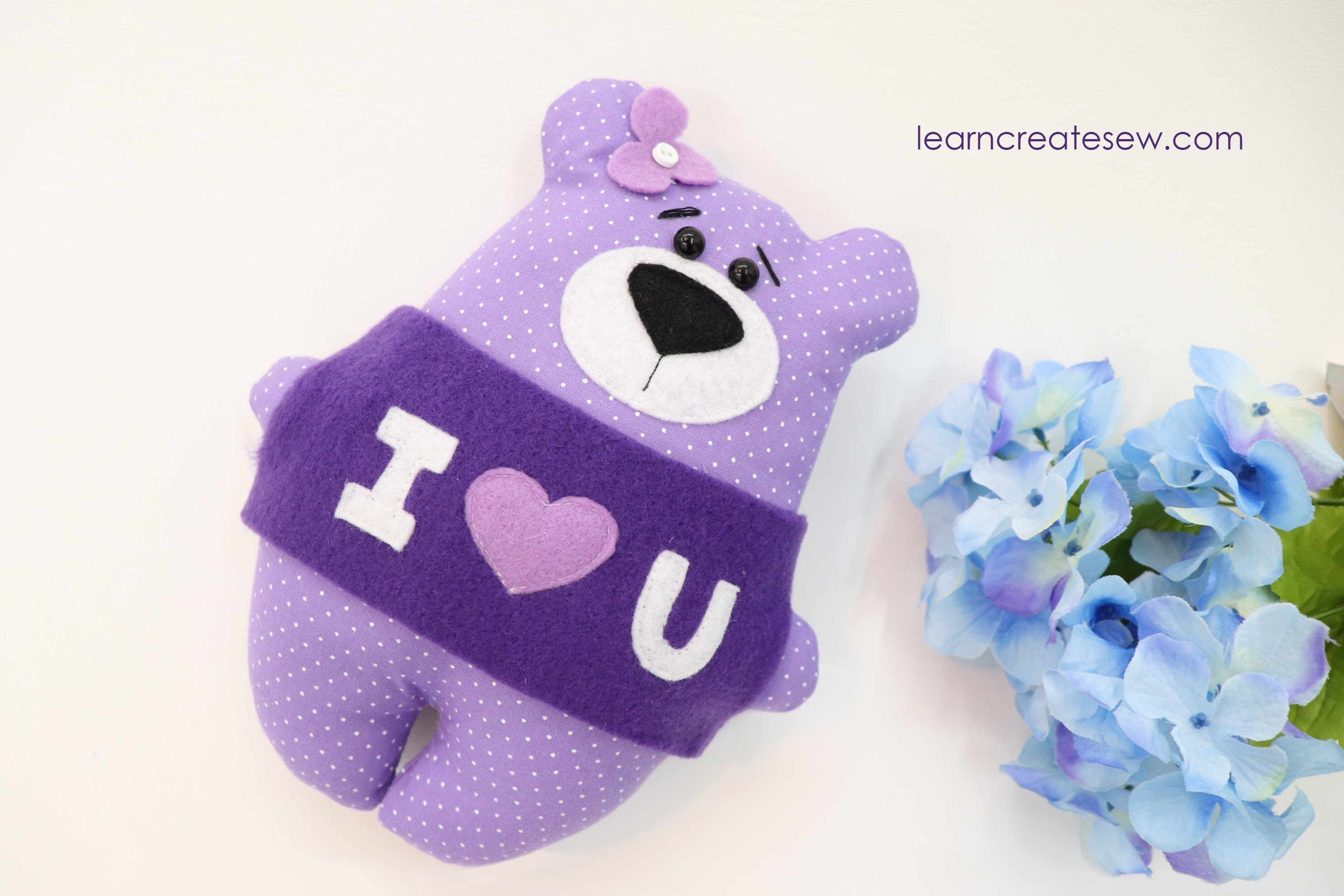
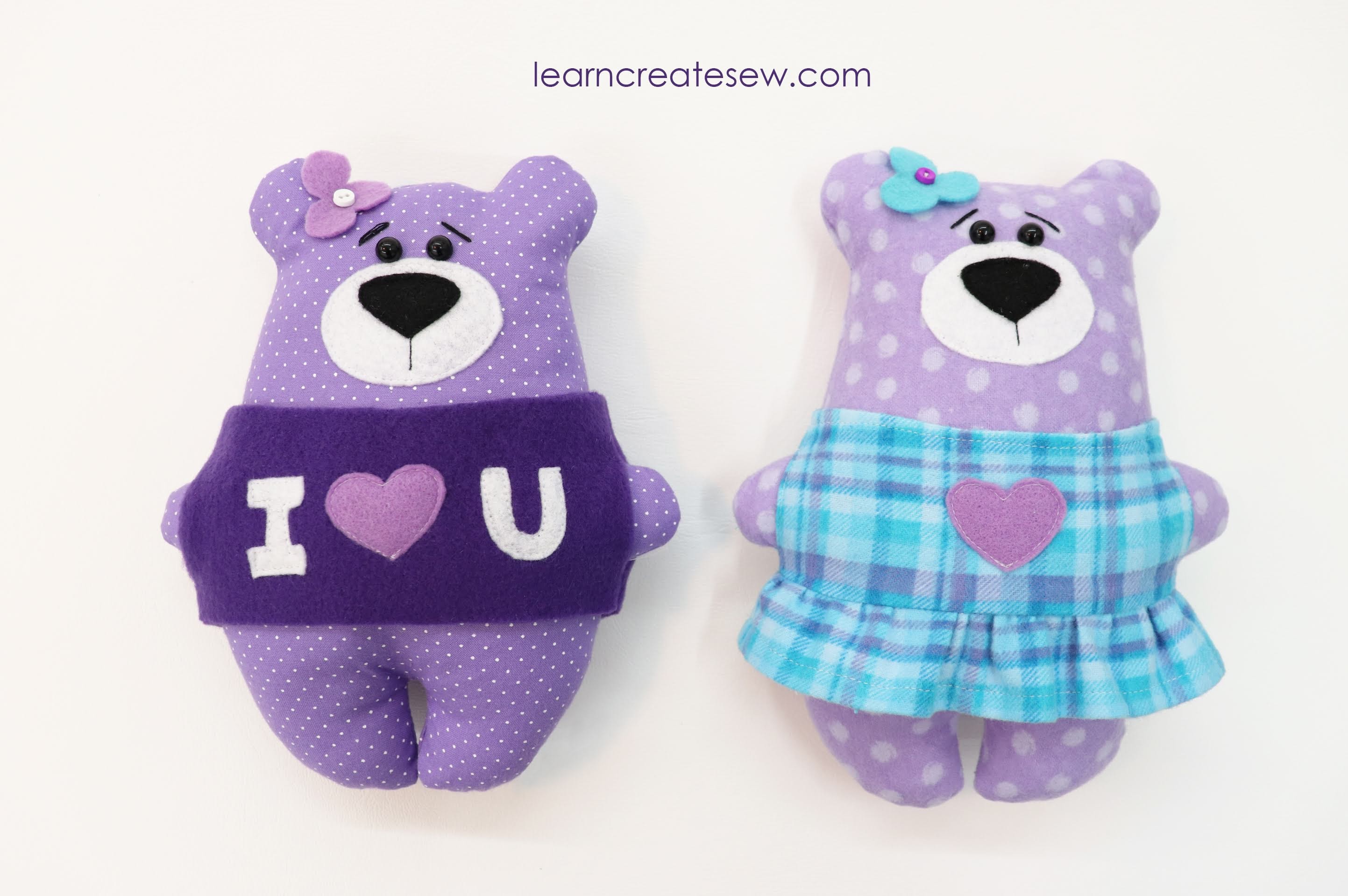
This simple bear plush is great for beginning sewers and service projects! My first year sewing students made these bears for a children’s hospital. They were a big hit for both those making the bears and those receiving them. They are quick to make and even my new sewers were successful! They are also a lot of fun 🙂
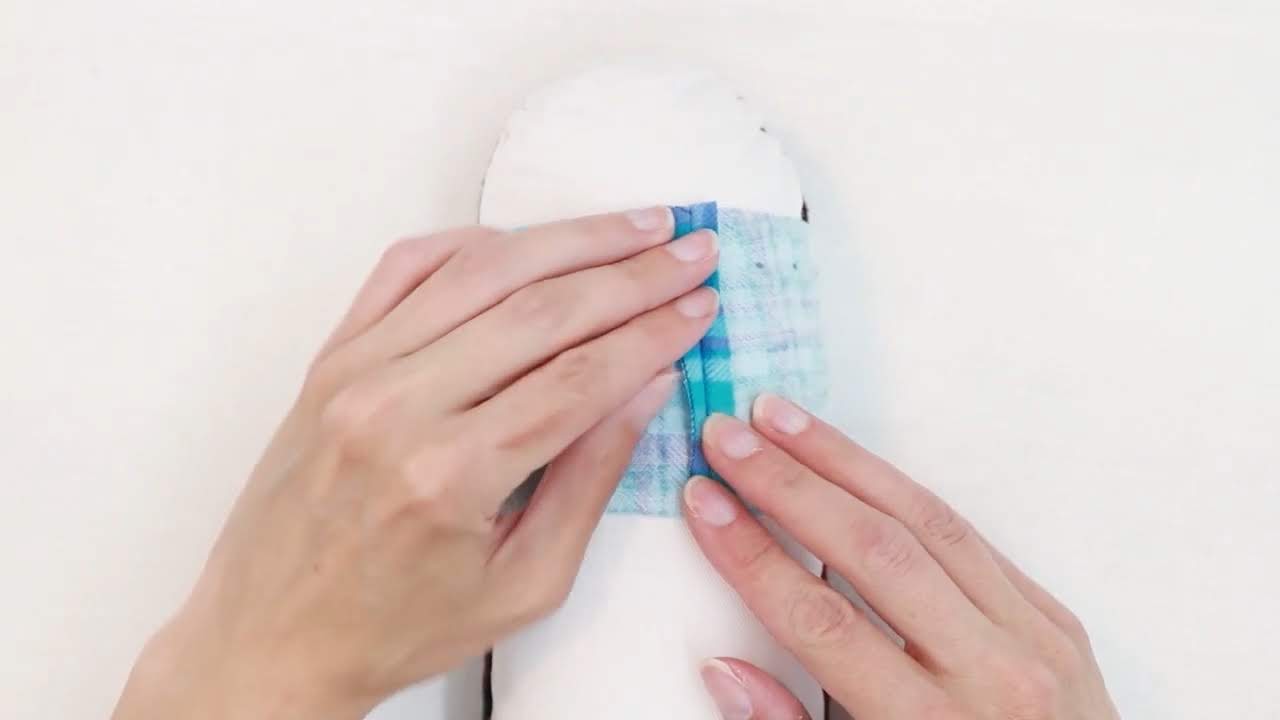
This bear can be made with or without accessories, and it is adorable either way! The dress may be a bit of a challenge for beginning sewers as it involves gathering.
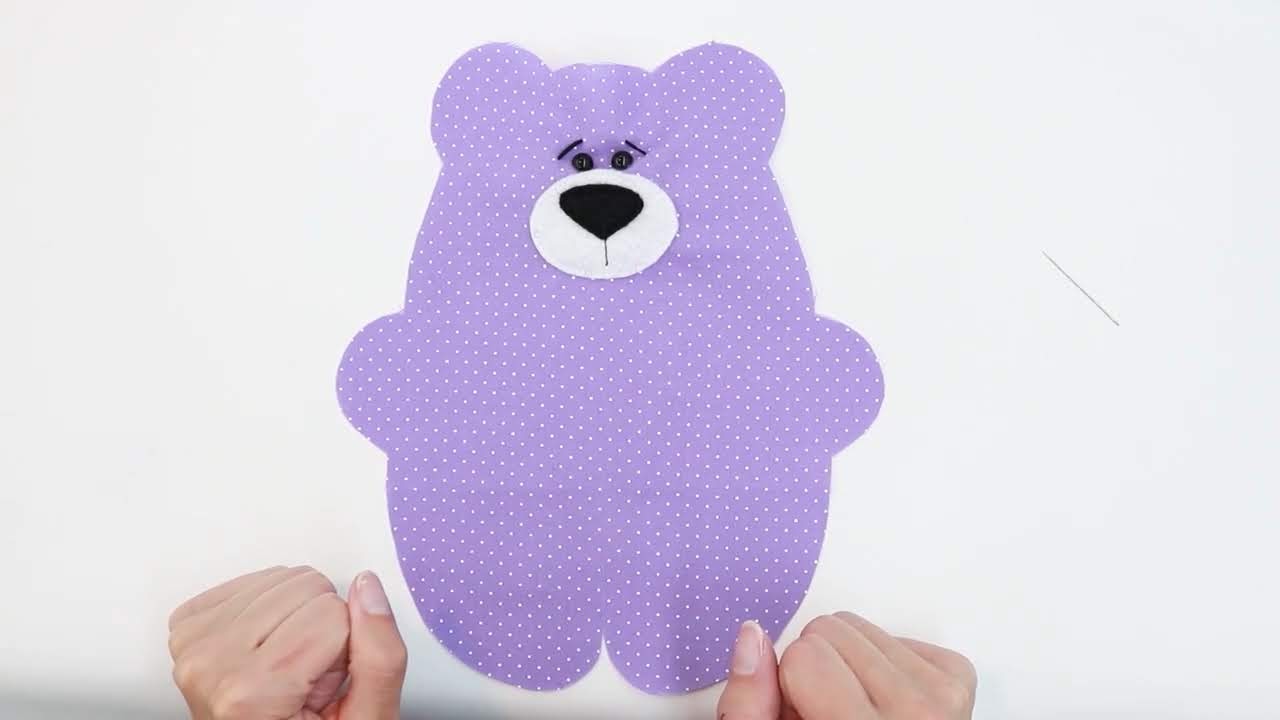
The body of the bear can be made with cotton, flannel, or fleece. Felt is great for the details. I used fleece for the I love You sweatshirt and flannel for the little dress. I also used 8mm safety eyes, buttons are also a great option. Embroidery floss was used for the eyebrows.
It is really fun to personalize your bear. Decorate as you prefer! Be creative and make it all your own. Since much of the decoration is simply felt shapes, this is really easy to do.
I hope you enjoy making this project as much as I did.
I have been wanting to make a fanny pack for years, and I finally did!
This is a classic fanny pack with a curved top flap. It’s what I always picture in my head when I think of a fanny pack. I made several different patterns before I settled on this one, and it was by far my favorite. It is fully lined, so no raw edges! But you could definitely make it with a single layer if you wanted to.
The waistband is also adjustable.
Since the zipper is on a curve, there is a bit of difficulty, probably a 5/10. If you aren’t as comfortable sewing zippers and think this might be a bit much for you, don’t worry! My next tutorial is a flat fanny pack and the zipper installation is much easier.
The dimensions of the fanny pack are approximately 13.5 inches side to side, 4 inches tall, and the top flap is about 2.5 inches deep. It tapers to a point at the bottom.
Canvas and denim are great for the exterior. You can even use regular cotton fabric, but I do recommend interfacing. I used SF101, but a fusible fleece would probably work good as well.
You can use top stitching as a decorative element and to add stability to the bag.
On my denim bag I used contrasting thread so the top stitching would stand out, and two rows on the sides to give it more of a “jeans” feel.
Keep an eye out for my next tutorial and I’ll show you how to make a different style of fanny pack!
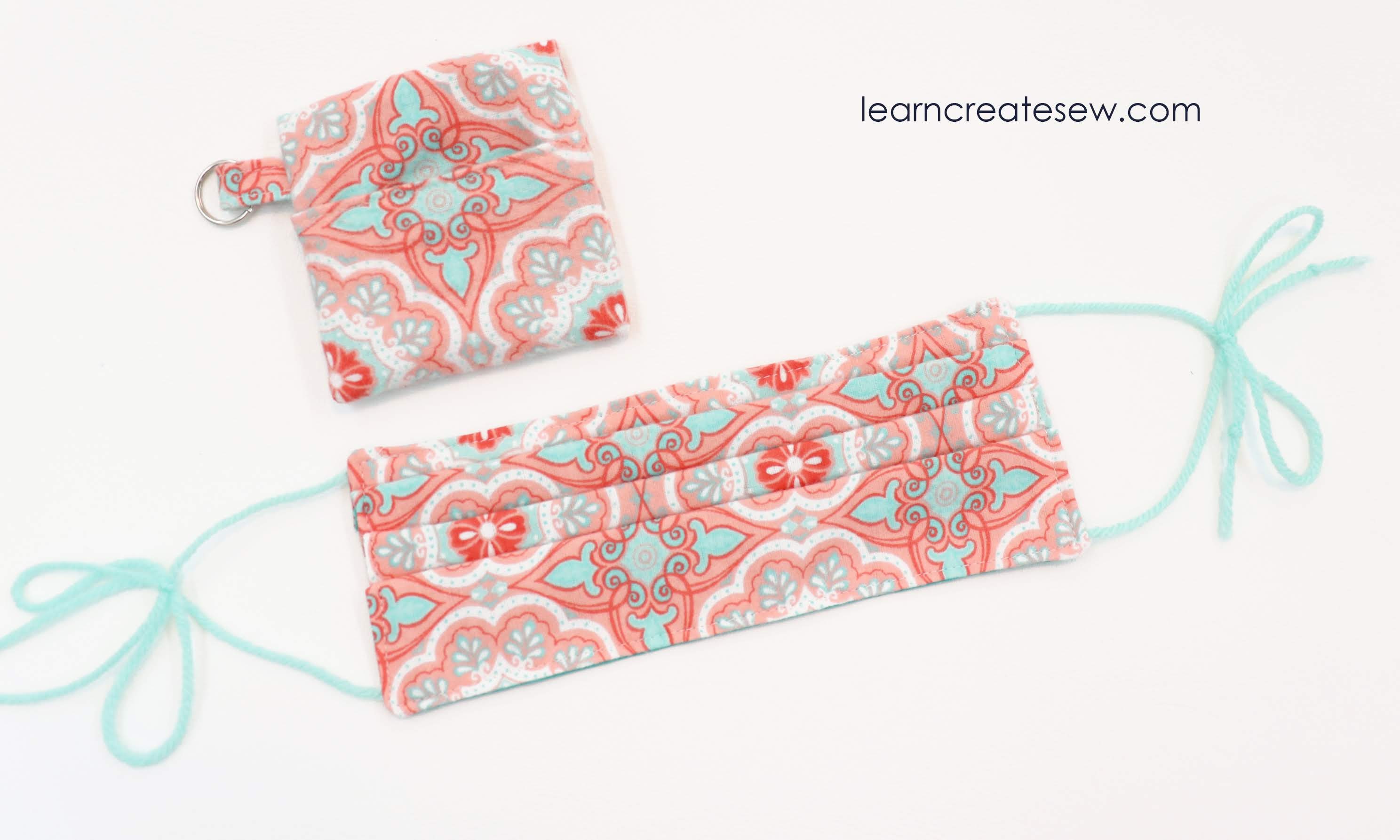
The fabric ties are great! They are durable, comfortable, and work really well. That said, they can be time consuming to sew and can be challenging for beginning sewers, so I started searching for an alternative.
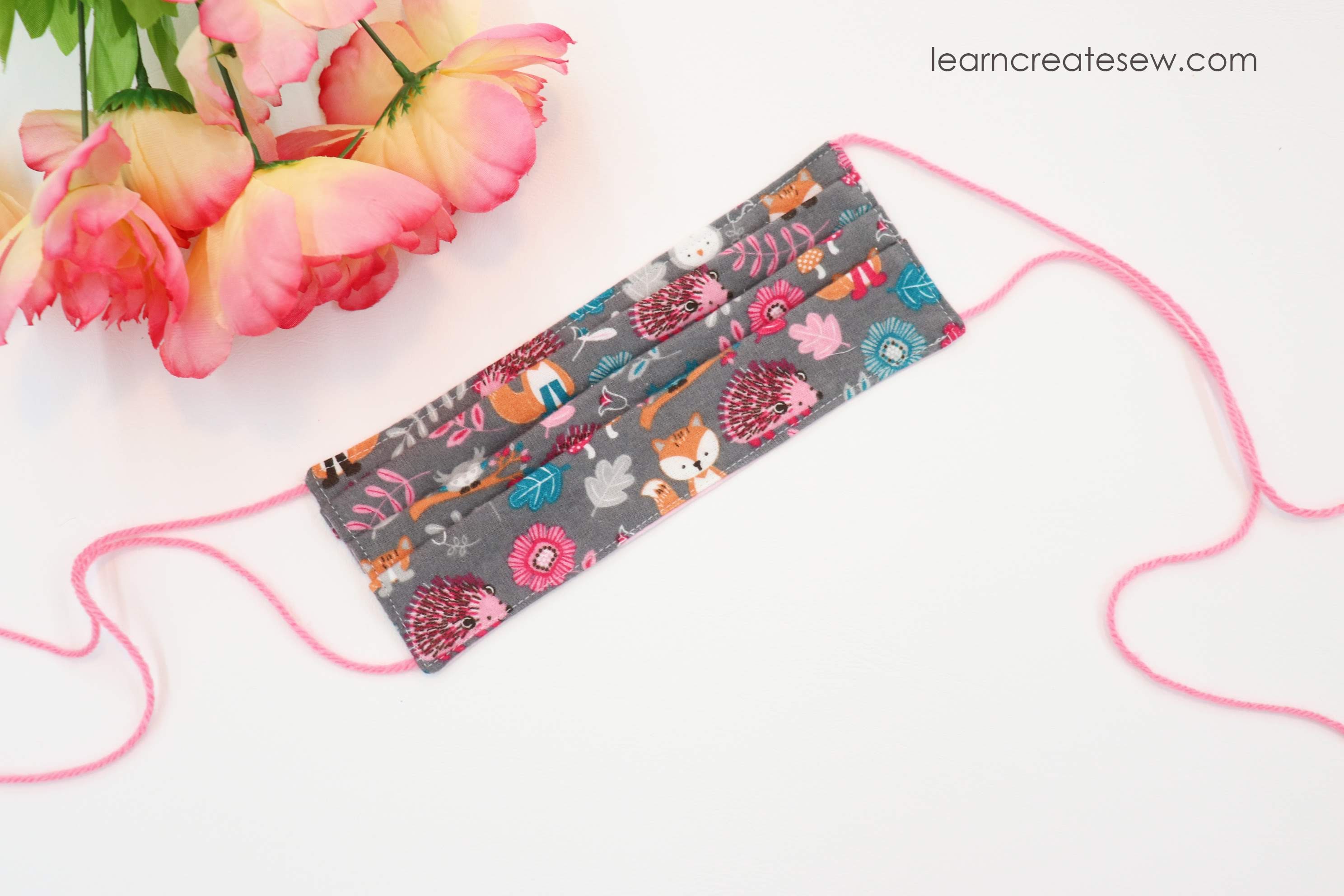
I had just finished my rag doll tutorial and yarn was EVERYWHERE in my house. It inspired me 🙂 Why not have yarn ties for face masks.
Yarn ties are super easy! They are quick and make the construction of the face mask very simple. I made a few test masks and ran them through the washer and dryer in a lingerie bag and they came out great. The ties also are easy to make in different styles.
There are a few drawbacks to yarn ties. First, always tie them with bows. If you get a knot, you may not be able to get it undone and may have to cut your tie. Second, some people may be sensitive to the feel of the yarn behind their ears and neck. Use soft yarn if possible. They are also not as sturdy. As a result, I still recommend fabric ties for durability and for donations, but yarn ties are great for ease and convenience. So, if you’re just looking for something to grab when you run to the gas station or mail box, these are great!
This tutorial shows you how to make 3 different styles of yarn ties. Two long ties behind the head and neck, two short ties to tie behind the ears, and one long tie to tie behind the head.
DETAILED INSTRUCTIONS
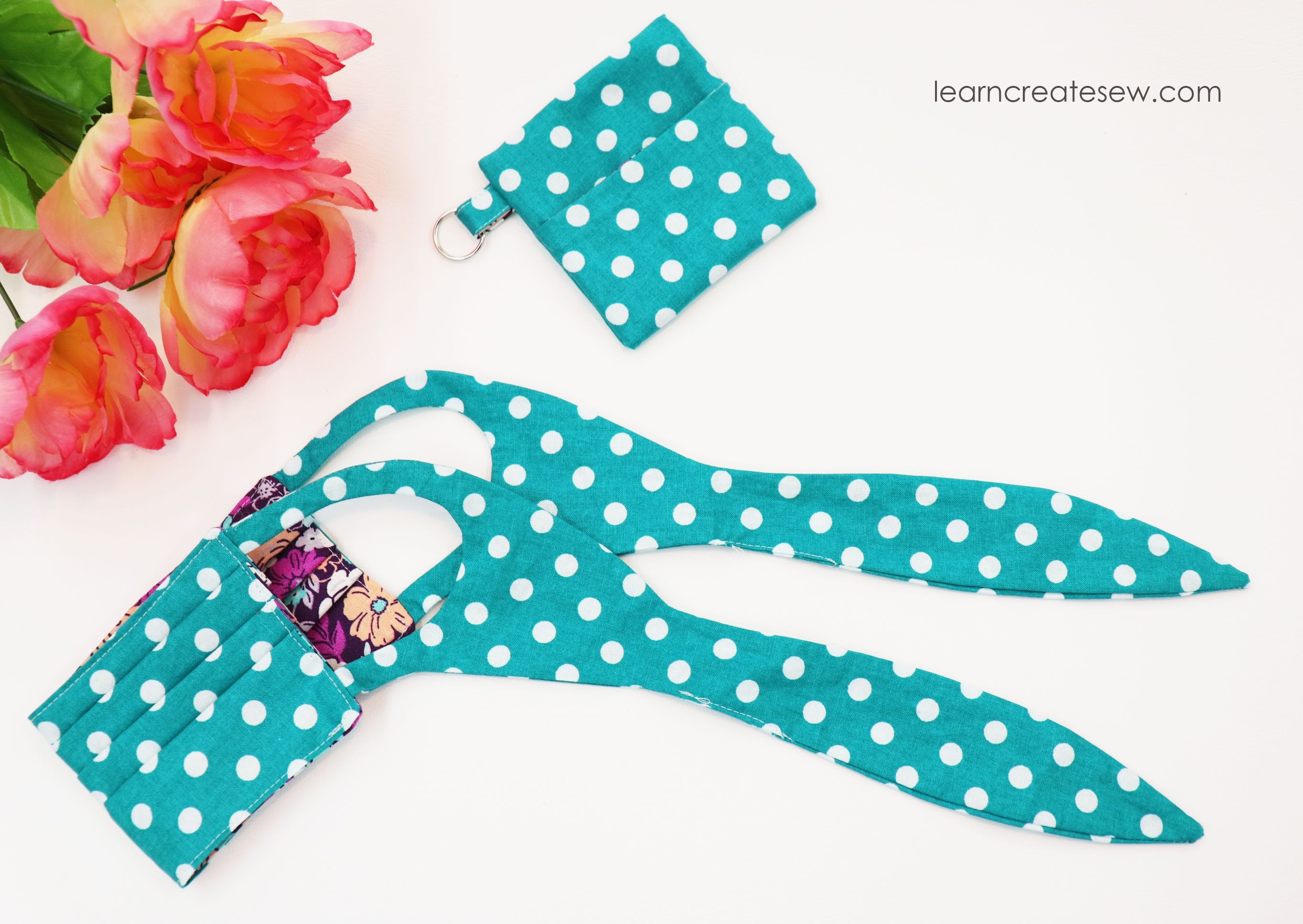
These masks also fit great in my Face Mask Key Chain Cases




















 learncreatesew